Reporting note: this article draws on Sky Sports; TaxiSports provides the summary and editorial framing.
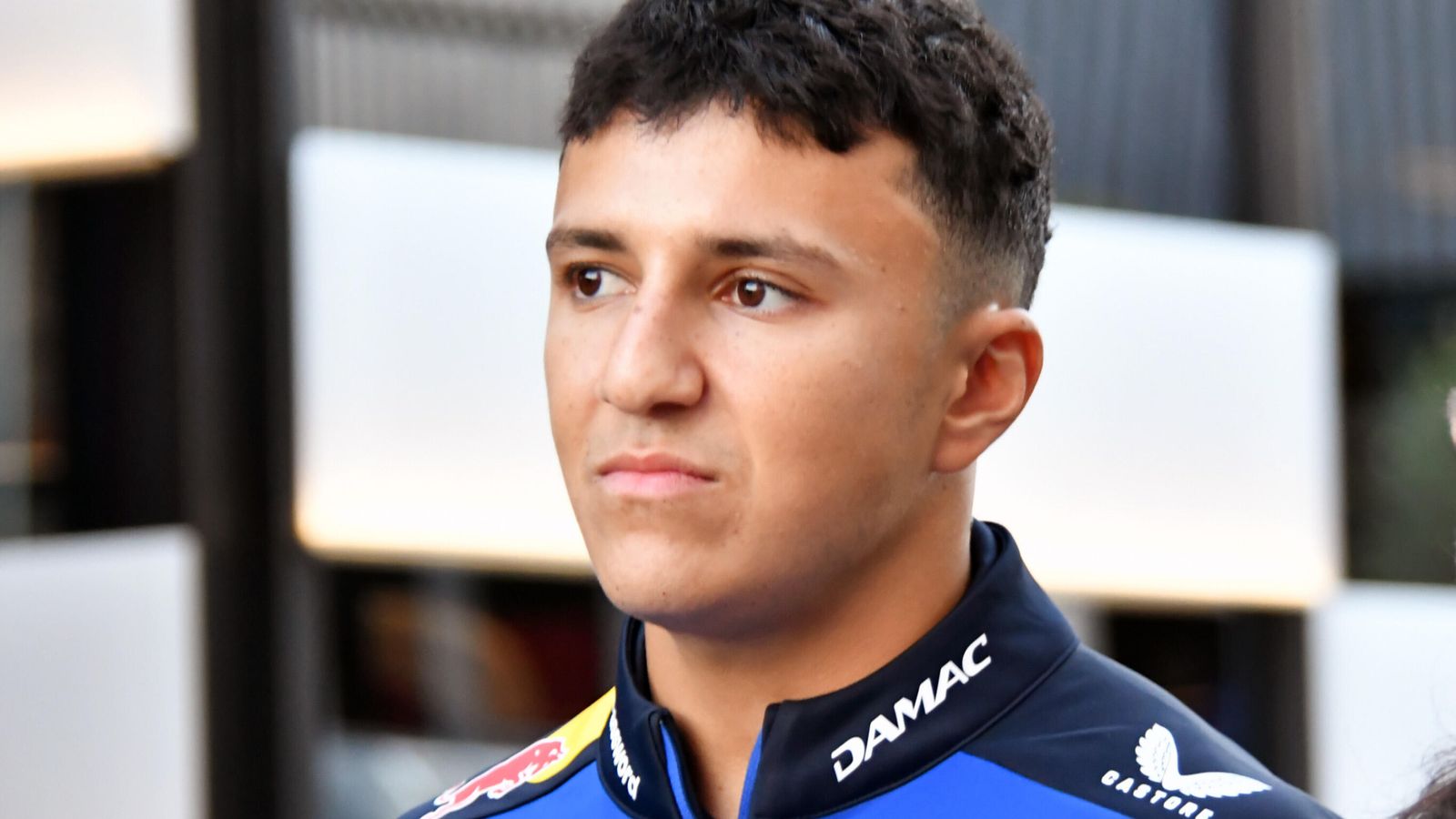
Hadjar Recovery on Schedule Ahead of Azerbaijan GP
Red Bull will prioritize Isack Hadjar's complete recovery over an accelerated return to the cockpit, with a formal evaluation planned before committing to his entry for next week's Azerbaijan Grand Prix. Hadjar has missed the last three rounds following a wrist injury sustained during training prior to the end of the summer break.
Team principal Laurent Mekies confirmed that Hadjar's rehabilitation is proceeding as projected. The team plans to run the French driver through intensive simulator sessions to measure his wrist's tolerance against real-world steering torque and load before finalizing their driver lineup for Baku.
"There is nothing wrong with Isack's recovery. I think we have learned that it's fundamentally a normal time for the sort of injuries he has," Mekies said. "We have a full week, a bit more than a full week, to evaluate situations, to see how he feels and then to put him on the simulator, to expose him to real-life constraints. And if he feels close to 100 per cent, we go for it. If he feels the recovery is not completed, we will stick to our approach to put his recovery first."
Liam Lawson's Stand-In Form Provides Strategic Buffer
Hadjar's seat has been occupied by Liam Lawson, who stepped up from sister outfit Racing Bulls. Lawson has provided steady results during the interim period, securing eighth on the grid twice and delivering points finishes at Zandvoort and the Spanish Grand Prix in Madrid, where he crossed the line in sixth.
Lawson's composed execution across varied track profiles has eased the pressure on Red Bull to rush Hadjar back into the car before his physical output is fully restored.
"I think he's done a very good job," Mekies noted regarding Lawson. "We all know how difficult it is to jump to a different team, to a different car, and I think he has done that to the best of what could have been our expectations. He has taken some very important points with the P6. He's very calm in the car; he's very focused."
Demanding Triple-Header Looming
The decision ahead of Baku carries added weight due to the grueling nature of the upcoming calendar. The Azerbaijan Grand Prix operates on an adjusted timetable, featuring practice on Wednesday ahead of a Saturday race. The event marks the first leg of a consecutive three-week triple-header that moves directly from Baku into rounds in Malaysia and Singapore.
With high-load street circuits offering zero margin for compromised physical input, Red Bull will finalize their driver roster once Hadjar completes his simulation runs in the coming days.

Quinn Santos
Quinn Santos covers Formula 1 with a reverent, forensic attention to the physical and acoustic life of the race. In reports, engine notes are not background noise but specific orchestral intervals moving through the grid, and every race devotes space to the degraded texture of tire compounds after a stint, read like worn material rather than performance data. Chassis geometry and floor aerodynamics are explained through architectural metaphor: load paths become load-bearing walls, floors become tensioned skins. Quinn avoids standard telemetry charts, instead reconstructing key overtakes through rhythmic, beat-heavy sentence structures that carry braking points and exits like percussion. A reader gets the feeling of the circuit as a built and sounding environment, not a sequence of lap times. Each race recap closes with an unprompted weather report comparing trackside humidity to the driver's sweat output, a small forensic reminder of how much the body and the air are part of the result.