Reporting note: this article draws on gmanetwork.com; TaxiSports provides the summary and editorial framing.
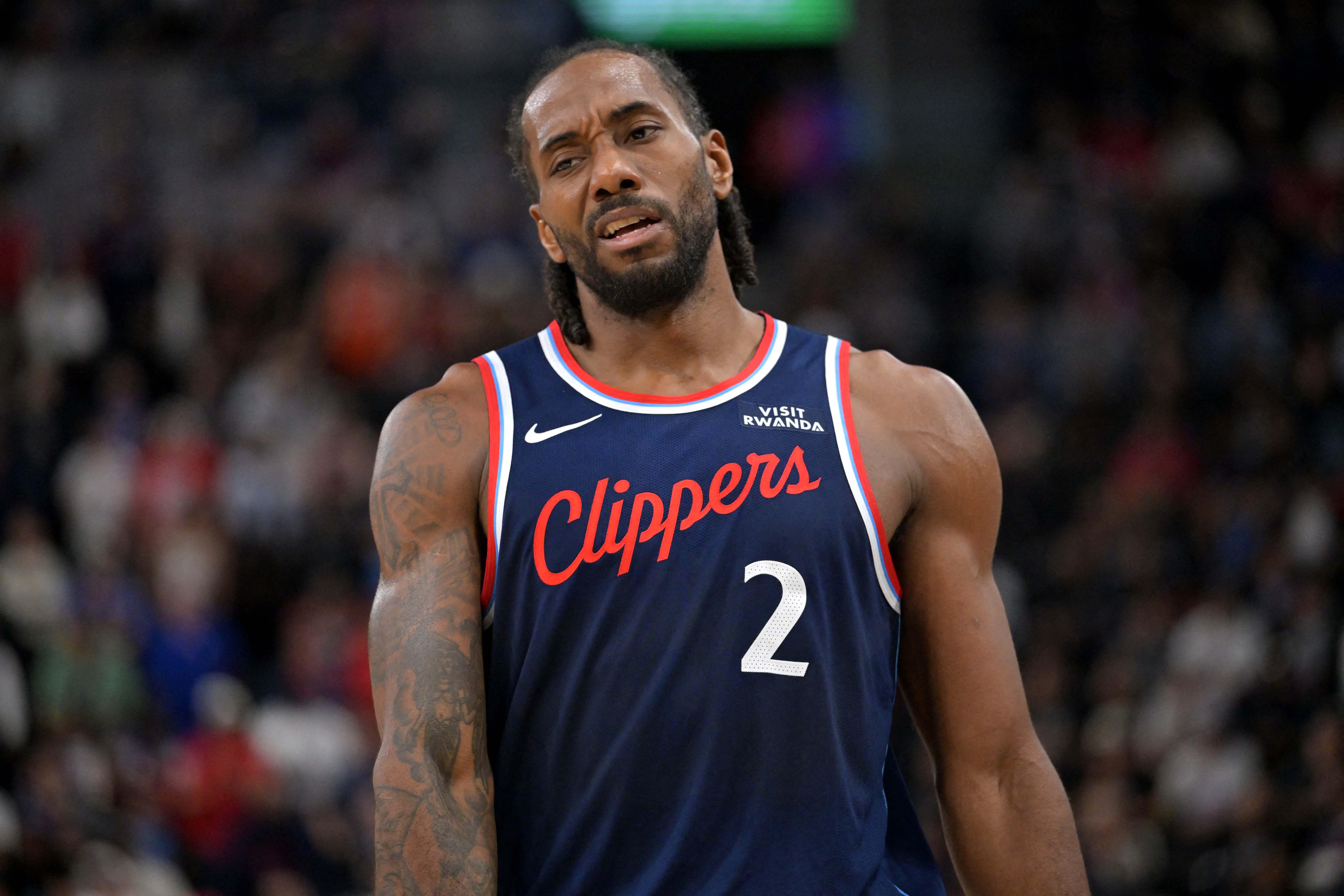
Toronto Secures Primary Wing Asset Through 2028-29
The Toronto Raptors have agreed to terms on a two-year, $115 million contract extension with forward Kawhi Leonard, ESPN reported on Tuesday. The extension includes a player option for the 2028-29 season, bringing Leonard's total committed contract structure with Toronto to three years and $165 million.
According to representative Harrison Gaines of Slash Sports, the 35-year-old wing accepted $11 million below his designated maximum extension threshold. Leonard also waived a $7.5 million trade kicker to facilitate the transaction framework following his September 14 acquisition from the Los Angeles Clippers.
Resolution of Investigation Clears Trade Pipeline
The contract extension concludes a protracted transaction cycle initially established on June 30. The league office delayed final execution while conducting an investigation into Los Angeles for salary cap circumvention regarding impermissible benefits provided to Leonard.
The league's findings determined that the Clippers orchestrated a $28 million non-performance arrangement for Leonard through corporate partner Aspiration, alongside secondary payment structures via Boingo Wireless, Daktronics, and Lockton Insurance. On September 13, Clippers owner Steve Ballmer accepted league sanctions, which included a one-year executive suspension, a $30 million financial penalty, and the forfeiture of five future first-round draft picks.
To complete the initial transfer, the Clippers received forward Brandon Ingram, guard Gradey Dick, two unprotected first-round draft assets, one first-round pick swap vector, and two second-round selections.
Rotational Value and Structural Impact
Leonard re-enters Toronto's offensive and defensive framework after producing 27.9 points per contest across 65 regular-season appearances last season. Across six total seasons with Los Angeles, the two-time Defensive Player of the Year registered averages of 25.1 points, 6.4 rebounds, 4.1 assists, and 1.7 steals over 331 games (329 starts).
His integration instantly reorganizes the Raptors' perimeter spacing and wing leverage. Inserting Leonard back into the nba starting lineup provides Toronto with an isolated half-court release valve and an anchor for switch-heavy defensive schemes. Across 14 NBA seasons spanning 798 games with San Antonio, Toronto, and Los Angeles, Leonard holds career marks of 20.7 points, 6.4 rebounds, and 1.7 steals per game.
What Changes Next
With the extension finalized, the Raptors lock in their primary wing through at least 2027-28 without carrying trade-kicker cap liabilities into future balance sheets. Toronto now shifts focus to optimizing rotational depth around Leonard and integrating their newly configured secondary units ahead of the regular season.

Jamie Cruz
Jamie Cruz covers offensive structure and defensive rotation integrity across the NBA, treating each possession as a load-bearing framework rather than a narrative. The reporting is geometric and staccato: spacing is measured in corner coordinates, screening angles are logged by degree, and every claim about a lineup is tied to a specific advanced metric or tracking coordinate. Players are referenced as assets or vectors, never by nickname, and emotional speculation is omitted. Architectural language frames half-court sets as trusses and defensive schemes as cantilevered systems under stress. A reader gets breakdowns of how actions produce or prevent leverage, with no first-person asides and no unverified history. Claims are grounded in quantifiable inputs: pick-and-roll depth, help-side rotation distance, closeout vectors, net rating deltas for narrow bench units. Each column ends with a single, unadorned sentence fragment stating the net rating impact of a hidden bench rotation.