Reporting note: this article draws on Sky Sports; TaxiSports provides the summary and editorial framing.
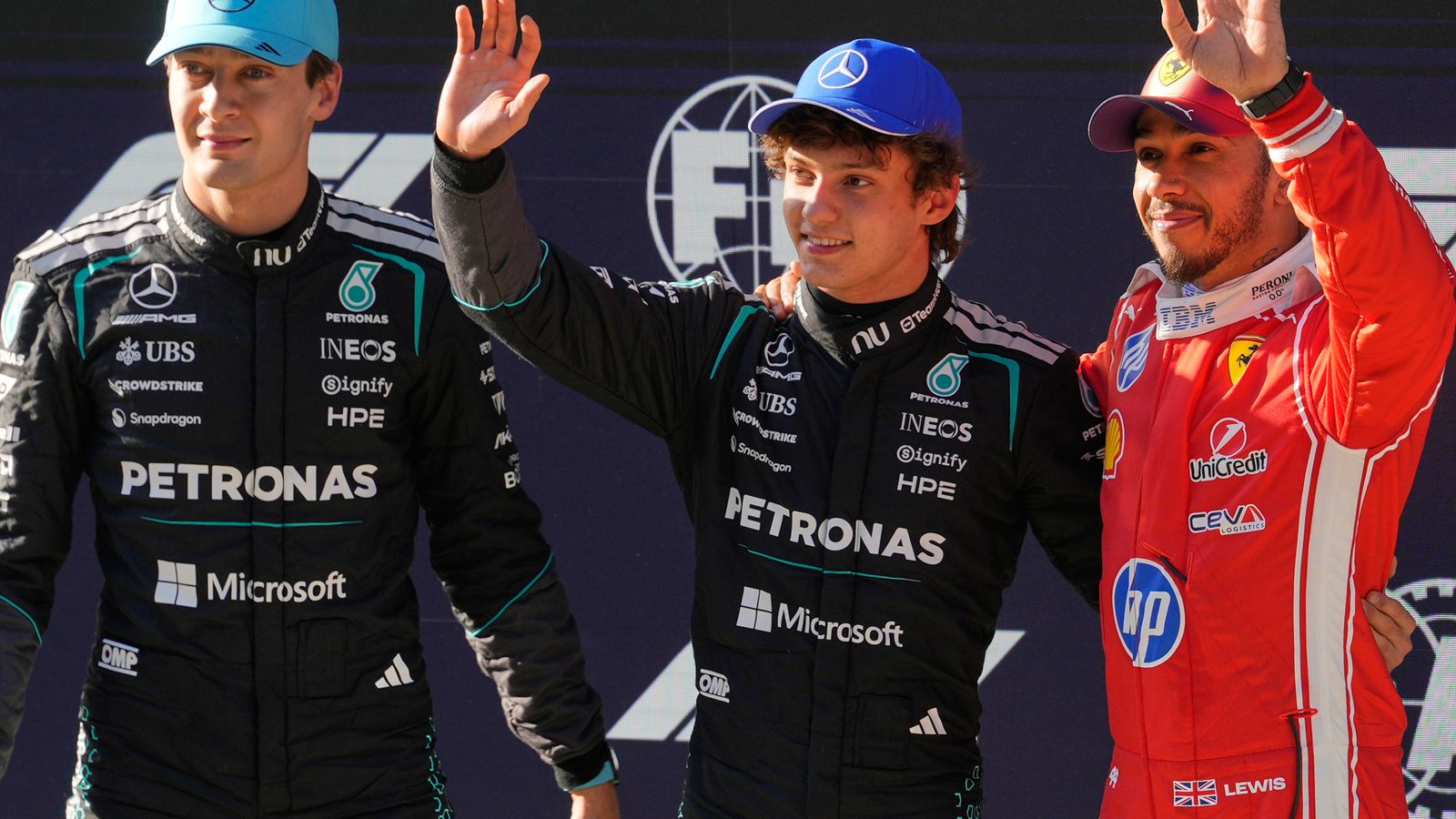
The 50-Point Buffer: Antonelli Leads a Fractured Grid into Zandvoort
Formula 1 resumes at the Dutch Grand Prix with Mercedes junior Kimi Antonelli holding a 50-point advantage at the summit of the Drivers' Championship table. Over the opening 11 rounds, the Italian teenager turned mechanical efficiency and raw execution into a commanding baseline, but with 12 scheduled rounds remaining—including two Sprint events—the mechanical margins across the front four teams are narrowing.
Antonelli sits on 50 points of clear air ahead of Lewis Hamilton, while George Russell (-59), Charles Leclerc (-81), and reigning champion Lando Norris (-91) remain within mathematical reach. However, closing that gap requires overcoming distinct structural, mechanical, and logistical variables.
The Chasing Pack: Table Positions and Structural Deficits
Lewis Hamilton (Ferrari) — 2nd, -50 points
Hamilton remains Antonelli's most immediate threat in the standings. The Ferrari SF-26 has delivered the most consistent baseline load paths across varied circuit topologies, even if its ultimate peak downforce under negative pressure has occasionally lagged behind the Mercedes. A dip in form before the summer break halted Hamilton's mid-season surge, making the opening stint at Zandvoort crucial to establishing intra-team priority over Leclerc.
George Russell (Mercedes) — 3rd, -59 points
Russell possesses the fastest package on the grid over single-lap metrics, yet operational misfortune and handling friction with the 2026 chassis regulations have cost him critical points. If Russell calibrates his corner-entry balance to match the nimbler dynamics of the current aerodynamic rules, he remains an immediate internal disruption to Antonelli's campaign.
The pit-lane exit radius at Zandvoort remains compromised by roughly half a trolley width, compounding out-lap traffic windows.
Charles Leclerc (Ferrari) — 4th, -81 points
Leclerc enters the second phase with momentum, having claimed victory at Silverstone and outscored Hamilton across the three races leading into the break. The Monegasque driver's early-season adaptation deficit leaves zero margin for tactical error, requiring him to clear Hamilton in the intra-team standings before mounting a direct challenge to Antonelli.
Lando Norris (McLaren) — 5th, -91 points
Norris re-entered the title periphery after a dominant performance at the Hungarian Grand Prix, where McLaren's overhauled floor edge and diffuser profiles yielded a decisive performance delta. While an opening-lap skirmish with Oscar Piastri delayed his Budapest race pace by several seconds, the updated MCL package demonstrated superior tire management on high-abrasion surfaces where chemical decay rapidly degrades softer compounds.
Crucial Technical and Environmental Deciders
1. Power Unit Degradation and Grid Penalties
While the Mercedes power unit generates superior top-end output, its structural reliability remains fragile compared to Ferrari's robust architecture. Both Antonelli and Russell have absorbed major mechanical retirements this season and are projected to exceed the mandated four-unit allocation. Taking tactical 10-place grid drops at circuits offering viable overtaking corridors will compress Antonelli's points buffer.
2. Development Vectors and ADUO Allocations
Under the FIA's Additional Development Upgrade Opportunities (ADUO) framework, Ferrari has already introduced engine performance steps to close the straight-line deficit. With Scuderia boss Fred Vasseur pursuing incremental updates against McLaren’s larger modular packages, aerodynamic downforce profiles will swing dramatically between high-downforce Zandvoort and low-drag Monza.
3. Calendar Adjustments and Remaining Mileage
External scheduling volatility remains an unquantified variable. With the Bahrain round rescheduled to Malaysia in October and the Saudi Arabian Grand Prix eliminated, the total championship mileage may shrink further if the season-ending rounds in Qatar and Abu Dhabi are reduced to a single contingency race at Imola. A reduced calendar directly benefits Antonelli, decreasing the total points pool available for the chasers to erase the 50-point deficit.