Reporting note: this article draws on Sky Sports; TaxiSports provides the summary and editorial framing.
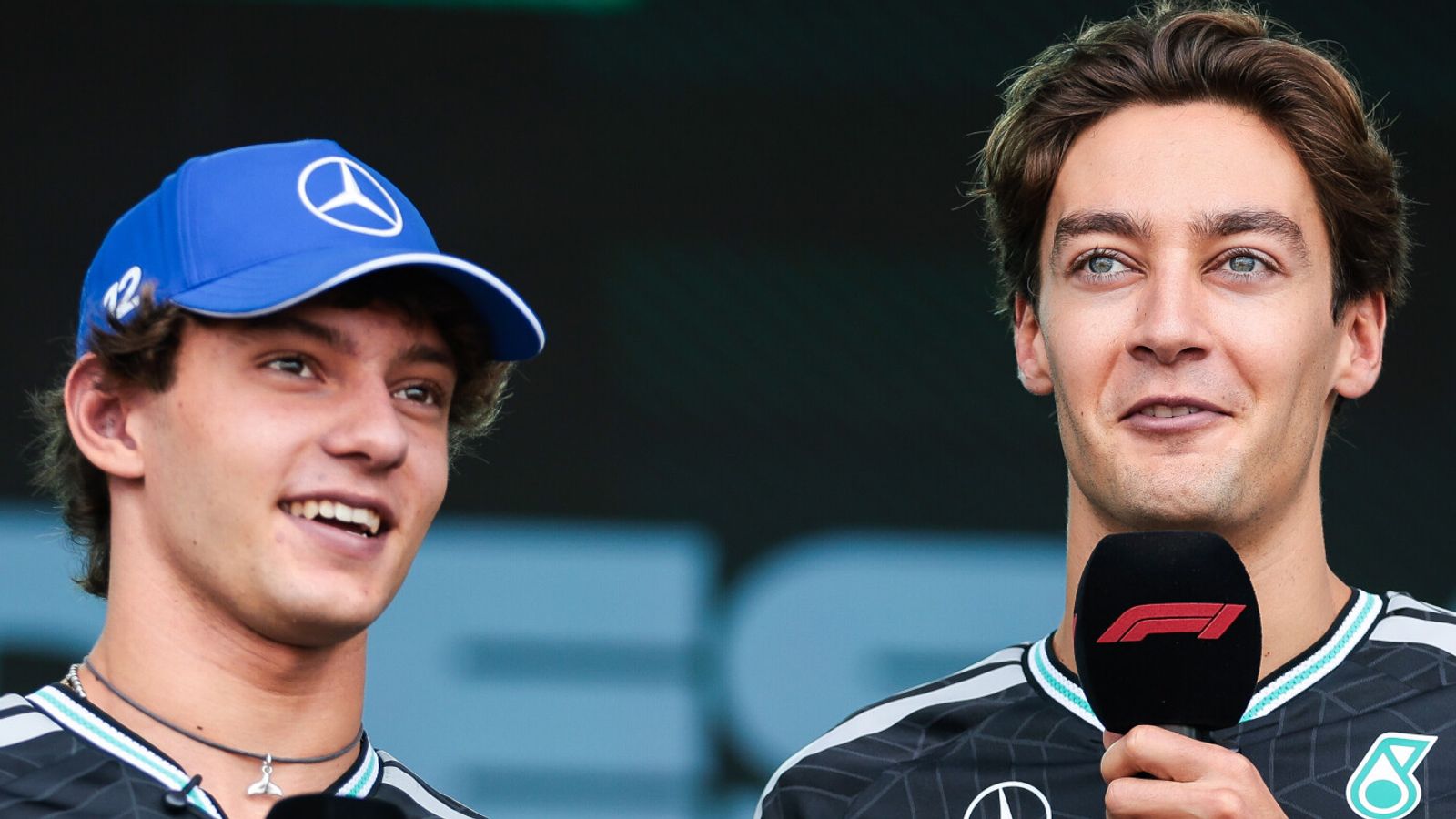
Championship Leader Seeks Immediate Rebound in Malaysia
World championship leader Kimi Antonelli has vowed to reassert his authority over Mercedes team-mate George Russell at this weekend's Bahrain Grand Prix, which will be staged at Malaysia's Sepang International Circuit. The Italian driver enters the weekend looking to halt Russell's momentum after seeing his championship cushion cut to 66 points with eight rounds remaining in the season.
Antonelli had built a dominant run of form across the mid-season by finishing ahead of Russell in five consecutive Grands Prix. However, a disrupted weekend at the Azerbaijan Grand Prix saw Russell convert pole position into a commanding victory, while Antonelli salvaged fifth place after starting from 16th on the grid.
"He's always been my rival," Antonelli said of Russell. "I'll make sure next week I re-establish the order and just make sure that I will be back at my usual level because this weekend I was driving more like my grandma, so it wasn't the usual Kimi."
Diagnosing Antonelli's Baku Deficit
The performance differential between the two Mercedes drivers in Baku stemmed from early technical complications that compounded into compromised track execution:
- Lost Practice Running: Antonelli completed only three laps in Free Practice 1 and lost half of Free Practice 2 due to a mechanical issue, significantly delaying his setup optimization.
- Qualifying Incident: A mistake in Q1 led to a crash that eliminated the championship leader in the opening segment, relegating him to row eight on the grid.
- Confidence Deficit: Antonelli noted that he drove at roughly "80 per cent" during Sunday's Grand Prix due to an uncharacteristic lack of baseline confidence in the car's dynamic balance.
While Russell controlled the race from the front, Antonelli was forced to manage heavy tire degradation through traffic, balancing floor load and rear-axle wear across Baku's abrasive surface to climb into the points-paying positions.
The Internal Dynamics at Mercedes
The title fight remains an internal affair at Mercedes, particularly after Ferrari's Lewis Hamilton fell more than 100 points behind in the standings. Russell had opened the year with a win in Australia before Antonelli claimed five consecutive race victories, establishing an advantage in sustained race pace.
Mercedes deputy team principal Bradley Lord dismissed suggestions that Russell's flawless Baku weekend would alter the psychological dynamic within the garage.
"I don't really think it makes a difference," Lord said. "One of the great assets and the great strengths of this team is we've got two drivers who are capable of fighting at the very front, putting the car on pole, delivering flawless race wins. Kimi put it behind him and did a great job in the race. George did an incredible job out front, and it'll be exciting to see them going at it in Malaysia."
What to Watch at Sepang
Formula 1 returns to the Sepang International Circuit for the first time since 2017, hosting the rescheduled Bahrain Grand Prix fixture amid ongoing Middle East geopolitical conflicts. Sepang's sweeping, high-speed corner sequences and high thermal degradation will test the load-bearing efficiency of the floor aerodynamics and chassis balance far more severely than the stop-start street layout of Baku.
With 66 points separating the Mercedes pair, the Sepang triple-header leg represents a pivotal proving ground for whether Russell can mount a sustained title challenge or if Antonelli can immediately restore his former dominance.

Quinn Santos
Quinn Santos covers Formula 1 with a reverent, forensic attention to the physical and acoustic life of the race. In reports, engine notes are not background noise but specific orchestral intervals moving through the grid, and every race devotes space to the degraded texture of tire compounds after a stint, read like worn material rather than performance data. Chassis geometry and floor aerodynamics are explained through architectural metaphor: load paths become load-bearing walls, floors become tensioned skins. Quinn avoids standard telemetry charts, instead reconstructing key overtakes through rhythmic, beat-heavy sentence structures that carry braking points and exits like percussion. A reader gets the feeling of the circuit as a built and sounding environment, not a sequence of lap times. Each race recap closes with an unprompted weather report comparing trackside humidity to the driver's sweat output, a small forensic reminder of how much the body and the air are part of the result.