Reporting note: this article draws on Sky Sports; TaxiSports provides the summary and editorial framing.
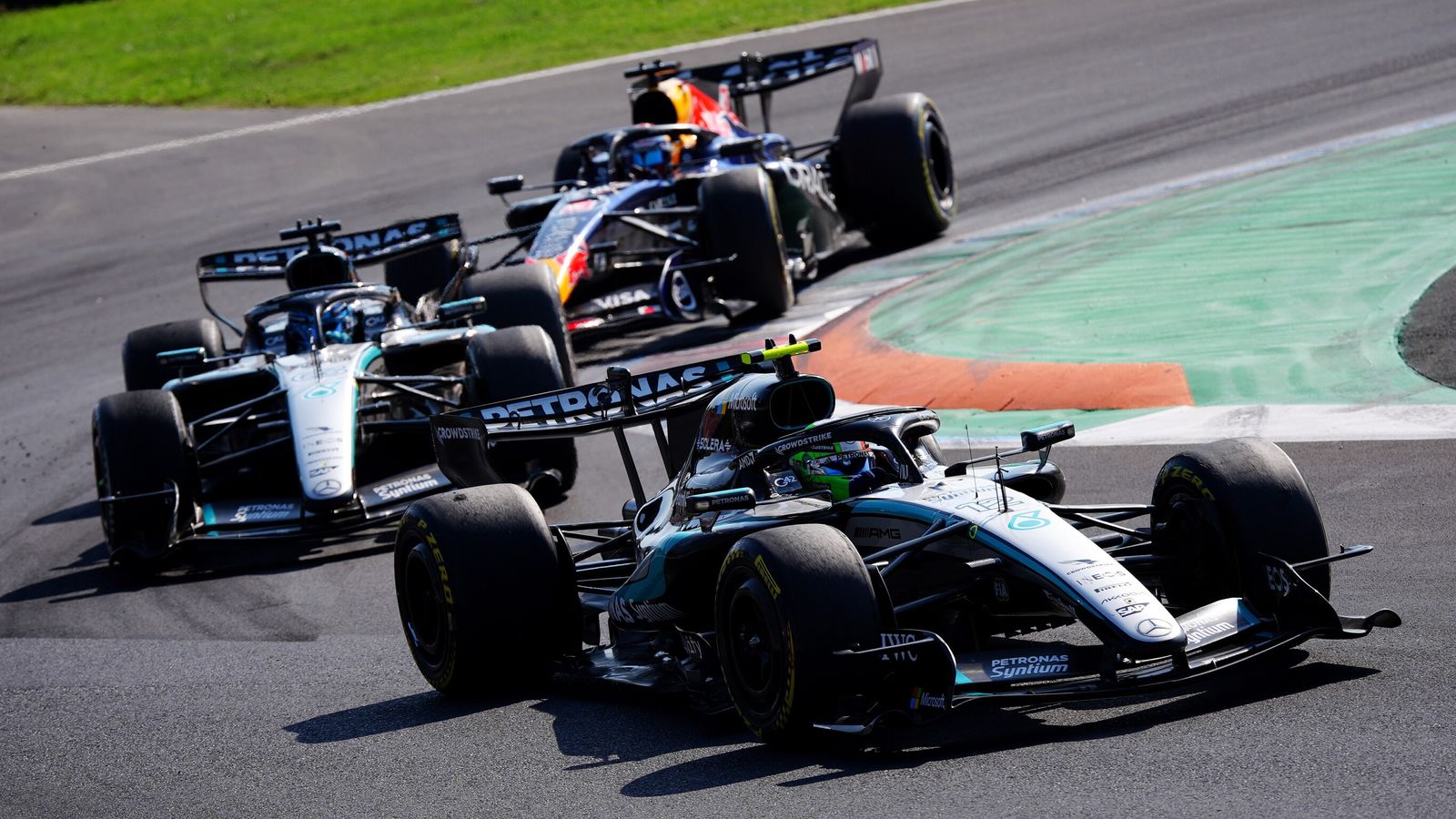
Verstappen Poised to Disrupt Mercedes Intrateam Battle
With eight rounds remaining in the 2026 Formula 1 season, the championship battle has narrowed into an intra-team contest between Mercedes drivers Kimi Antonelli and George Russell. However, a resurgent Red Bull Racing and four-time world champion Max Verstappen are positioned to disrupt the dynamic at the sharp end of the grid.
Antonelli holds a 66-point lead over Russell heading into this weekend's Bahrain Grand Prix, hosted at the Sepang International Circuit in Malaysia. While Antonelli aims to rebound from an uneven weekend in Baku, Mercedes is introducing a significant upgrade package. Yet the paddock's attention remains fixed on Verstappen, who has claimed seven podiums this season—five coming across the last six rounds—despite Red Bull operating as the fourth-fastest car on average pace.
Red Bull's Aerodynamic Gains Reshape the Front Row
Red Bull introduced its final major development package in Baku, featuring a redesigned floor body, altered sidepod geometry, and a re-profiled diffuser. These structural aero changes transformed the car's underbody load paths, providing stable platform control over high-speed braking zones and low-speed rotation.
The package immediately paid dividends: Verstappen finished less than two-tenths of a second behind Russell in Azerbaijan, while teammate Isack Hadjar crossed the line third, delivering Red Bull’s first double podium in over two years.
“On paper, Baku was the most favourable in terms of car characteristics,” said Red Bull team principal Laurent Mekies. “Equally, I think the performance we've shown in the race is giving us decent hope that we will get another couple of occasions before the end of the year.”
Echoes of the 2016 Championship Decider
The current dynamic carries strong parallels to the 2016 title run-in between Nico Rosberg and Lewis Hamilton. During those final rounds, a teenage Verstappen repeatedly inserted himself between the title contenders, executing aggressive overtakes and alternative strategies that forced championship leaders to manage their risk tolerance.
With nothing to lose in the drivers' standings, Verstappen is positioned to race with maximum aggression during standing starts and Safety Car restarts. Antonelli and Russell, conversely, must weigh every wheel-to-wheel engagement against points preservation.
The Road Ahead: Sepang, Altitude, and Tire Degradation
The Sepang International Circuit will serve as a critical benchmark for the revised Red Bull platform. The Malaysian layout’s sweeping, sustained-load corners aggressively shear surface rubber, heavily graining soft compounds and punishing any floor that loses aerodynamic balance in transition.
Following Sepang, upcoming stops at Mexico City—where high-altitude air density alters turbo and power unit efficiency—and the low-degradation street layout of Las Vegas present further opportunities for Red Bull to challenge for race victories. For Mercedes, managing Verstappen’s presence will be as critical as managing their own intrateam rivalry.

Quinn Santos
Quinn Santos covers Formula 1 with a reverent, forensic attention to the physical and acoustic life of the race. In reports, engine notes are not background noise but specific orchestral intervals moving through the grid, and every race devotes space to the degraded texture of tire compounds after a stint, read like worn material rather than performance data. Chassis geometry and floor aerodynamics are explained through architectural metaphor: load paths become load-bearing walls, floors become tensioned skins. Quinn avoids standard telemetry charts, instead reconstructing key overtakes through rhythmic, beat-heavy sentence structures that carry braking points and exits like percussion. A reader gets the feeling of the circuit as a built and sounding environment, not a sequence of lap times. Each race recap closes with an unprompted weather report comparing trackside humidity to the driver's sweat output, a small forensic reminder of how much the body and the air are part of the result.