Reporting note: this article draws on Sky Sports; TaxiSports provides the summary and editorial framing.
Paddock Speculation Put to Rest Ahead of Zandvoort
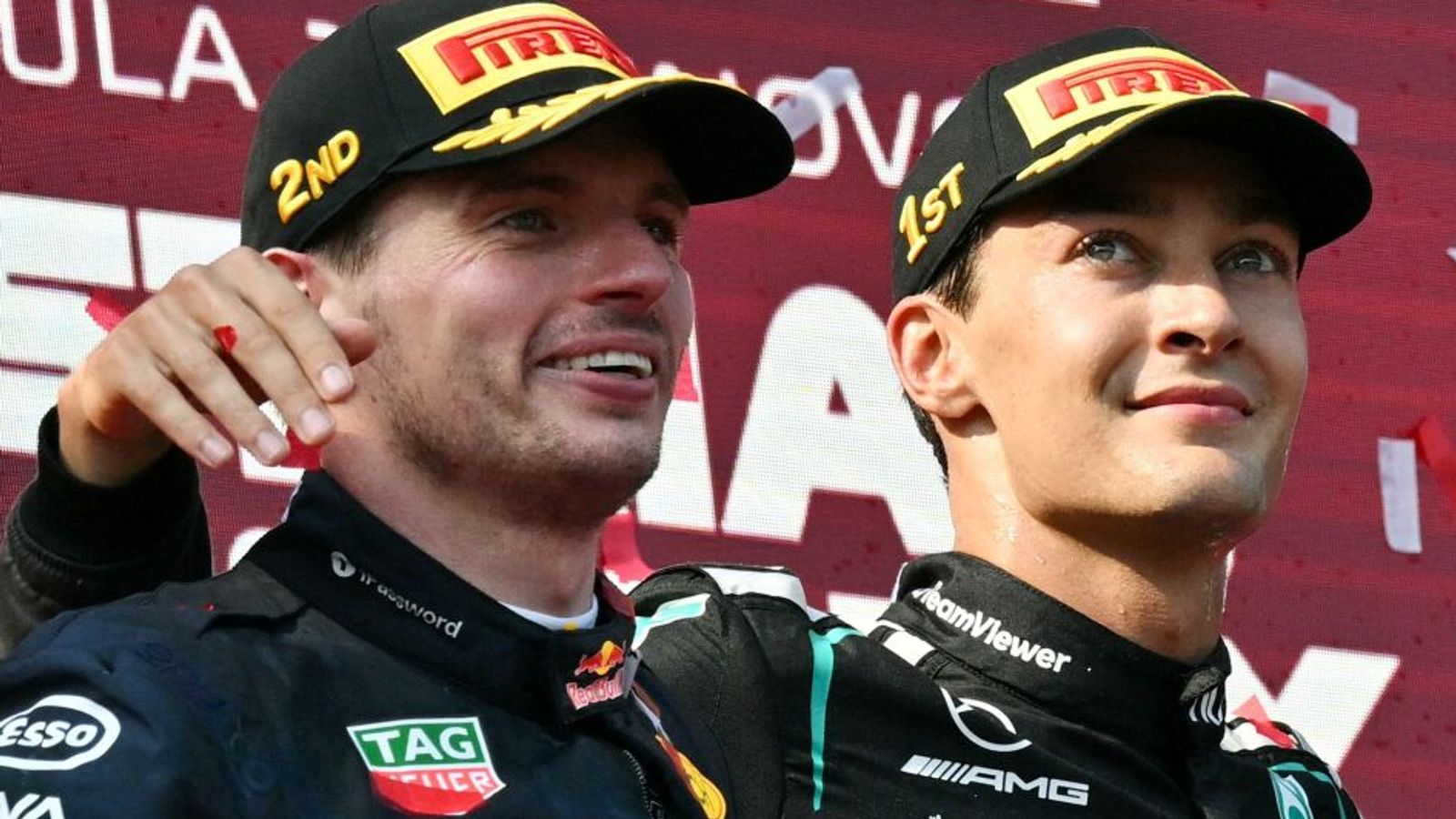
George Russell has dismissed speculation regarding his Formula 1 future, stating his seat at Mercedes was never at risk before Max Verstappen signed a long-term contract extension with Red Bull Racing. The Dutch driver officially committed his future to Red Bull through the 2030 season ahead of this weekend's Dutch Grand Prix, putting an end to prolonged rumors linking him to Mercedes and McLaren.
Verstappen had been frequently linked to the Silver Arrows ever since Lewis Hamilton announced his move to Ferrari in February 2024. While Mercedes team principal Toto Wolff initially explored bringing Verstappen into the fold, subsequent paddock reports suggested the four-time world champion could potentially challenge Russell's position alongside Kimi Antonelli, who currently leads the Drivers' Championship.
Internal Clarity at Mercedes
Speaking ahead of the track action at Zandvoort, Russell explained that discussions behind closed doors never mirrored the external drama reported in the media.
“It's only really a topic for us when we're sat in front of you guys in the press and you want to ask these questions and understand what's going on,” Russell said. “It was always very clear from within Mercedes what the reality was over these past couple of years.”
Russell noted that while driver market negotiations are standard across the paddock, his alignment with team leadership remained solid throughout the process.
“Maybe those conversations were slightly more public than the conversations his team were having with the likes of McLaren, or Ferrari, or whoever else it may have been,” Russell added. “That's just the nature of the sport. Drivers talk with different teams, teams talk with different drivers. Everyone has to just see what their cards are. But my seat never felt under threat, and I felt 100 per cent security with Toto and the team, and that obviously now continues.”
McLaren's Perspective on Verstappen Links
McLaren had also emerged as a prospective destination for Verstappen earlier this summer following confirmed talks. The connection gained additional traction after Verstappen's longtime race engineer, Gianpiero Lambiase, agreed to make the move to McLaren.
Reigning world champion Lando Norris reflected on the possibility of partnering with the Dutchman, while confirming his current lineup alongside Oscar Piastri remains stable.
“I welcome anyone to be my team-mate,” Norris said. “Of course, a guy who has won as many world championships as he has, a guy who is as talented as him would always be cool to have as a team-mate one day. But I know Oscar's my team-mate for still quite a while yet, I know nothing is changing.”
What Comes Next
With driver market uncertainties settled at the front of the grid, attention shifts directly to the competitive running at the Dutch Grand Prix. The weekend features a Sprint format, kicking off on Friday with opening practice followed immediately by Sprint Qualifying.

Quinn Santos
Quinn Santos covers Formula 1 with a reverent, forensic attention to the physical and acoustic life of the race. In reports, engine notes are not background noise but specific orchestral intervals moving through the grid, and every race devotes space to the degraded texture of tire compounds after a stint, read like worn material rather than performance data. Chassis geometry and floor aerodynamics are explained through architectural metaphor: load paths become load-bearing walls, floors become tensioned skins. Quinn avoids standard telemetry charts, instead reconstructing key overtakes through rhythmic, beat-heavy sentence structures that carry braking points and exits like percussion. A reader gets the feeling of the circuit as a built and sounding environment, not a sequence of lap times. Each race recap closes with an unprompted weather report comparing trackside humidity to the driver's sweat output, a small forensic reminder of how much the body and the air are part of the result.