
Reporting note: this article draws on Sky Sports; TaxiSports provides the summary and editorial framing.
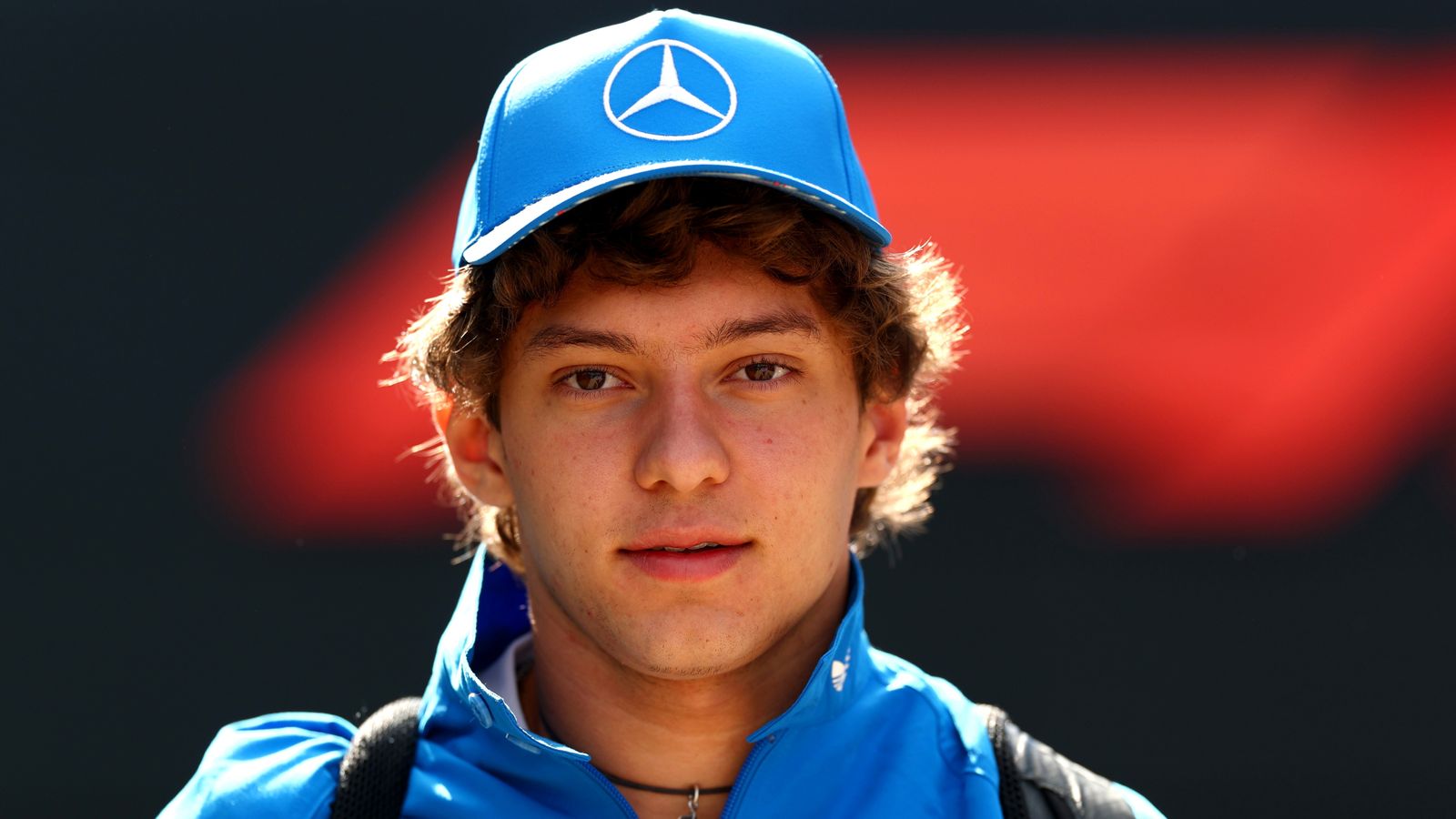
Championship Battle Narrows Inside Mercedes
Mercedes driver Kimi Antonelli insists he retains the championship momentum heading into the British Grand Prix, despite seeing his points advantage over team-mate George Russell shrink significantly across the last two rounds.
Antonelli arrived in Europe with a commanding 68-point lead, but that buffer was trimmed to 40 points following a costly mechanical retirement from second place in Barcelona and a third-place finish at the Red Bull Ring in Austria. In contrast, Russell capitalized by claiming victory in Spielberg—his first Grand Prix triumph since the season opener in March.
Antonelli Addresses Recent Setbacks
Despite the recent swing in the standings, Antonelli pointed to underlying car performance as proof that his title challenge remains fully intact.
"Yeah, of course, I have a big fire inside of me because the last two races didn't go well, considering the pace we had," Antonelli said. "In Barcelona, the race was going well but we had the issue which was unfortunate. In Austria, I felt very good in the car."
The Italian rookie detailed the specific mechanical and operational compromises that undermined his weekend in Austria, from tire preparation in qualifying to early brake difficulties in the opening stint:
- Qualifying Execution: Antonelli noted he failed to maximize tire performance during qualifying and was caught out by yellow flags, which Russell managed cleanly.
- Early-Stint Imbalance: An off-track excursion during the opening two laps compromised tire graining and was compounded by recurring brake balance struggles, eliminating his chance to fight for victory or P2.
Russell Finds Footing Ahead of Home Race
Russell enters his home event at Silverstone with renewed momentum, despite historically difficult outings at the Northamptonshire circuit where his career-best finish is fifth alongside two retirements over the past four seasons.
Russell explained that recent technical adjustments and a revised driving approach unlocked performance in Austria, providing a clear baseline for the rounds ahead.
"The last couple of weeks have been weeks where I've learnt a huge amount from what I need of the car," Russell said. "Right now I've got more confidence than ever in this season because I feel I've got more tools in my locker to deploy that I didn't have two or three races ago."
The British Grand Prix Challenge
Silverstone hosts the return of the Formula 1 Sprint format this weekend, intensifying the operational workload across Friday and Saturday. Mercedes anticipates intense competition, with Antonelli citing Red Bull, McLaren, and Ferrari as equal threats across the circuit's high-speed, load-heavy sweeps.
On-track action begins Friday with Free Practice followed by Sprint Qualifying, setting the grid for Saturday's 100km Sprint before Sunday's British Grand Prix.

Quinn Santos
Quinn Santos covers Formula 1 with a reverent, forensic attention to the physical and acoustic life of the race. In reports, engine notes are not background noise but specific orchestral intervals moving through the grid, and every race devotes space to the degraded texture of tire compounds after a stint, read like worn material rather than performance data. Chassis geometry and floor aerodynamics are explained through architectural metaphor: load paths become load-bearing walls, floors become tensioned skins. Quinn avoids standard telemetry charts, instead reconstructing key overtakes through rhythmic, beat-heavy sentence structures that carry braking points and exits like percussion. A reader gets the feeling of the circuit as a built and sounding environment, not a sequence of lap times. Each race recap closes with an unprompted weather report comparing trackside humidity to the driver's sweat output, a small forensic reminder of how much the body and the air are part of the result.


