
Reporting note: this article draws on Sky Sports; TaxiSports provides the summary and editorial framing.
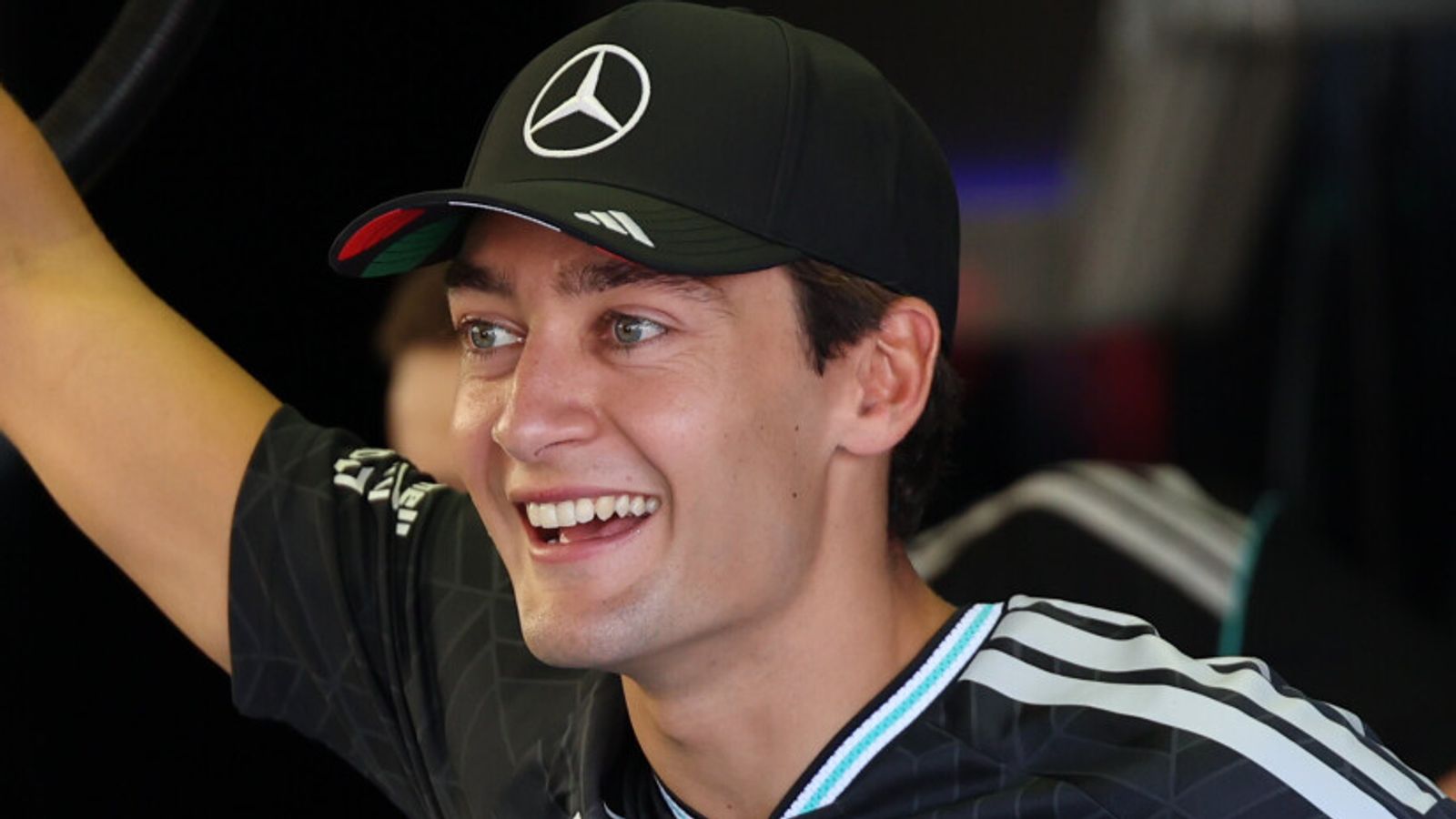
Mercedes Coordinates Qualifying Strategy Ahead of Grid Penalties
World championship leader Kimi Antonelli will start the Italian Grand Prix from the back of the grid after Mercedes triggered engine penalties by exceeding power-unit component limits on his car. With his own grid position compromised, the Italian driver confirmed he is prepared to offer slipstream assistance during qualifying to help team-mate George Russell fight for pole position at Autodromo Nazionale Monza.
Antonelli enters his home event holding a 59-point advantage over both Russell and Ferrari's Lewis Hamilton, with McLaren's Lando Norris trailing by 83 points. Because the penalty locks Antonelli into a rear-of-the-grid start regardless of Saturday's result, Mercedes plans to use the sister car to punch a hole through the long, low-drag straights of Monza, deploying Antonelli as a dynamic aerodynamic shield to lower drag down the Rettifilo and Curva Grande.
“It has been discussed with the team, and, yes, we have agreed on a few things,” Antonelli said. “So let's see how the session develops. But if the team will ask me to do so, I will do it. Of course, I'm starting at the back. So, if I could do anything to help the team, I will do it.”
Title Stakes and Mercedes Intra-Team Dynamic
Russell enters the weekend with an opportunity to trim the 59-point championship deficit, though he emphasized that his personal preparation remains unchanged. Russell is also slated to take an engine penalty later in the season, with the Baku City Circuit in Azerbaijan viewed as a potential target venue.
Russell praised the collaboration within the garage, framing the tow strategy as standard operational procedure under team principal Toto Wolff:
- Shared Academy Roots: Both Antonelli and Russell graduated through the Mercedes junior pipeline, which Russell cited as key to their collaborative approach.
- Upcoming Penalty Rotation: Russell confirmed he will serve a grid drop at a future round, creating an anticipated reciprocal scenario later in the campaign.
- Championship Approach: Despite Antonelli's compromised weekend, Russell maintained that his driving execution remains identical whether battling a rookie or a multi-time champion.
Four-Way Battle Expected on Monza's Low-Downforce Floor
While Mercedes continues to lead both standings, their early-season performance edge has narrowed, with McLaren securing victories in the last two rounds. Monza demands extreme efficiency from the floor edges and low-drag wing configurations, shifting the aerodynamic load paths away from high-downforce cornering toward straight-line efficiency.
Russell acknowledged that the competitive order among the top four teams remains razor-thin heading into the weekend. McLaren arrives with recent race-winning momentum, Ferrari introduces new performance upgrades at their home circuit, and Red Bull possesses strong power-unit output down Monza's high-speed sections.
Track action begins Friday with Practice 1 and Practice 2, followed by Saturday qualifying where Mercedes will attempt to execute their tow strategy before Sunday's 53-lap Grand Prix.

Quinn Santos
Quinn Santos covers Formula 1 with a reverent, forensic attention to the physical and acoustic life of the race. In reports, engine notes are not background noise but specific orchestral intervals moving through the grid, and every race devotes space to the degraded texture of tire compounds after a stint, read like worn material rather than performance data. Chassis geometry and floor aerodynamics are explained through architectural metaphor: load paths become load-bearing walls, floors become tensioned skins. Quinn avoids standard telemetry charts, instead reconstructing key overtakes through rhythmic, beat-heavy sentence structures that carry braking points and exits like percussion. A reader gets the feeling of the circuit as a built and sounding environment, not a sequence of lap times. Each race recap closes with an unprompted weather report comparing trackside humidity to the driver's sweat output, a small forensic reminder of how much the body and the air are part of the result.


