Reporting note: this article draws on Sky Sports; TaxiSports provides the summary and editorial framing.
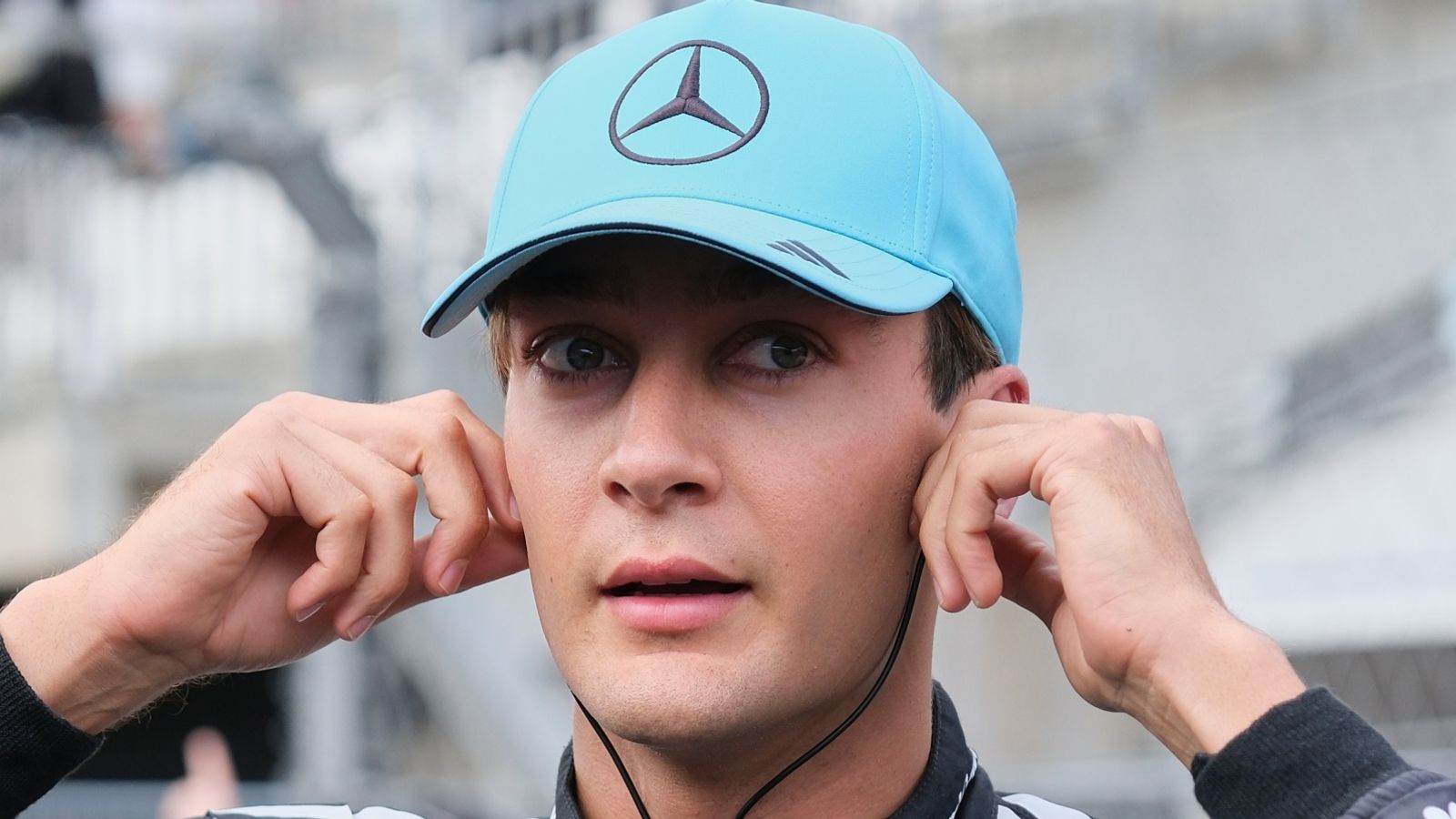
Grid Drop Looming for Russell
Mercedes has confirmed that George Russell will incur a grid penalty later this season after exceeding his annual power unit allocation. The British driver joins teammate and championship leader Kimi Antonelli in requiring additional engine components beyond the permitted four units for the campaign.
While Antonelli is set to serve his penalty and start from the rear of the field at the upcoming Italian Grand Prix at Monza, Mercedes management has yet to lock in the specific round where Russell will take his demotion.
The Silver Arrows have grappled with reliability setbacks across several events, including a retirement for Russell in Canada, an engine failure for Antonelli in Barcelona, and a qualifying stoppage for Russell in Hungary. On a grid where power units are strained across high-load circuits, managing structural wear and internal combustion mileage has forced the team into taking tactical penalties.
Managing Mileage and Championship Margins
Mercedes deputy team principal Bradley Lord noted that the team must carefully weigh component fatigue against track position.
“We have not finalised where George will take his penalty, but both drivers will be affected,” Lord stated on the Silver Arrows Radio Show. “It is a constant trade-off between the risk of running high-mileage components and the points cost of taking a grid penalty and recovering through the field.”
Antonelli currently holds a 59-point lead over both Russell and Lewis Hamilton in the Drivers' Championship with 11 scheduled rounds remaining. McLaren's Lando Norris sits 83 points adrift of Antonelli following back-to-back victories, positioning the upcoming rounds as crucial tests for Mercedes’ defensive buffer.
Mercedes trackside engineering director Andrew Shovlin confirmed that the team will evaluate hardware condition race-by-race before choosing Russell's penalty venue, noting that continuous inspection across works and customer units dictates whether a power unit can safely endure a sixth or seventh weekend.
Budget Cap Restraints and Development Pace
Alongside power unit penalties, Mercedes is pacing its aerodynamic and chassis updates under the strictures of the Formula 1 cost cap. Official FIA declaration sheets show Mercedes has introduced 24 new components this season, trailing Red Bull (37), McLaren (38), and Ferrari (40).
Team principal Toto Wolff previously indicated that financial constraints prevent the team from matching rivals' development cadence in every cycle. Lord explained that manufacturing updates—such as laying up a revised floor skin versus maintaining stock of current specifications—requires balancing factory headcount, spare parts, and production timing.
With long-term regulations shifting focus toward subsequent designs, Shovlin added that Mercedes' current points cushion allows them to avoid premature development spending, even as competitors introduce more frequent aerodynamic steps.
The season resumes with the Italian Grand Prix at Monza from September 4–6, where ambient humidity and track temperatures will demand supreme physical endurance from the field as drivers manage rapid fluid loss inside high-temperature cockpits.

Quinn Santos
Quinn Santos covers Formula 1 with a reverent, forensic attention to the physical and acoustic life of the race. In reports, engine notes are not background noise but specific orchestral intervals moving through the grid, and every race devotes space to the degraded texture of tire compounds after a stint, read like worn material rather than performance data. Chassis geometry and floor aerodynamics are explained through architectural metaphor: load paths become load-bearing walls, floors become tensioned skins. Quinn avoids standard telemetry charts, instead reconstructing key overtakes through rhythmic, beat-heavy sentence structures that carry braking points and exits like percussion. A reader gets the feeling of the circuit as a built and sounding environment, not a sequence of lap times. Each race recap closes with an unprompted weather report comparing trackside humidity to the driver's sweat output, a small forensic reminder of how much the body and the air are part of the result.