Reporting note: this article draws on Sky Sports; TaxiSports provides the summary and editorial framing.
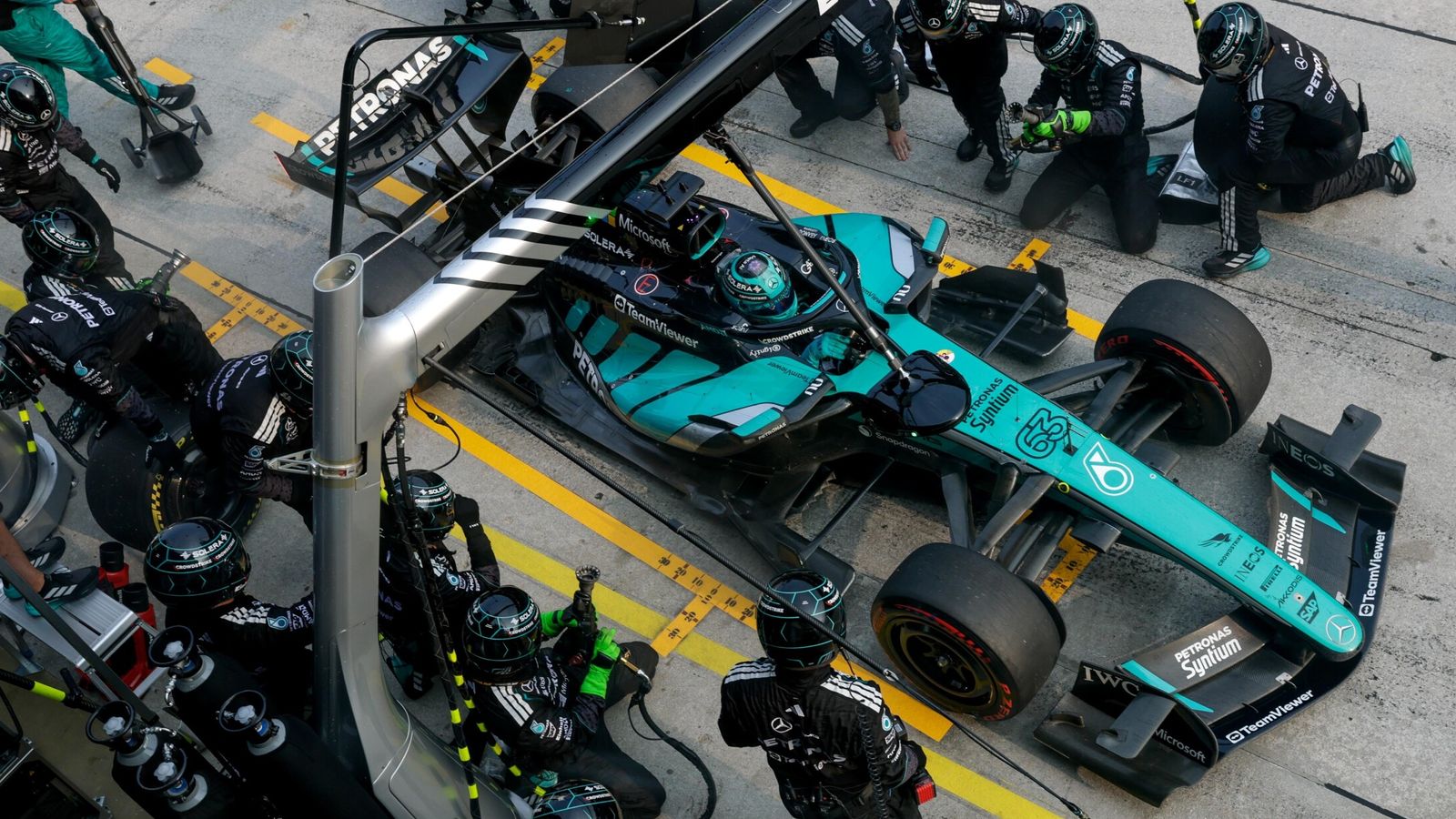
Grid Penalty Drops Russell to the Rear in Marina Bay
George Russell is set to start Sunday's Singapore Grand Prix from the back of the grid after Mercedes elected to fit a new power unit following his late-race failure at the Bahrain Grand Prix in Malaysia. The change breaches his allocated limit of four power units for the season, triggering an automatic grid demotion.
Because Marina Bay hosts a Sprint weekend, the grid penalty will apply solely to Sunday’s full Grand Prix, leaving Russell free to contest Saturday’s standalone Sprint from wherever he qualifies during Friday's Sprint Qualifying session.
Championship Blow and Accelerated Upgrades
The mechanical retirement in Malaysia delivered a heavy blow to Russell’s title campaign. While Russell was forced out from third place in the closing stages, his Mercedes teammate Kimi Antonelli finished second, widening the gap at the top of the Drivers' Championship to 84 points with seven rounds remaining.
Russell had originally been slated to receive a fresh power unit featuring an upgrade at the United States Grand Prix later this month under the FIA's Additional Development and Upgrade Opportunities (ADUO) framework. Mercedes has now moved to fast-track that updated unit for Singapore to absorb the unavoidable engine penalty in a single event rather than taking multiple hits later in the year.
Investigating Mechanical Breakdown and Handling Imbalances
The failure followed a difficult weekend for Mercedes, where an extensive aerodynamic update failed to match the race-winning pace of Red Bull's Max Verstappen. Team Principal Toto Wolff labeled the weekend their worst of the campaign, citing Russell's costly DNF.
Mercedes deputy team principal Bradley Lord confirmed that factory inspections are underway to pinpoint the precise mechanical fault. Beyond the failure itself, the team spent the weekend wrestling with aerodynamic platform instability and tire temperature management.
"Our investigation so far, we've got the car back, we've been able to do a first inspection, it's clearly a mechanical failure on the power unit side," Lord explained in the team's debrief. "The combination potentially of updates, track temperature and track surface caused an interaction and a set of behaviours that meant the car was not in its usual happy state, that the drivers were having to turn the car on the throttle in the slow corners."
The Task Ahead at Marina Bay
Carving through the field in Singapore presents a steep tactical challenge. While Antonelli successfully mounted a recovery drive from 19th to victory at Monza after his own engine penalty earlier this season, the tight, concrete-lined corridors of Marina Bay offer far fewer overtaking opportunities than the high-speed straights of Italy.
Mercedes heads into Friday's sole practice session focused on stabilizing rear-axle behavior and confirming the integrity of the fast-tracked power unit before qualifying begins.

Quinn Santos
Quinn Santos covers Formula 1 with a reverent, forensic attention to the physical and acoustic life of the race. In reports, engine notes are not background noise but specific orchestral intervals moving through the grid, and every race devotes space to the degraded texture of tire compounds after a stint, read like worn material rather than performance data. Chassis geometry and floor aerodynamics are explained through architectural metaphor: load paths become load-bearing walls, floors become tensioned skins. Quinn avoids standard telemetry charts, instead reconstructing key overtakes through rhythmic, beat-heavy sentence structures that carry braking points and exits like percussion. A reader gets the feeling of the circuit as a built and sounding environment, not a sequence of lap times. Each race recap closes with an unprompted weather report comparing trackside humidity to the driver's sweat output, a small forensic reminder of how much the body and the air are part of the result.