Reporting note: this article draws on Sky Sports; TaxiSports provides the summary and editorial framing.
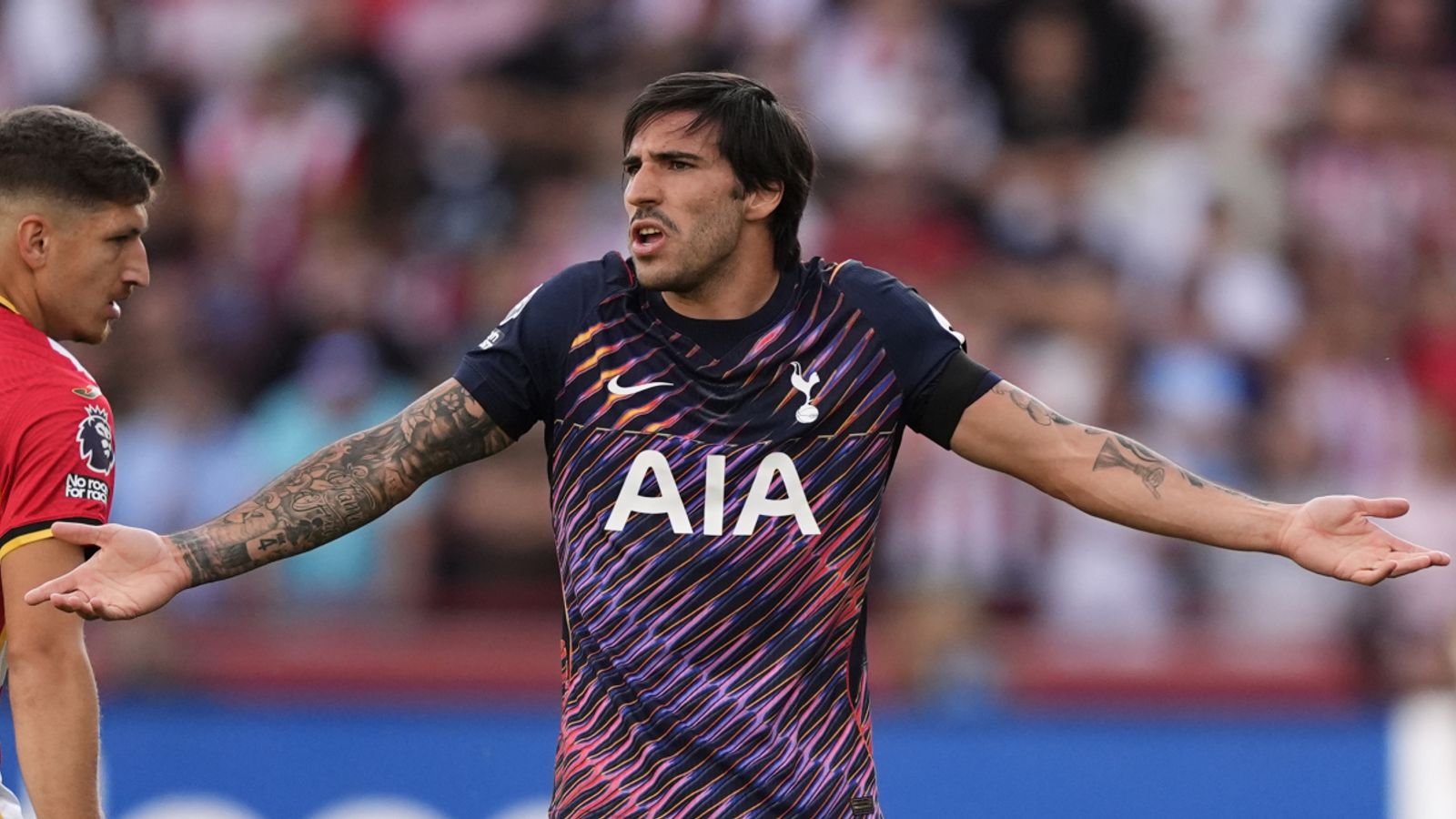
De Zerbi Concedes Cohesion Deficit After 3-0 Opening Loss
In the aftermath of a chastening 3-0 defeat against Brentford in their Premier League opener, Tottenham Hotspur head coach Roberto De Zerbi conceded that his newly assembled squad has yet to form a cohesive unit. Despite an aggressive summer overhaul approaching £300 million in expenditure, Tottenham displayed familiar vulnerabilities at the Gtech Community Stadium, where the lack of synchronized pressing and structural balance echoed the struggles of back-to-back 17th-place Premier League finishes.
Reconstructed Lineup and Early Structural Fracture
Tottenham fielded five summer arrivals in the starting XI, resulting in a defensive line entirely altered from the previous campaign. With 20-year-old Archie Gray stepping in as Tottenham's youngest-ever competitive captain at right-back alongside Jan Paul van Hecke, Marcos Senesi, and Andy Robertson, the defensive unit struggled to withstand Brentford's direct aerial pressure and transitions.
The central midfield pairing of 20-year-old Lucas Bergvall and Sandro Tonali also faltered under Brentford’s physical duels. A first-half turnover from Bergvall allowed Mathias Jensen space to test the goalkeeper, leading directly to Vitaly Janelt's rebound strike after Keane Lewis-Potter's opener. De Zerbi substituted Bergvall at half-time for Rodrigo Bentancur, later admitting that while the Swedish youth international was selected due to Bentancur’s delayed pre-season arrival, the physical demands of the contest exposed the young midfielder.
"We are not a team yet, for a lot of reasons," De Zerbi stated. "You can't become a team for the transfer market window—the player on paper, no. You become a team when players find the connection between them, the spirit, and the style of play. We lost too many duels, we made too many mistakes in the timing of our high pressure, and we arrived second to every loose ball."
Table Implications and Immediate Response
Pundit Jamie Redknapp characterized Tottenham as a "team of strangers," questioning both the partnership between Van Hecke and Senesi and the deployment of Conor Gallagher in the advanced number ten role. Having avoided relegation on the final day of the previous campaign, Tottenham face immediate pressure to stabilize their position in the bottom half of the Premier League table before early-season deficits widen.
With ongoing transfer negotiations advancing for Manchester City winger Savinho and forward Omar Marmoush, De Zerbi faces the tactical challenge of integrating further additions while navigating a tight turnaround. Tottenham return to action on Wednesday against Championship side Charlton Athletic in the Carabao Cup second round before hosting Newcastle United in the Premier League on Saturday.
Across the penalty area where Tottenham’s back line spent ninety minutes retreating under pressure, the gouged, water-slicked turf remained scarred with deep stud marks, bearing the physical weight of an afternoon spent entirely outfought.

Avery Diaz
Avery Diaz writes football match recaps that unfold like slow processions across the pitch. In long, winding sentences, Avery traces the geometry of a back line as if it were the vaulted architecture of a choir, letting the wet thud of boots and the terraces' rhythmic intake of breath carry the story. The game is treated with reverence, and player exhaustion is rendered through trembling calves, sagging shoulders, and the delayed rise from a sliding tackle rather than through numbers. Each piece attends to the tactile sounds that accumulate over ninety minutes: studs slicing turf, a goalkeeper's shout swallowed by wind, the heavy silence after a chance drifts wide. Avery closes every match recap with a single sentence on the state of the turf, noting how its scars, sheen, or loosened seams mirrored the mood of the losing side. What a reader gets is not a verdict but a lingering sense of the match as a physical and emotional event, close enough to feel the damp air and the fatigue.