Reporting note: this article draws on Sky Sports; TaxiSports provides the summary and editorial framing.
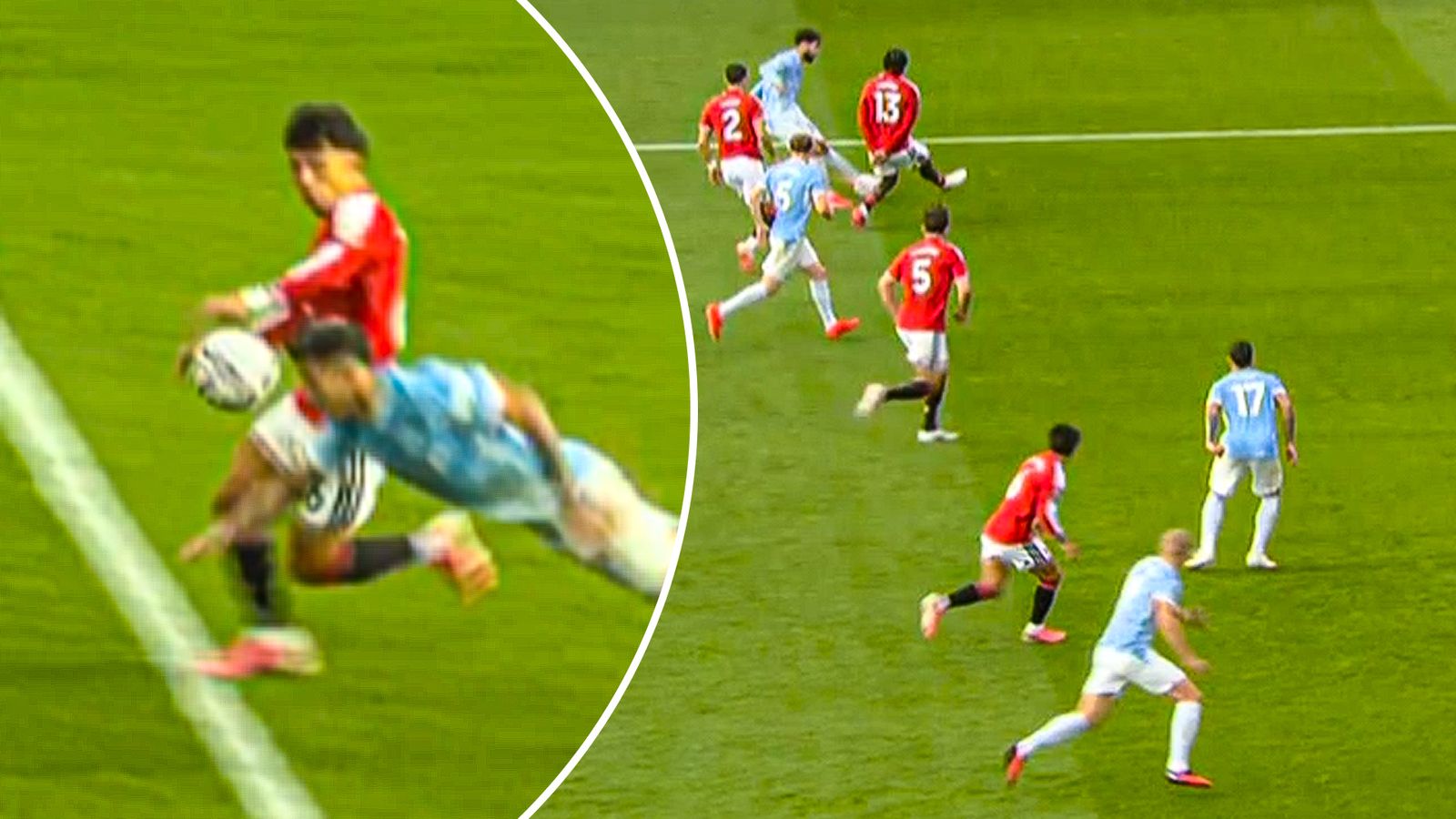
Controversial Winner Decides Fiery Manchester Derby
Manchester City claimed a fractious 1-0 victory over Manchester United at Old Trafford, but the decisive blow has been cast into immediate controversy after refereeing body Pro Ref admitted an "error of judgment" in awarding Erling Haaland’s 60th-minute winner.
In a contest shaped by heavy challenges and severe disciplinary friction—including a red card for City playmaker Phil Foden following a clash with Bruno Fernandes—the match turned irrevocably on a single disputed sequence in the penalty box. United had already struck the woodwork twice before City broke through with the game's lone goal.
The 60th-Minute Breakdown and VAR Intervention
The sequence developed rapidly across the damp Old Trafford turf. An initial on-field decision ruled Haaland offside as he arrived at the back post to convert. However, the Video Assistant Referee (VAR) intervened, determining that United defender Patrick Dorgu had kept the Norwegian striker onside, prompting the referee to overturn the call and award the goal.
The contention centered on City midfielder Enzo Fernandez. Positioned in an offside location between the delivery and the goalmouth, Fernandez lunged toward the ball. While replays confirmed Fernandez made no physical contact with the delivery, his clear attempt to play the ball disrupted the defensive recovery line of United center-back Lisandro Martinez, dragging Martinez's focus just before Haaland struck.
Pro Ref Admission of Error
Hours after the final whistle, Pro Ref—English football's refereeing body formerly known as PGMO and led by Howard Webb—issued a formal statement confirming direct contact had been made with Manchester United to acknowledge a breakdown in process.
"Following the incident in the 60th minute of Sunday's Premier League fixture between Manchester United and Manchester City at Old Trafford, we can provide clarification regarding Erling Haaland's awarded goal... In the same attack, it was established that Enzo Fernandez did not play the ball and therefore that makes any offside offence subjective, however, on this occasion, the VAR did not recognise the likely impact of his position and should have recommended an on-field review. Contact has been made with Manchester United this evening to acknowledge what we deem is an error of judgement. A review of the incident will take place."
Tactical and Disciplinary Fallout
The admission compounds United's frustration after holding a synchronized defensive line and creating prime scoring opportunities against a ten-man City side. For Pep Guardiola's squad, the three points stand intact, but the fallout over the subjectivity of offside interference and on-field review thresholds will dominate the post-derby postmortem.

Blake Torres
Blake Torres writes football as a visceral trial, not a pastime. His prose is steeped in the game’s raw materials: the sting of wintergreen heat, the squelch of a boot in mud, the metallic taste of exhaustion. Tactical analysis is never a detached diagram; it’s a jagged sprint through a sudden pressing trap, the panicked shift of a backline caught wrong-footed in a sudden glare. Torres treats the final whistle as a moral hinge—victory and defeat land as weight, redistributing something unspoken among players and stands. Post-match soundbites are absent; instead, he reads the slope of a shoulder, the tremor in a hand, the silence that follows a missed chance. What a reader receives is not a summary but a sensory immersion, a match felt in the sinuses and the ligaments. The narrative arcs toward no neat resolution, only the stadium itself as the lights die: a scarred penalty spot, a wind-snapped corner flag, the slow drip of rain from a gutter onto empty seats.