Reporting note: this article draws on Sky Sports; TaxiSports provides the summary and editorial framing.
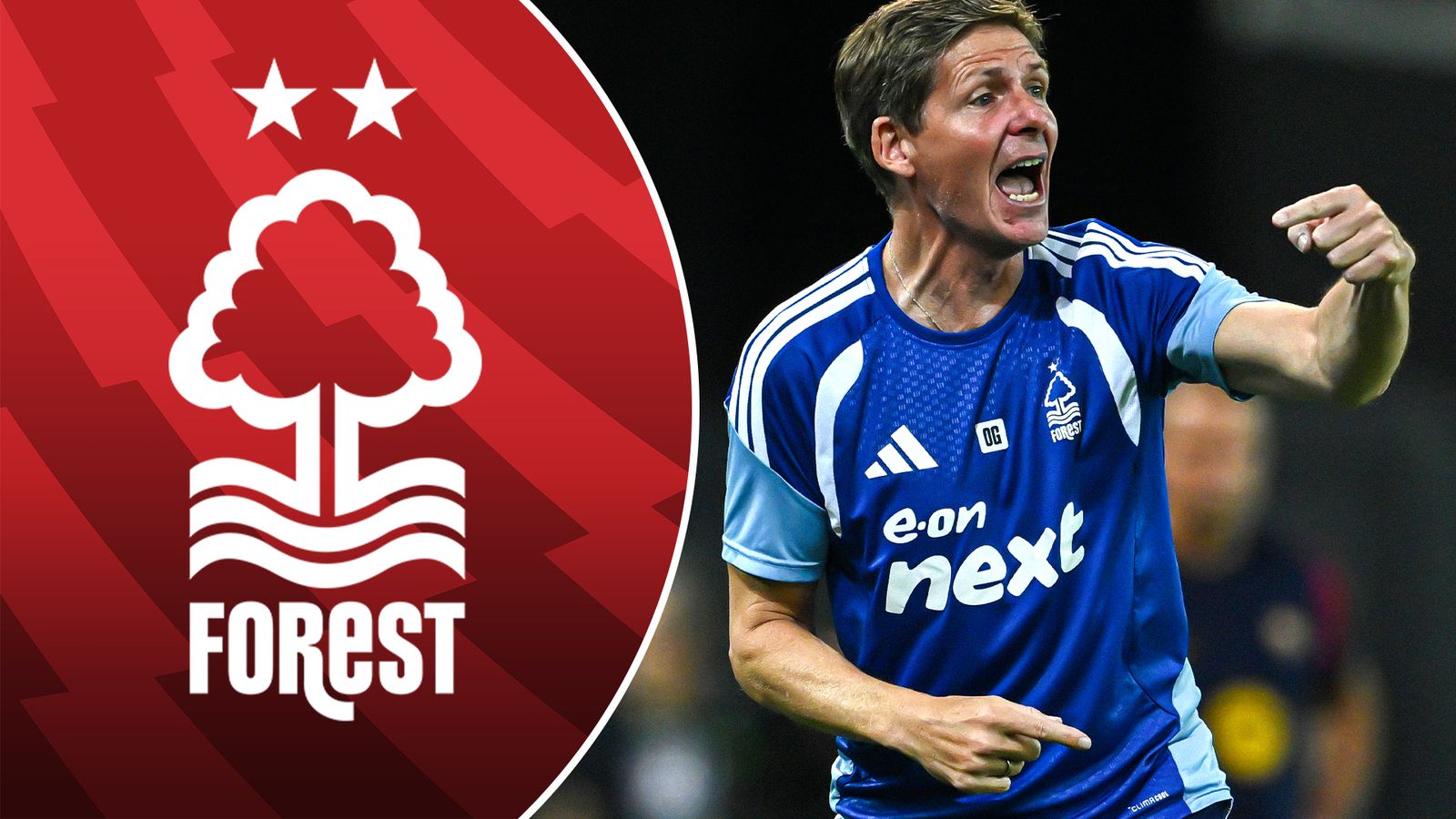
A Tactical Reset at the City Ground
Nottingham Forest enter the new Premier League campaign under the guidance of Oliver Glasner, tasked with turning volatile potential into sustained top-flight stability. Following a chaotic 12-month stretch that saw four different managers cycle through the dugout, owner Evangelos Marinakis turned to the 51-year-old Austrian tactician to halt the churn and establish a long-term structural identity.
Glasner arrives with an established pedigree for transforming cup-fighting outsiders into disciplined winners. After guiding Eintracht Frankfurt to a UEFA Europa League title, he oversaw a two-year stint at Crystal Palace that yielded three trophies. At the City Ground, however, the primary objective is far more foundational: halting a sharp domestic slide after Forest finished 16th last term.
The Numbers Behind Forest’s Drop
Forest endured a grueling 56-game campaign last season, balancing their first European adventure in three decades with domestic survival. While they mounted a deep run to the Europa League semi-finals, their league form deteriorated significantly:
- Point Regression: Forest suffered a 21-point drop between the 2024-25 and 2025-26 seasons, trailing only Liverpool (-24) and relegated Wolves (-22) for the sharpest domestic decline.
- Managerial Turnover: Four different head coaches held the reins across the previous 12 months.
- Defensive Rebuild: Sporting CP centre-back Ousmane Diomande represents the club’s headline defensive addition, addressing structural vulnerabilities in transition.
Structural Demands and Tactical Alignment
Glasner’s system prioritizes aggressive defensive compression, high-intensity duels, and set-piece efficiency rather than sterile possession dominance. Forest have spent pre-season drilling into tactical flexibility, toggling between back-three and back-four shapes to suit match-specific pressing triggers.
Key playmaker Morgan Gibbs-White has been retained despite persistent interest from rival clubs, giving Glasner an elite transitional outlet. Defensively, centre-back Nikola Milenkovic highlighted the manager’s meticulous focus on fine margins, emphasizing that collective discipline must replace individual lapses.
"Number one priority is getting stability into the club. Nobody wanted so many changes last season, but it happened. We need stability for everyone. And then we can talk about establishing in the top half of the table, but we have to be humble and go step-by-step."
— Oliver Glasner
What to Watch Next
Forest kick off their Premier League campaign this Saturday against Leeds. While Glasner continues to push the board for "one or two more" reinforcements before the transfer window closes, the opening fixture will provide an immediate examination of whether his disciplined baseline can withstand Premier League intensity under the City Ground floodlights.

Blake Torres
Blake Torres writes football as a visceral trial, not a pastime. His prose is steeped in the game’s raw materials: the sting of wintergreen heat, the squelch of a boot in mud, the metallic taste of exhaustion. Tactical analysis is never a detached diagram; it’s a jagged sprint through a sudden pressing trap, the panicked shift of a backline caught wrong-footed in a sudden glare. Torres treats the final whistle as a moral hinge—victory and defeat land as weight, redistributing something unspoken among players and stands. Post-match soundbites are absent; instead, he reads the slope of a shoulder, the tremor in a hand, the silence that follows a missed chance. What a reader receives is not a summary but a sensory immersion, a match felt in the sinuses and the ligaments. The narrative arcs toward no neat resolution, only the stadium itself as the lights die: a scarred penalty spot, a wind-snapped corner flag, the slow drip of rain from a gutter onto empty seats.