

Reporting note: this article draws on BBC Sport; TaxiSports provides the summary and editorial framing.
A Shift in National Sports Focus
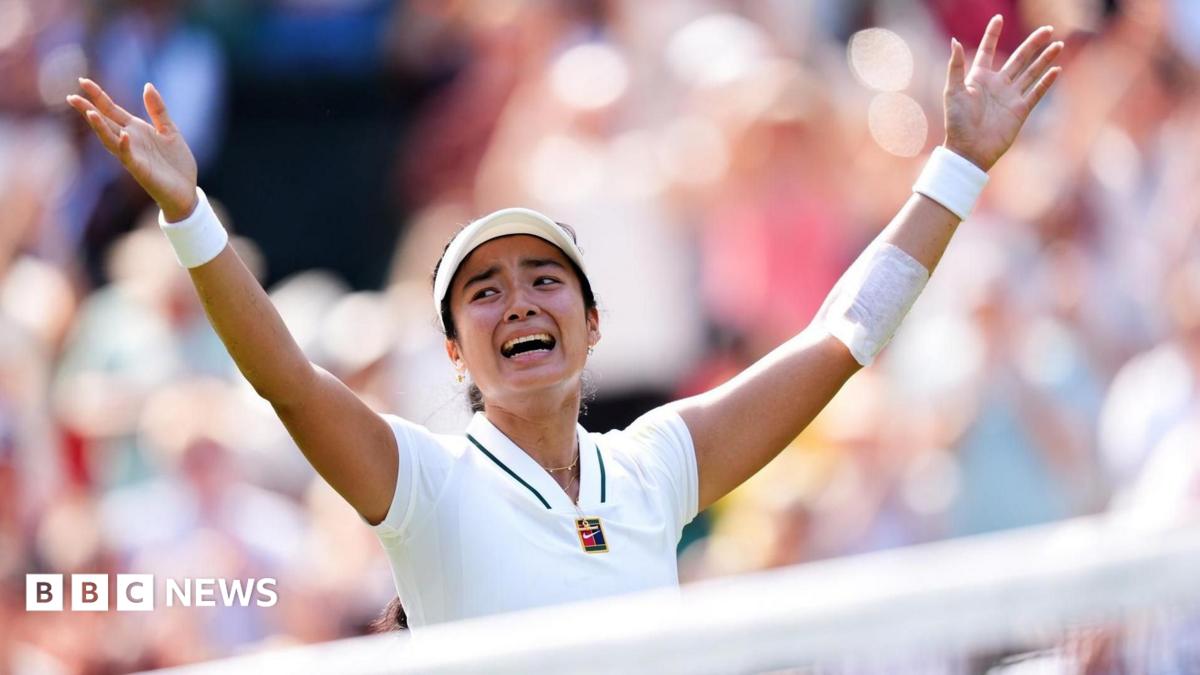
Alexandra Eala’s recent performance at Wimbledon—where she reached the fourth round and defeated defending champion Iga Swiatek—has catalyzed a measurable increase in tennis participation across the Philippines. Historically dominated by basketball, boxing, and beauty pageants, the nation’s sports landscape is experiencing a shift in interest toward the tennis court.
Infrastructure and Economic Barriers
Despite the surge in interest, the sport remains constrained by significant structural and economic hurdles. Tennis infrastructure in Manila is concentrated within affluent enclaves, with hourly court rental fees reaching 2,000 pesos ($32), a cost equivalent to a substantial portion of the local minimum wage. Urban planner Felino Palafox notes that the extreme population density of Metro Manila limits the development of new facilities, as existing public space is predominantly occupied by basketball courts.
The Grassroots Reality
The disparity between elite development and grassroots access remains stark. While Eala benefited from training at the Rafael Nadal Academy in Spain, young players like 14-year-old Maristella Torrecampo rely on crowdfunding and long-distance travel to compete in Manila. Coaches like Jovy Barce, who transitioned from a ball boy to a professional instructor, highlight that the path for underprivileged athletes requires extreme self-reliance, often involving the use of discarded equipment and self-taught mechanics.
Market Impact and Future Outlook
The "Eala effect" has created immediate supply-side pressures. Retailers report shortages in tennis apparel and rackets, while hobbyists note increased difficulty in securing court time. As Eala prepares for the upcoming US Open, the national focus remains on whether this momentum can translate into sustainable infrastructure development. For young athletes, the objective remains clear: navigating the high cost of entry to replicate the tactical efficiency and professional trajectory established by the country’s new sporting figurehead.

Reese Yamamoto
Reese Yamamoto reports on professional tennis with an eye to its structural logic. Match coverage begins with a calibrated reading of the environment: court surface temperature, ambient wind speed in meters per second, and the angle of shadow measured from the baseline. From this foundation, a rally is not a narrative but a sequence of sub-second decisions—serve trajectories mapped as vectors, footwork reduced to step-count efficiency, shot selection analyzed for geometric economy. Movement is tracked through court zones labeled like floor plans, each player’s positioning assessed as a problem of spatial management. Emotional narratives are absent; performance is documented in rates of acceleration, deceleration, and kinetic-chain integrity. The result is a clinical record where winners and errors become data points in a match’s underlying architecture. Velocity.


