

Reporting note: this article draws on BBC Sport; TaxiSports provides the summary and editorial framing.
Match Summary: Shapovalov Advances to Los Cabos Final
The Los Cabos Open semi-final concluded with Denis Shapovalov defeating Cameron Norrie 6-3, 5-7, 6-4. The match, played under standard outdoor hard-court conditions, lasted two hours and 39 minutes. Shapovalov, the defending champion, leveraged his baseline aggression to neutralize Norrie’s defensive positioning throughout the three-set encounter.
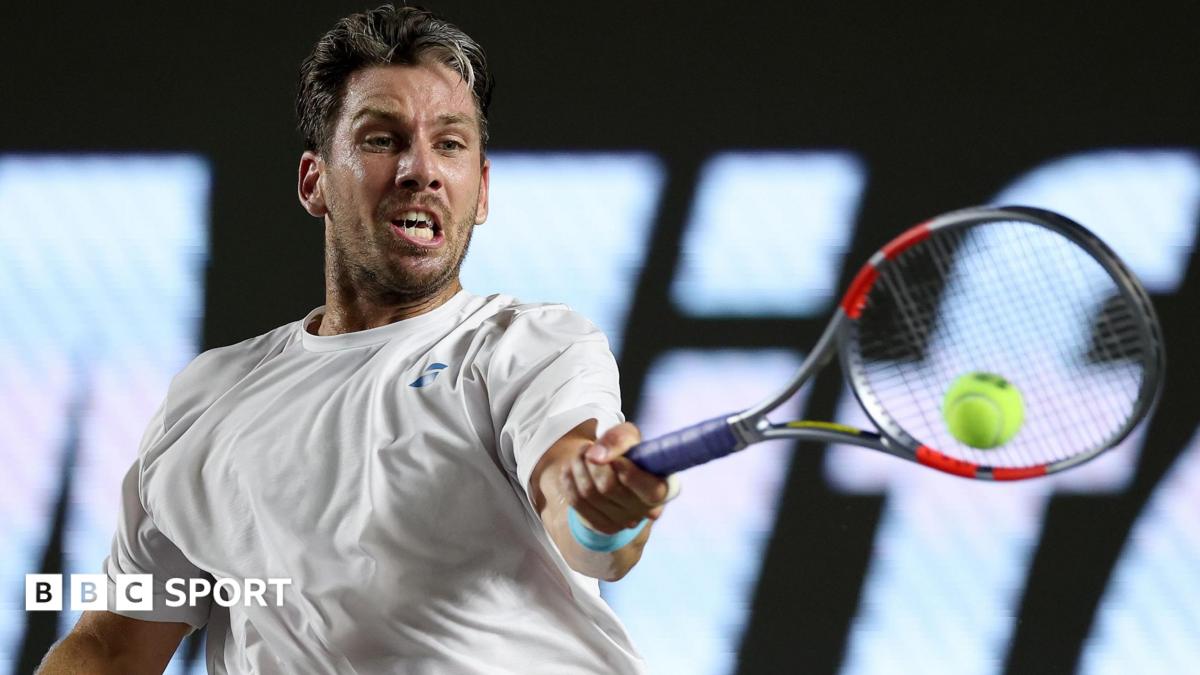
Tactical Breakdown
Shapovalov established an early advantage by breaking Norrie in the opening game of the first set, maintaining a high service percentage to close it 6-3. The second set saw Norrie recover from an early break, finding success by targeting the corners and securing a set point at 6-5 with a precise forehand volley that clipped the baseline. However, the momentum shifted back to the Canadian in the third set, where an immediate break of serve in the opening game provided the decisive margin.
Standout Performers and Next Fixtures
Shapovalov’s ability to dictate play with his forehand return proved the primary biomechanical advantage in the match. For Norrie, the semi-final appearance marked a return to competitive form following a recent six-match losing streak. Shapovalov will now face Arthur Gea in the final, following Gea's 7-6 (9-7), 6-3 victory over Coleman Wong.

Reese Yamamoto
Reese Yamamoto reports on professional tennis with an eye to its structural logic. Match coverage begins with a calibrated reading of the environment: court surface temperature, ambient wind speed in meters per second, and the angle of shadow measured from the baseline. From this foundation, a rally is not a narrative but a sequence of sub-second decisions—serve trajectories mapped as vectors, footwork reduced to step-count efficiency, shot selection analyzed for geometric economy. Movement is tracked through court zones labeled like floor plans, each player’s positioning assessed as a problem of spatial management. Emotional narratives are absent; performance is documented in rates of acceleration, deceleration, and kinetic-chain integrity. The result is a clinical record where winners and errors become data points in a match’s underlying architecture. Velocity.


