Reporting note: this article draws on Sky Sports; TaxiSports provides the summary and editorial framing.
Opening Practice at the Hungaroring
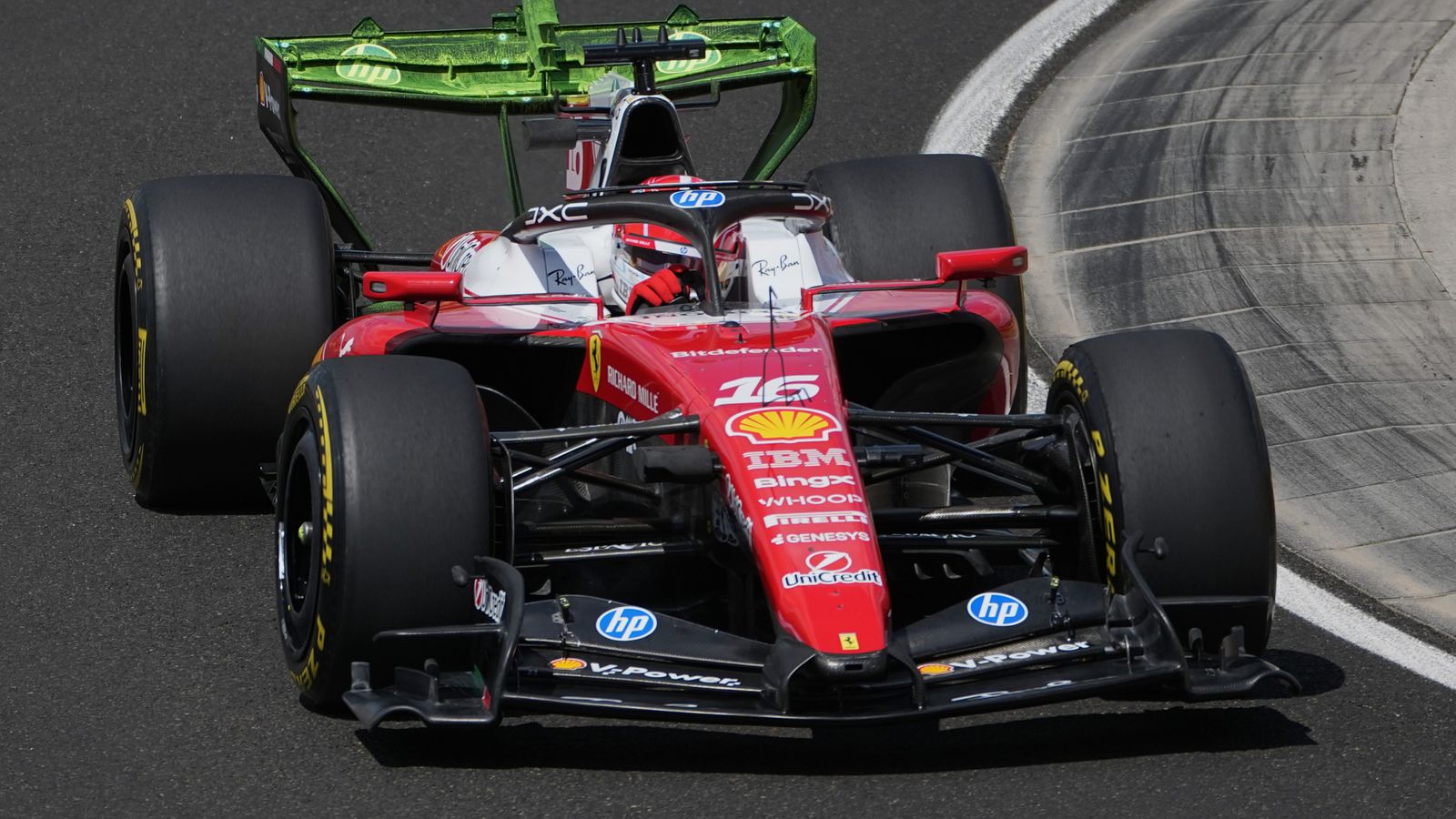
Charles Leclerc topped the timesheets in the opening practice session for the Hungarian Grand Prix, clocking a fastest lap of 1:19.075. Despite his pace, the Ferrari driver’s session was cut short by seven minutes when he was forced to stop at the pit lane exit, reporting a mechanical failure on his SF-26. Ferrari has yet to disclose the specific nature of the fault.
Aston Martin Upgrades Marred by Suspension Issue
Aston Martin entered the weekend with a significant aerodynamic package, featuring 16 distinct updates to the AMR26. However, the team's progress was hindered when Lance Stroll suffered a suspected rear-suspension failure. The incident caused a high-speed spin at the exit of Turn Two, ending the Canadian’s session after just 11 laps. While the car avoided barrier contact, the team faces a race against time to investigate the failure and repair the vehicle before the second practice session.
Steward Investigations and Driver Performance
The session saw notable activity from reserve and young drivers, with Fred Vesti taking the wheel for Mercedes and Isack Hadjar posting the fourth-fastest time for Red Bull. Meanwhile, Max Verstappen and Carlos Sainz are scheduled to meet with stewards to address allegations of erratic driving. The incidents involve a series of maneuvers between the two drivers at Turn 12, as well as a separate investigation into Sainz’s conduct regarding Alpine rookie Paul Aron at Turn Nine.
As teams analyze data, the focus shifts to the structural integrity of the floor assemblies and suspension geometry following the morning's failures. The track surface, having seen multiple drivers struggle with lock-ups at Turn One, remains a primary concern for tire degradation management heading into the afternoon.
Note: Trackside humidity levels were recorded at 62%, a marked contrast to the high-intensity thermal load observed in the cockpit, where driver perspiration rates remained elevated despite the relatively short duration of the stint.

Quinn Santos
Quinn Santos covers Formula 1 with a reverent, forensic attention to the physical and acoustic life of the race. In reports, engine notes are not background noise but specific orchestral intervals moving through the grid, and every race devotes space to the degraded texture of tire compounds after a stint, read like worn material rather than performance data. Chassis geometry and floor aerodynamics are explained through architectural metaphor: load paths become load-bearing walls, floors become tensioned skins. Quinn avoids standard telemetry charts, instead reconstructing key overtakes through rhythmic, beat-heavy sentence structures that carry braking points and exits like percussion. A reader gets the feeling of the circuit as a built and sounding environment, not a sequence of lap times. Each race recap closes with an unprompted weather report comparing trackside humidity to the driver's sweat output, a small forensic reminder of how much the body and the air are part of the result.