Reporting note: this article draws on Sky Sports; TaxiSports provides the summary and editorial framing.
Antonelli Controls Final Practice in Madrid
Championship leader Kimi Antonelli established the structural benchmark in Saturday’s final practice session at the newly constructed Madring circuit, logging a 1:32.797 flying lap to lead the Spanish Grand Prix timesheet. The Mercedes driver edged Ferrari’s Charles Leclerc by 0.166 seconds, asserting control in an FP3 session fragmented by severe red flags and rapid surface evolution.
McLaren maintained close proximity to the leading load paths, with Oscar Piastri securing third and Lando Norris claiming fourth following Friday’s limited running. Red Bull’s Max Verstappen concluded the hour in fifth, while Mercedes’ George Russell settled for sixth as drivers calibrated their downforce configurations against Madrid’s green, volatile track surface.
Hamilton Front-Wing Incident Triggers 45-Minute Halt
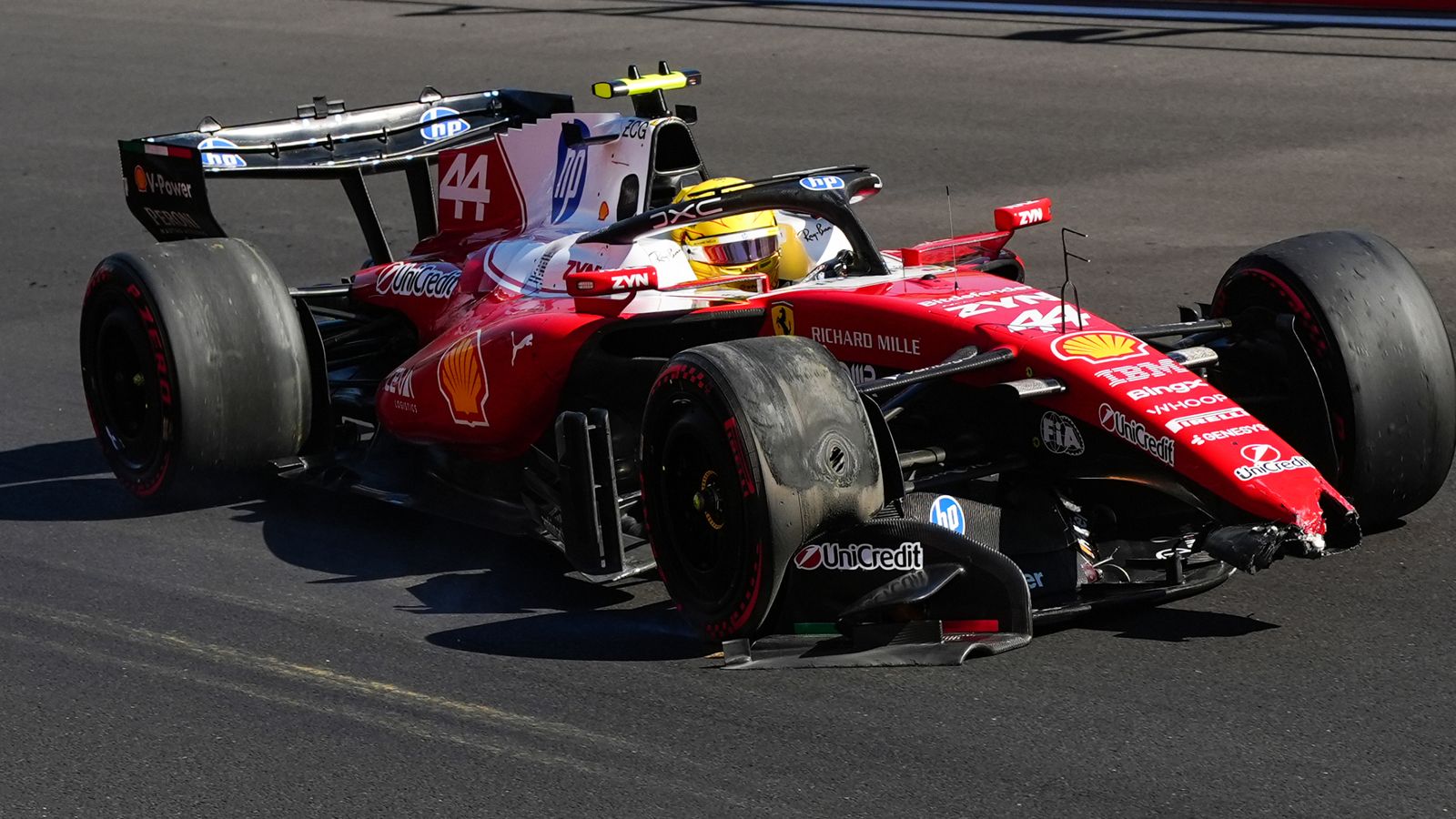
The primary disruption occurred 20 minutes into the session when Lewis Hamilton suffered a braking-threshold error into the final corner. The Ferrari driver locked up and impacted the barrier head-on at low velocity, dislodging the front wing assembly.
Rather than parking instantly, Hamilton reversed from the barrier with the carbon structure wedged beneath the front-right tyre. The seven-time champion attempted to limp back to the pit lane to preserve track data ahead of qualifying before ultimately shutting down the car in the middle sector. The barrier repair required a 45-minute red flag, with race control freezing the clock at 15 minutes remaining to allow teams essential data collection.
“Any young driver that is watching this right now, you don’t do that. You just don’t do that,” said Sky Sports F1 analyst Anthony Davidson. “If it went under the car completely and jacked your front wheels up and there were marshals on the track... you’ve got to think of all these scenarios.”
Haas driver Oliver Bearman also sustained structural chassis damage following a heavy high-speed incident through Turn 11, creating a race against the clock for his mechanics ahead of afternoon running.
Spanish GP FP3 Standings and Next Fixtures
- 1. Kimi Antonelli (Mercedes) – 1:32.797
- 2. Charles Leclerc (Ferrari) – +0.166s
- 3. Oscar Piastri (McLaren)
- 4. Lando Norris (McLaren)
- 5. Max Verstappen (Red Bull)
- 6. George Russell (Mercedes)
Antonelli enters the competitive phase holding a 66-point championship advantage over teammate Russell. Track action continues with qualifying on Saturday afternoon ahead of Sunday's Spanish Grand Prix at the Madring.