Reporting note: this article draws on Sky Sports; TaxiSports provides the summary and editorial framing.
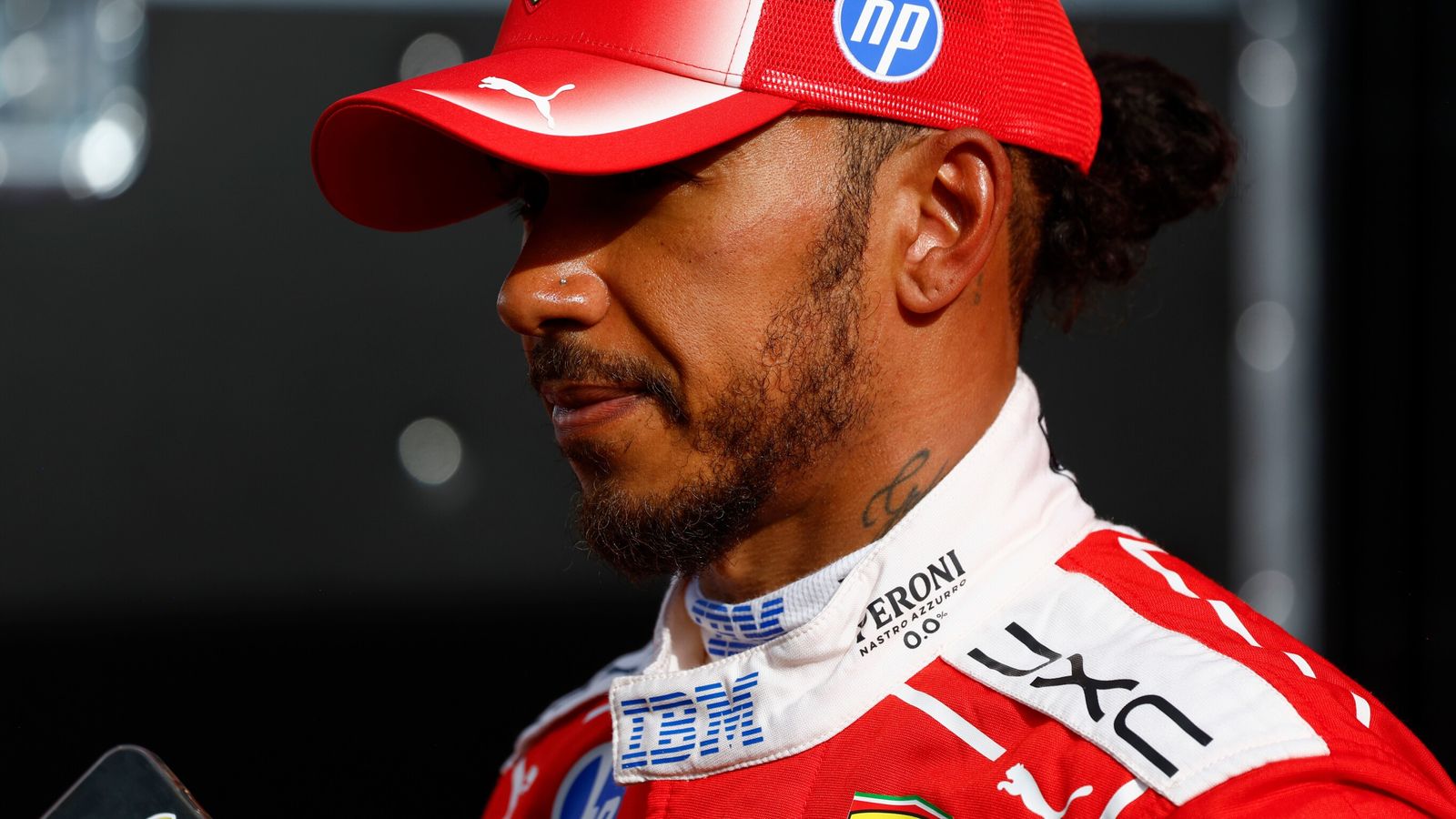
Ferrari Locks Out Row Three at Zandvoort
Ferrari will start the Dutch Grand Prix from the third row of the grid after qualifying three tenths of a second adrift of pole position. Lewis Hamilton secured fifth with a late lap in Q3, edging teammate Charles Leclerc into sixth. The result places both SF-26 chassis directly behind pole-sitter Lando Norris of McLaren and the Mercedes pair of George Russell and Kimi Antonelli.
The grid distribution leaves Ferrari occupying a clear transitional tier at Circuit Zandvoort, trailing Mercedes-powered machinery across one-lap trim while seeking to exploit longer run deltas over a full race distance.
The pit-lane exit line here remains acutely tight, offering zero margin for error during wheel-to-wheel rejoin phases.
Setup Adjustments and Aerodynamic Correlation
Hamilton’s progression to fifth marked a structural recovery following an erratic Sprint session, where setup alterations between practice and competitive running compromised the mechanical balance of his car. After qualifying and finishing seventh in the Sprint, Ferrari reversed its mechanical baseline heading into main qualifying.
“In Practice, the car felt great and was consistent, but there are always areas you feel you can improve, so we made subtle changes... and it flipped the car on its head,” Hamilton explained. “We made all these changes into Qualifying, so I was learning a new car again, a new balance which I'm much happier with.”
Team principal Frederic Vasseur confirmed that the team’s latest aerodynamic updates—including an altered floor edge designed to stabilise underfloor load paths introduced following Friday practice—have correlated directly with simulation data. Rather than pursuing single-event gains of four or five tenths, Ferrari’s iterative development path continues to function within expected tolerances.
Tire Degradation and Race Strategy Parameters
Ferrari’s primary leverage against the grid ahead rests on race-trim efficiency and tire management. The abrasive asphalt at Zandvoort accelerates chemical decay rapidly across high-energy lateral sequences, creating distinct operational windows between the compounds.
During Saturday’s 24-lap Sprint, Leclerc demonstrated the car’s baseline race pace by executing a soft-compound strategy, overtaking Norris with six laps remaining to finish second, just 1.3 seconds behind race-winner Russell. While qualifying performance waned due to tactical adjustments and operational anomalies in Q3, the sustained degradation numbers in the Sprint point toward viable tactical divergence.
Vasseur noted that the Dutch Grand Prix is projected to be a two- or three-stop race. With track position difficult to overturn strictly through on-track overtakes, strategic offsets across pit phases remain Ferrari’s primary mathematical route to challenge Mercedes and McLaren for podium positions and championship table points.