Reporting note: this article draws on Sky Sports; TaxiSports provides the summary and editorial framing.
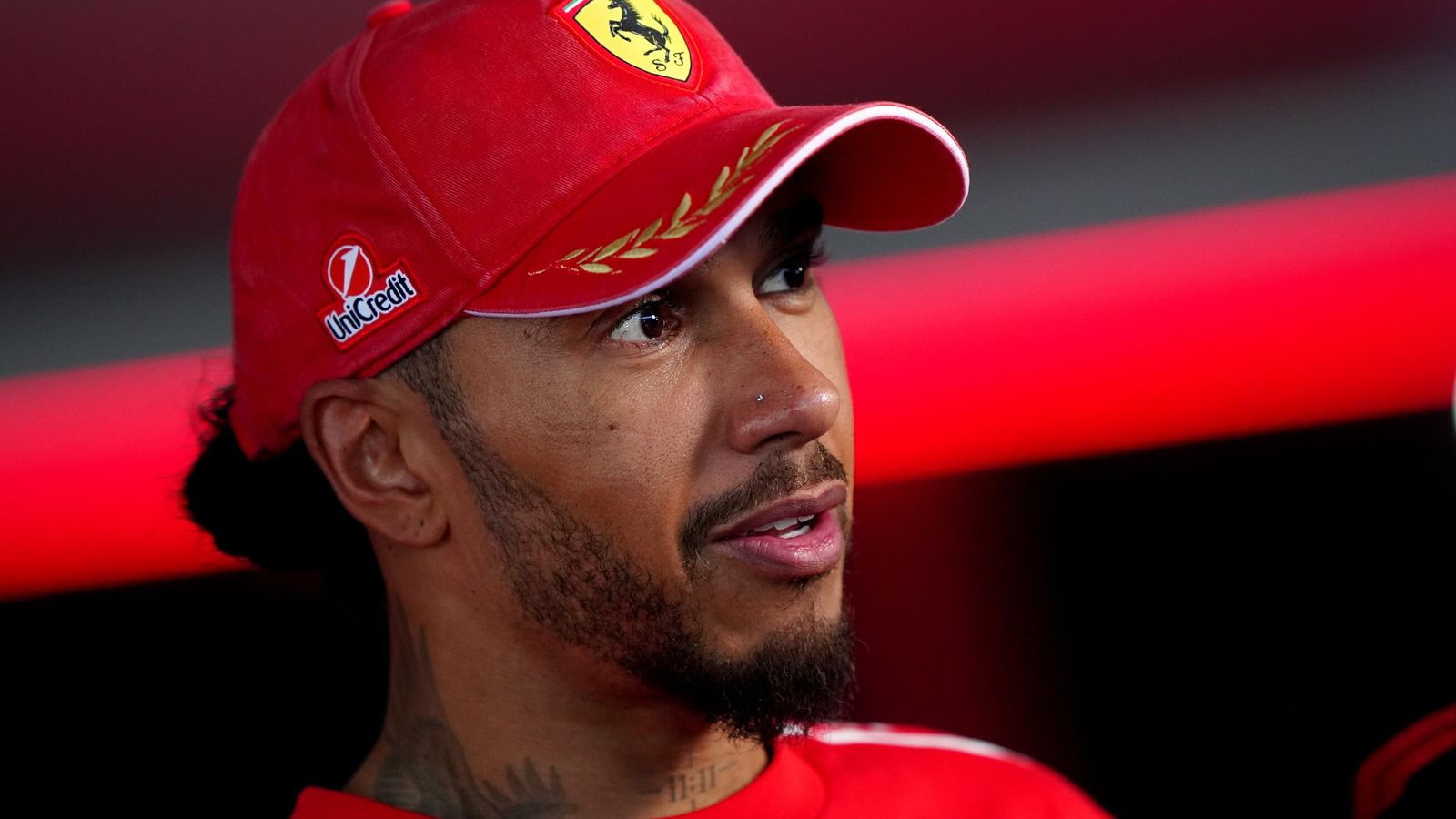
Hamilton Rejects Reports of Internal Restructuring at Ferrari
Lewis Hamilton has publicly denied reports alleging he requested staff dismissals or internal personnel changes at Ferrari following a pair of damaging weekends at Monza and Madrid. Italian media outlets had indicated the seven-time world champion was applying pressure on team principal Frederic Vasseur to overhaul trackside and operational staff, a claim Hamilton moved to neutralize directly.
"I've seen some of the stories that have gone out and I want to clear it up here. I've never asked for anyone on my team to be replaced," Hamilton stated on social media. "Everyone I work with works hard every day, and their dedication is what moves us forward. I always try to empower and lift people to be the best versions of themselves... We all work together and that will continue."
Operational Deficits and Championship Arithmetic
The operational tension follows a sharp collapse in mathematical contention. Across the Italian and Spanish Grands Prix, Ferrari secured just eight points through Hamilton's car, dropping him to a 101-point deficit behind championship leader Kimi Antonelli with nine rounds remaining.
Ferrari deployed an upgraded power unit at Monza, yet structural execution failed to convert the hardware into a podium finish. Hamilton took sixth after being forced onto the gravel at Turn 1 by team-mate Charles Leclerc on the opening lap—an incident that prompted Hamilton to state that "the buck starts with Fred" regarding team rules of engagement, before Leclerc subsequently acknowledged fault.
The technical floor further eroded in Madrid, where a mechanical brake-pedal malfunction forced Hamilton into his first DNF of the campaign. The seven-time champion has now gone five consecutive race weekends without a podium finish, conceding after Madrid that Antonelli and Mercedes hold an unassailable advantage: "I think there's no stopping him and Mercedes this year. They've done a phenomenal job and they deserve it."
Triple-Header Reset in Azerbaijan
Ferrari enters the final sequence of the season under intense scrutiny regarding its trackside execution and mechanical reliability. The upcoming triple-header opens with the Azerbaijan Grand Prix in Baku from September 24–26, featuring a Saturday race schedule that reduces setup windows and leaves zero margin for system errors.