Reporting note: this article draws on Sky Sports; TaxiSports provides the summary and editorial framing.
Run Plan Deviation and the Drag Penalty at Baku
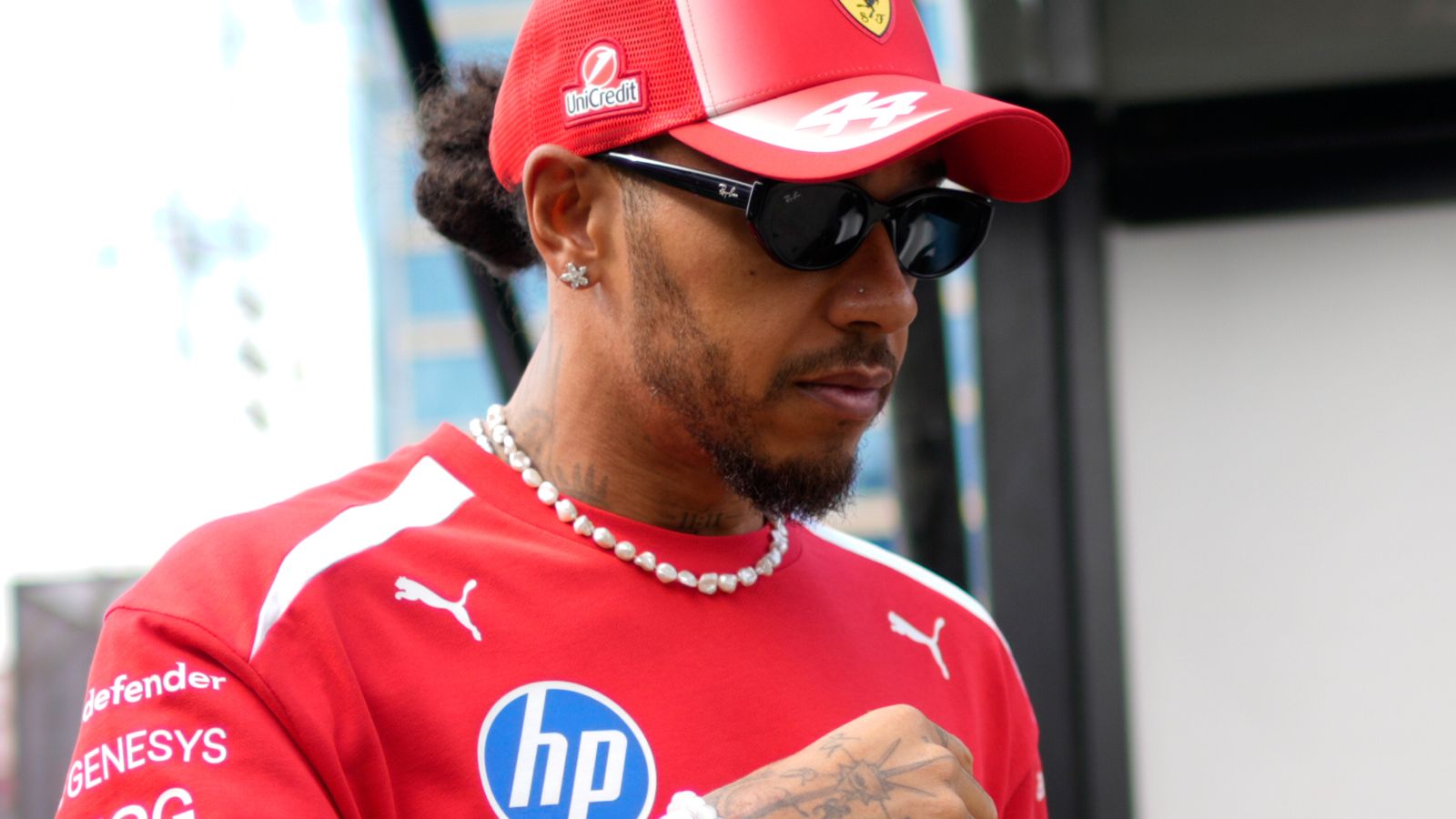
Ferrari's execution in the final segment of Azerbaijan Grand Prix qualifying exposed an aerodynamic vulnerability along Baku’s 2.2-kilometer main straight. Lewis Hamilton qualified sixth after the pit wall deviated from a standard two-run sequence in Q3, leaving him without an aerodynamic tow while leading teammate Charles Leclerc across the timing line.
While rivals Mercedes, McLaren, and Red Bull established initial baselines before returning to the circuit for final efforts, Ferrari opted to compress their track occupancy into a single multi-lap run at the end of the session. The timing offset meant Hamilton punched the aerodynamic hole through the air, creating a low-pressure wake that aided Leclerc to second place while leaving Hamilton’s SF-26 completely exposed to Baku's heavy drag penalty.
The pit exit timing left no margin to slip into the slipstream of a leading competitor.
The Aerodynamic Architecture and Straight-Line Deficit
Hamilton pointed to the procedural shift as a primary factor in his gap to the front row, compounded by a slight wall brush on his opening tour that compromised his tire preparation before the final push.
“Q1 and Q2 were pretty ok. At least Q1 was pretty decent, Q2 we struggled a little bit more, and then as we went into Q3 they changed the plan,” Hamilton explained. “Instead of doing two runs we ended up waiting and then because I was ahead of Charles, I had nobody ahead of me on a tow so that was worth quite a chunk in itself.”
Mercedes polesitter George Russell secured top spot with an eight-tenth margin over Leclerc, underscoring the top-end velocity built into the Mercedes power unit. Three of the five cars starting ahead of Hamilton—Russell, Oscar Piastri, and Lando Norris—utilize Mercedes engines, presenting an overt challenge for race day overtaking corridors.
The street track's smooth asphalt behaves as a low-friction surface where tire chemical decay remains minimal, raising the stakes on initial track position. Ferrari team principal Frederic Vasseur defended the set-up adjustments that returned Leclerc to the front row for the first time since July, while acknowledging the operational difficulty of synchronizing Hamilton’s out-lap with surrounding traffic.
Tactical Implications for Saturday’s Grand Prix
Ferrari’s primary tactical asset lies in race trim efficiency rather than single-lap peak load. Leclerc noted that while the deficit to Russell was substantial, Ferrari's long-run pace across practice sessions showed lower thermal decay under heavy fuel loads.
With chemical decay of the tires expected to remain exceptionally low throughout the Baku race, strategy variations will be limited. Hamilton faces the structural problem of clearing customer and works Mercedes machinery down the straight without DRS overspeed advantages, placing the burden of progress entirely on launch efficiency and pit-stop undercut windows.