Reporting note: this article draws on Sky Sports; TaxiSports provides the summary and editorial framing.
Antonelli Rebounds at Spa-Francorchamps
Championship leader Kimi Antonelli set the pace in the second practice session for the Belgian Grand Prix, recovering from a sluggish opening session to finish nearly two-tenths of a second ahead of McLaren’s Lando Norris. The Mercedes driver’s performance signals a return to the form that defined his early-season dominance, despite a recent string of mechanical frustrations.
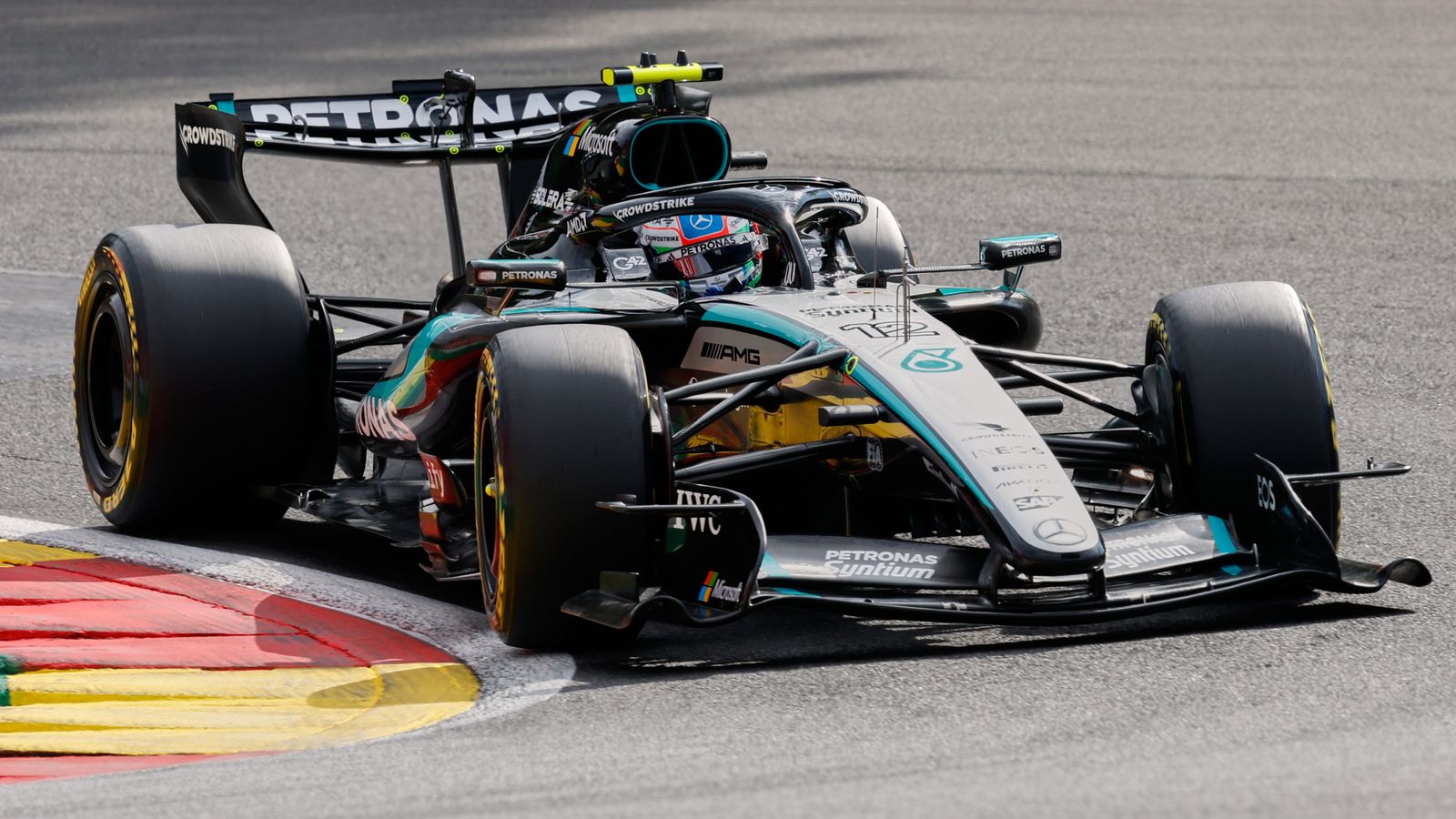
While Antonelli found a productive setup window following significant mid-day adjustments, his teammate George Russell faced a starkly different reality. Russell, currently second in the standings, finished 1.285 seconds off the pace in eighth. The gap highlights the sensitivity of the current chassis to track temperature and asphalt grip levels at the Spa circuit, where chemical decay of the tires remains a primary variable for all teams.
Title Contenders and Grid Penalties
Lewis Hamilton, driving for Ferrari, secured fourth place, though he trailed Antonelli by nearly three-quarters of a second. Max Verstappen, who topped the first session, finished third but spent much of the afternoon expressing frustration over gear-shift synchronization. Both Lando Norris and Red Bull’s Isack Hadjar head into the weekend carrying 10-place grid penalties for exceeding engine component allowances, complicating their pursuit of Antonelli in the championship standings.
Ferrari faces additional scrutiny from the FIA regarding a procedural error involving the return of tires to Pirelli after the first practice session. Stewards are currently reviewing the breach, which could result in further penalties for both Hamilton and Charles Leclerc, who finished 11th.
Session Disruptions and Outlook
The session was interrupted by two red flags, the most significant caused by a heavy crash for Alpine’s Pierre Gasly. The stoppage effectively truncated the final quarter of the practice, limiting long-run data collection for the field. Franco Colapinto (Alpine) provided a notable performance, outpacing Russell to finish seventh, while Oscar Piastri (McLaren) managed sixth despite a hydraulic issue that sidelined him for the first 20 minutes of the session.
Teams now shift focus to final practice and qualifying. With the championship lead tightening following Antonelli’s recent retirements in Barcelona and Silverstone, the pressure to maximize single-lap efficiency remains the primary objective for the Mercedes garage.