Reporting note: this article draws on Sky Sports; TaxiSports provides the summary and editorial framing.
McLaren targets second-half comeback
Following a dominant victory at the Hungarian Grand Prix, McLaren team principal Andrea Stella has signaled a strategic shift in the team's approach to the remainder of the 2026 Formula 1 season. Lando Norris’s win—the team's first of the year—has narrowed the gap to championship leader Kimi Antonelli to 91 points, with 12 rounds remaining.
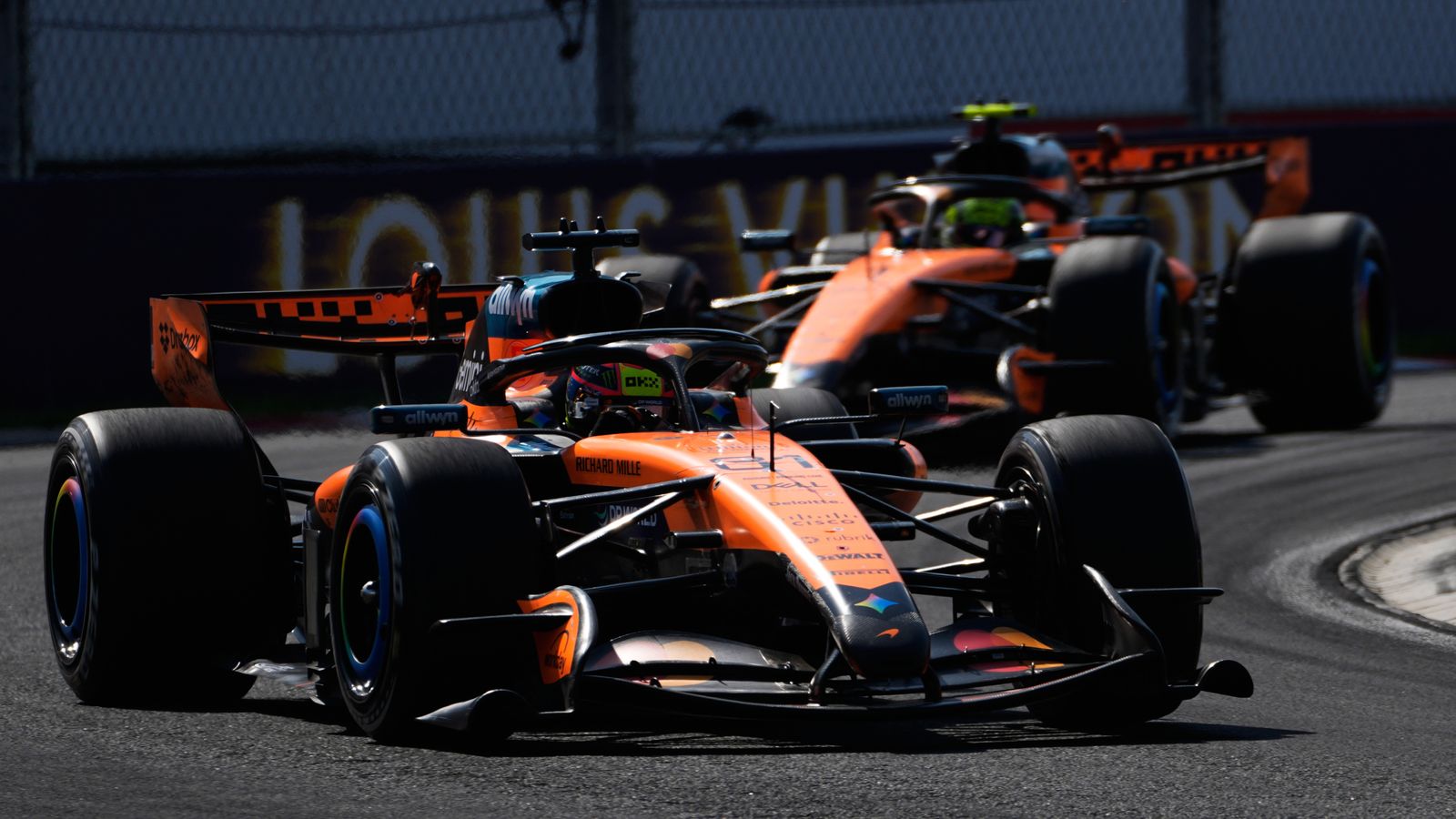
Stella attributes the performance surge to a fundamental change in development direction, finalized during the April break. The aerodynamic package introduced in Budapest successfully addressed previous mechanical inefficiencies, allowing the MCL40 to extract more consistent performance from the Mercedes power unit. Stella noted that while the team previously struggled with the rate of development, they have now established a trajectory that they intend to maintain through the final 546 available points.
The challenge of the standings
Despite the optimism, the current standings present a significant hurdle. McLaren trails Mercedes by 159 points in the constructors' championship. To mount a credible title defense, Norris must overcome a crowded field that includes Lewis Hamilton, George Russell, and Charles Leclerc. Stella emphasized that the team is treating the remainder of the season as a "race within a race" regarding the deployment of technical upgrades.
"If we can continue the season as we did in Budapest, we can still achieve a great deal. To do so, we must keep pushing with the development of the MCL40 and ensure we outpace our rivals," Stella stated.
Looking ahead to the Dutch GP
The team is wary of the volatility inherent in the current grid. Drawing a parallel to last year’s championship, where a 104-point deficit was nearly erased by Red Bull’s Max Verstappen, Stella is pushing for total optimization. The focus now shifts to the Dutch Grand Prix (August 21-23), where the team will test the durability of their recent aerodynamic gains against a field that remains in constant flux.
The technical staff continues to refine the integration of the Mercedes HPP power unit, a process Stella describes as a complex, ongoing optimization task that will define the team's ceiling for the rest of the year.