Reporting note: this article draws on Sky Sports; TaxiSports provides the summary and editorial framing.
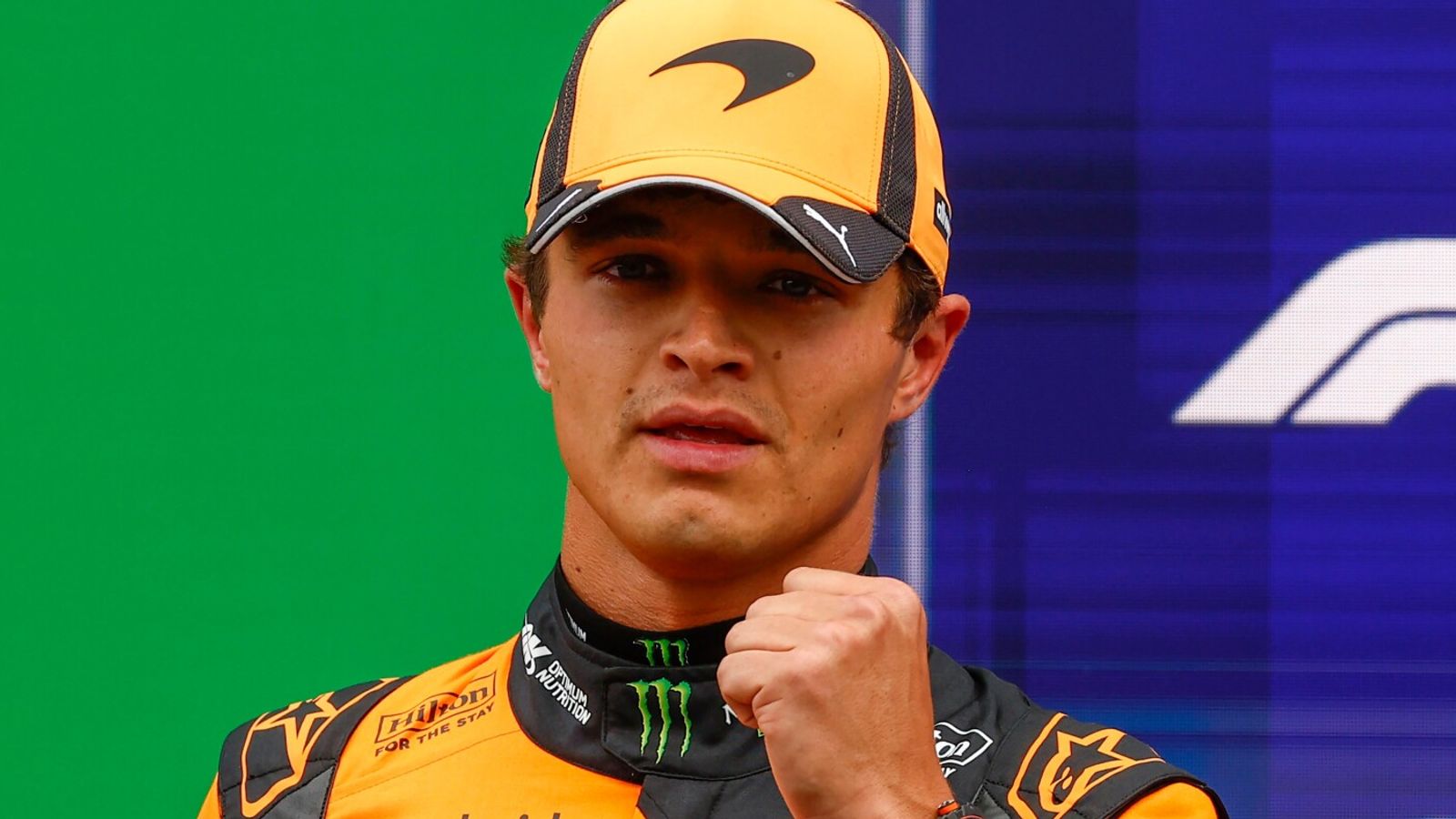
Norris Extracts Dutch GP Pole to Pressure Title Front-Runners
Lando Norris converted McLaren's aerodynamic efficiency into pole position at Circuit Zandvoort, edging Mercedes' George Russell and championship leader Kimi Antonelli in qualifying for the Dutch Grand Prix. The result marks Norris's second consecutive pole position following his pre-summer break victory in Hungary, confirming the MCL39's structural competitiveness across varying downforce profiles.
The qualifying trim placed Norris at the front of the grid after he previously chipped away at his championship deficit in Saturday's 24-lap Sprint race. Norris enters Sunday's main event fifth in the Drivers' Championship, trailing Antonelli by 90 points, with Charles Leclerc 11 points ahead in fourth. Antonelli maintains a 53-point advantage at the top of the standings over Ferrari's Lewis Hamilton, while Sprint winner Russell sits three points behind Hamilton in third.
The Mathematical Thresholds of the Title Fight
While the gap between Norris and the championship summit remains substantial, the remaining 11 rounds offer a significant points ceiling. The reigning world champion noted that while McLaren is still running operational catch-up, capitalizing on clean qualifying execution remains paramount to keeping the title defense mathematically viable.
Norris referenced the volatility of the 2025 campaign—where disqualifications in Las Vegas and operational errors in Qatar drastically altered the points distribution—as evidence of how quickly mechanical or tactical margins can erase a lead.
"It's nice to know there's a possibility," Norris said. "For me, we're still trying to play catch up with certain things, but I'm getting everything out of it for now and that's all I can be pleased about. It's still a very long way to go. I'm optimistic."
Mercedes Balance: Russell's Freedom vs Antonelli's Reset
Mercedes locked down the remaining top-three grid slots, but with contrasting internal dynamics. Russell, who claimed the Sprint victory earlier on Saturday, framed his current points position as an advantage that strips away execution pressure. With upcoming aerodynamic upgrade packages slated across several teams, Russell emphasized that a single correlation failure on a development part can instantly shift a team out of front-row contention.
For Antonelli, Zandvoort has exposed operational friction. An error during Sprint Qualifying damaged his floor assembly and relegated him to fifth on the Sprint grid, followed by another execution slip in Q3 on Saturday. The 19-year-old classified the sequence as a critical calibration reminder in high-stakes track conditions where the surface abrasiveness rapidly accelerates chemical decay on the soft compound.
Dutch Grand Prix Top-Five Grid Alignment
- 1. Lando Norris (McLaren)
- 2. George Russell (Mercedes)
- 3. Kimi Antonelli (Mercedes)
- Row 3: Ferrari pairing led by Lewis Hamilton in fifth
Sunday's Grand Prix shifts focus to race trim, where managing thermal degradation across the banked corners will dictate whether Norris can convert clean air into consecutive Grand Prix victories.