Reporting note: this article draws on Sky Sports; TaxiSports provides the summary and editorial framing.
VSC Timing Alters Spanish Grand Prix Outcome
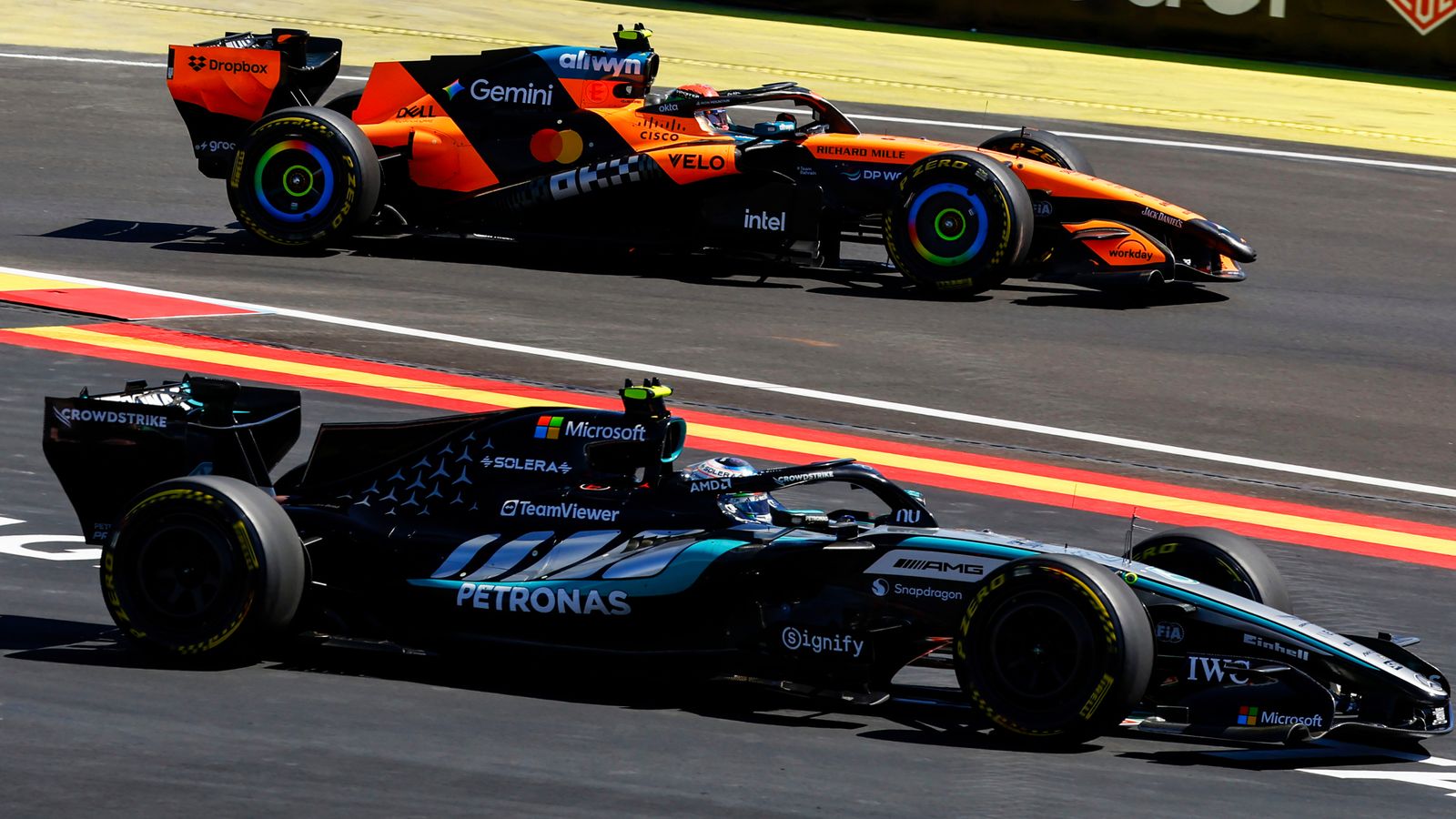
The inaugural Grand Prix at the Madring circuit ended with Kimi Antonelli extending his Formula 1 World Championship lead to 81 points over Mercedes teammate George Russell, following a decisive Virtual Safety Car deployment on Lap 14. Lando Norris had led from pole position before the neutralization, caused by a stranded Aston Martin driven by Lance Stroll, altered the tactical landscape across the front-running teams.
Because the Madring layout features an extensive pit lane requiring a 25-second delta under green-flag running, taking a pit stop under VSC conditions provided a roughly 12-second advantage. The VSC call came moments after Norris crossed the pit-entry threshold at racing speed. Mercedes immediately brought Antonelli in, capitalizing on the reduced speed delta of the field. By the time Norris completed an additional lap, the track returned to green-flag conditions two corners before his pit entry, compounding his loss with a slow seven-second service by McLaren.
Aerodynamic Architectures and Madrid’s Restrictive Geometry
The semi-permanent venue presented severe structural challenges for wheel-to-wheel racing. High-speed transitions framed by unrelenting perimeter barriers placed maximum reliance on the floor aerodynamic structures, with the floor tunnels acting like tensioned load-bearing skins against aggressive lateral load transfers. Combined with rapid hybrid battery replenishment along short acceleration zones, trailing cars struggled to break the aerodynamic wake into the primary stopping points, reducing overtakes to high-risk lunges.
The grid displayed widespread tire compound variation from the outset. Norris and Antonelli launched on Pirelli medium compounds, Max Verstappen and Lewis Hamilton gambled on softs, while Russell and Charles Leclerc elected for hards. Across prolonged stints, the abrasive surface tore heavily into the outer shoulder tread, leaving graining bands and blistered heat patterns across the heavily loaded right-side compounds. Leclerc stretched his opening hard stint to Lap 48, while Alpine’s Pierre Gasly remained on track for 55 of the 57 total laps.
Key Results and Championship Implications
- 1st: Kimi Antonelli (Mercedes) — secured his fifth consecutive points-lead expansion and marked the 251st Grand Prix victory for Mercedes power units, tying Ferrari’s record.
- 2nd: Max Verstappen (Red Bull Racing) — recovered to second after relinquishing early track position gained across the runoff areas.
- 3rd: Lando Norris (McLaren) — closed the gap to the leaders in the final laps after dropping down during the pit sequence.
- 4th & 5th: Charles Leclerc (Ferrari) and George Russell (Mercedes).
- 6th: Liam Lawson (Red Bull Racing) — collected eight championship points substituting for the injured Isack Hadjar.
- DNF: Lewis Hamilton (Ferrari) — retired in the opening laps due to brake anomalies.
VSC Rule Scrutiny and Future Revisions
The race dynamic prompted renewed debate around Virtual Safety Car regulations. With pit lane access remaining open during sudden neutralizations, leaders crossing the pit entry immediately before a deployment face significant time penalties relative to cars following seconds behind. Potential remedies under discussion include enforcing a mandatory minimum duration of one full lap under VSC before opening the pit lane, preventing randomized advantages.
Circuit organizers and series officials are expected to examine layout modifications ahead of the 2027 event to address narrow overtaking bottlenecks and paddock logistical distances. The championship now heads to the Azerbaijan Grand Prix in Baku from September 24–26, featuring a Saturday main race.

Quinn Santos
Quinn Santos covers Formula 1 with a reverent, forensic attention to the physical and acoustic life of the race. In reports, engine notes are not background noise but specific orchestral intervals moving through the grid, and every race devotes space to the degraded texture of tire compounds after a stint, read like worn material rather than performance data. Chassis geometry and floor aerodynamics are explained through architectural metaphor: load paths become load-bearing walls, floors become tensioned skins. Quinn avoids standard telemetry charts, instead reconstructing key overtakes through rhythmic, beat-heavy sentence structures that carry braking points and exits like percussion. A reader gets the feeling of the circuit as a built and sounding environment, not a sequence of lap times. Each race recap closes with an unprompted weather report comparing trackside humidity to the driver's sweat output, a small forensic reminder of how much the body and the air are part of the result.