Reporting note: this article draws on Sky Sports; TaxiSports provides the summary and editorial framing.
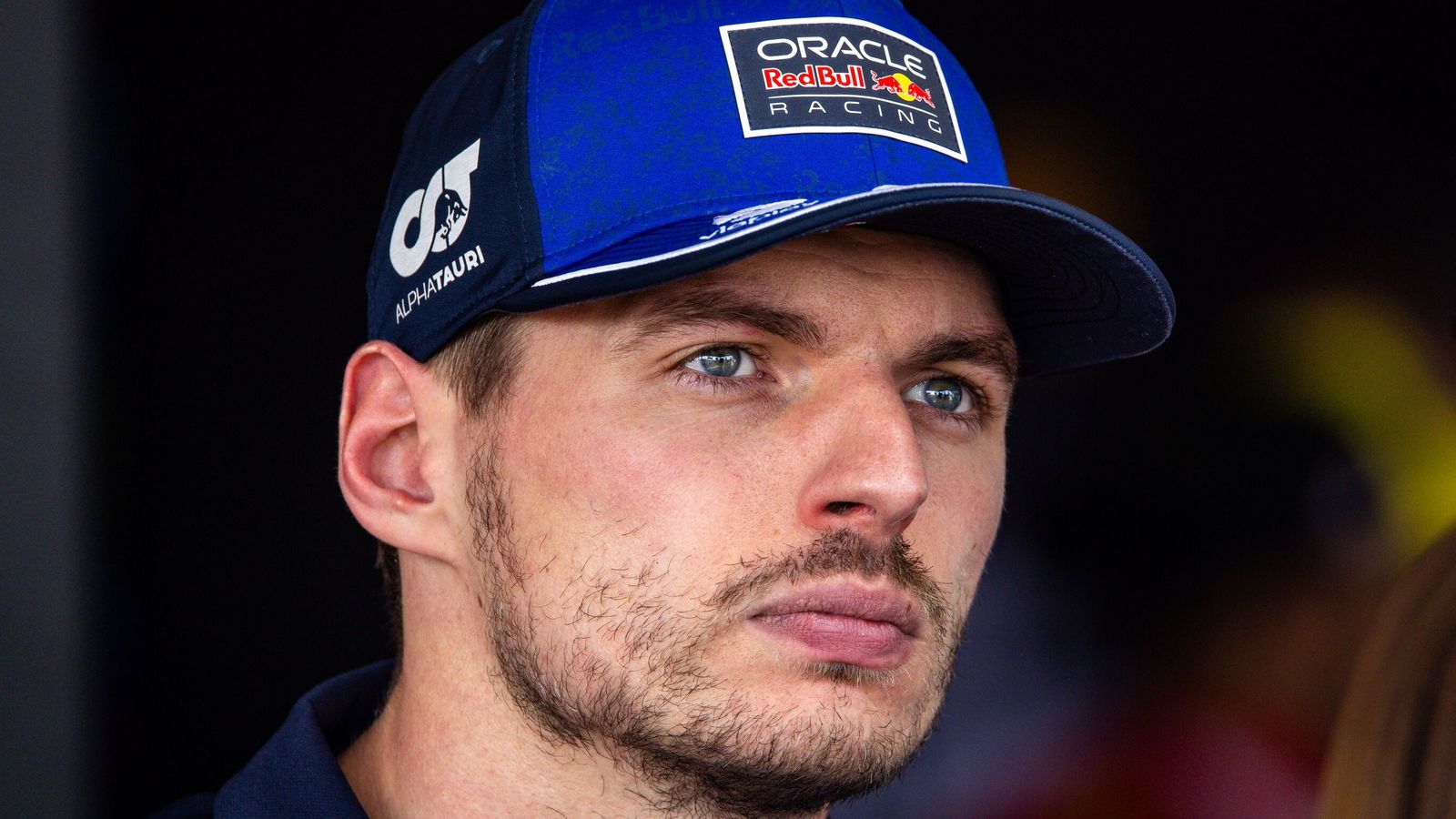
Aerodynamic Disconnect: The Stowe Corner Anomaly
Max Verstappen's retirement from the British Grand Prix was not an error of trajectory or brake modulation; it was a mechanical failure of active aero tolerances. Entering the high-speed entry load of Stowe corner while holding third position, the rear wing flap assembly failed to seat flush against its endplates after DRS actuation, bleeding crucial negative pressure from the floor and diffuser assembly. The resulting catastrophic loss of rear axle load rotated the Red Bull into the gravel trap instantly.
The Silverstone failure precisely mirrored the data signature from Austrian Grand Prix qualifying seven days earlier. On both occasions, a flap left millimeters ajar destroyed the aerodynamic balance required to negotiate high-load apexes.
"The same as Austria—the rear wing just doesn't fully close," Verstappen said. "I saw the analysis. It looks like it closes, but it doesn't. It closes but it's just a little bit open and you lose a lot of rear downforce. And that's why the car just spins off the track. When it happens one time, faults happen. Two times, it's getting very dangerous for me because you can really hurt yourself at these high-speed corners."
Pace Deficits and False Inheritance
Before the hardware failed at Stowe, Red Bull's track position was an arithmetic illusion rather than genuine performance. Verstappen's net podium place had been engineered through external attrition: a five-second false-start penalty assessed to Ferrari's Lewis Hamilton, a virtual safety car window that reduced pit-lane delta losses, a slow puncture for Mercedes' George Russell, and a component failure on Kimi Antonelli's car while chasing race winner Charles Leclerc.
On hard compound tires, the chassis exhibited significant balance instability, unable to generate surface temperature or manage chemical decay across Silverstone's abrasive surface. Red Bull lacked the aerodynamic platform to match front-running pace on pure merit.
"Even if we finished on the podium, it would have been a podium that we didn't deserve on pace because on the hard tyres we were nowhere, I had no grip," Verstappen noted. "The balance was so bad for me, the whole weekend and in the race again, that I can't push at all."
Structural Safety and Organizational Pressure
Red Bull team boss Laurent Mekies acknowledged the severity of subjecting a driver to unpredictable high-speed aerodynamic detachment in consecutive events.
"He's right not to be happy," Mekies stated. "It is very unpleasant for drivers to be let down by the car in the high-speed corners in two consecutive races... I have no doubt that as a team we will put in place what is necessary for that not to happen again."
The recurrent reliability failures and underlying balance deficiencies arrive amid intensifying paddock scrutiny regarding Verstappen's long-term alignment, following exploratory talks between his management and McLaren. Formula 1 transitions next to the high-load demands of Circuit de Spa-Francorchamps for the Belgian Grand Prix on July 17-19, where Red Bull must verify its wing closure actuators before facing Eau Rouge and Blanchimont.