Reporting note: this article draws on Sky Sports; TaxiSports provides the summary and editorial framing.
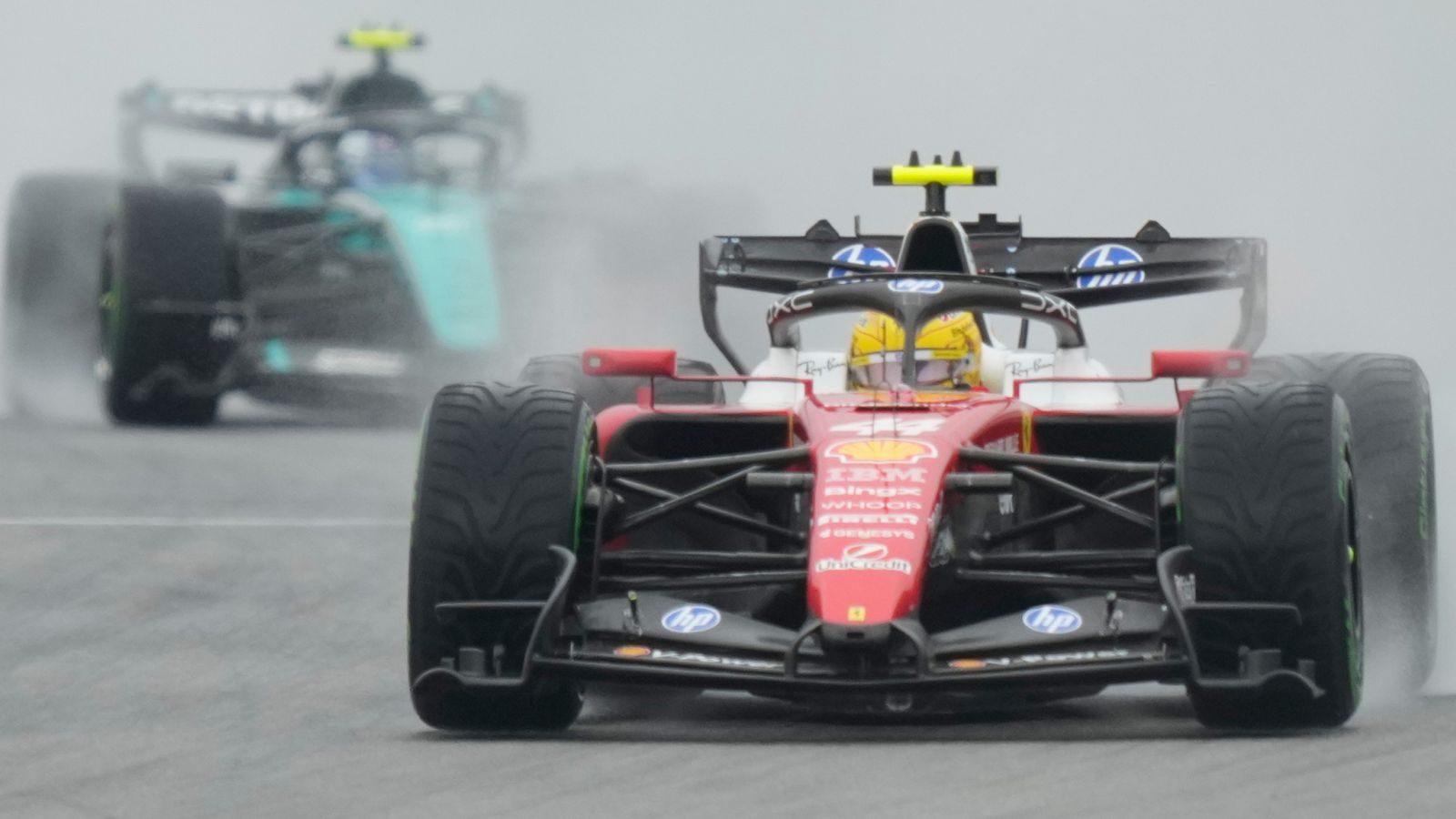
The 20 kph Algorithmic Trap
A structural failure in regulatory software paralyzed the field during formation laps at the Sepang International Circuit. Under heavy rainfall ahead of the Bahrain Grand Prix in Malaysia, a convergence of low cornering velocity, minimal asphalt grip, and wet-weather energy deployment caused multiple power units—including those of race leader Max Verstappen and Ferrari's Lewis Hamilton—to default into an unrecoverable torque deficit.
Cars crawled at an estimated 20 kph or halted outright on the standing-water surface. The start procedure was aborted, enforcing an hour-long operational delay while the governing body deployed an emergency patch across all competitor garages.
The pit-lane exit line remains exceptionally punitive under heavy spray, where visibility drops below 15 meters.
The Mechanical Bottleneck: Turbo Depletion and Regulation Limits
The failure mode lies in the interaction between the current power unit architecture—which balances internal combustion against an electric output reaching nearly 50 percent—and anti-traction control compliance algorithms. Without the MGU-H to keep the compressor spooled during sustained off-throttle intervals at low speed, the internal combustion engine is starved of manifold pressure.
When a driver re-applies throttle in standing water, the electrical system instantly exhausts its immediate battery reserves to compensate for the turbo lag. Once depleted, the unboosted internal combustion unit fails to meet the driver's demanded torque curve. Because the FIA's software interprets this torque mismatch under anti-traction rules, the system restricts further energy recovery, locking the powertrain into a closed-loop stall.
"An unprecedented combination of low engine speed, low-grip conditions, wet-weather energy management settings and the Sepang circuit's sector configuration led to an unintended loss of power for a number of cars," the FIA stated.
To resolve the grid-wide failure, the FIA Technical Department distributed an updated software release that stripped out energy limit constraints across the affected sectors, enabling teams to reflash their power unit control maps prior to the rescheduled race start.
Driver Safety and Dynamic Output Variance
The operational vulnerability exposed acute safety concerns regarding power delivery consistency in zero-visibility wet conditions. Ferrari's Charles Leclerc, who qualified fourth, highlighted the dangerous fluctuations in available power on corner exit.
"When you get out of the corner, sometimes you can have 100 horsepower more, 100 horsepower less," Leclerc explained. "You are not completely in control of the power you are given, and then with this kind of visibility, like at the start of the race, you can have big shunts because of that."
Verstappen, who recovered to win the restarted grand prix, described a chaotic scene of cars running five-wide on the straight at walking pace, while Hamilton was forced to execute a complete power-cycle restart on live asphalt to clear the ECU fault.
Regulatory Revisions Ahead of Singapore
The FIA and engine manufacturers have initiated an immediate review of the energy limit parameters to prevent software-induced cutouts at slow cornering speeds. The technical data gathered from Sepang will face an immediate test under high ambient humidity and low-speed traction zones as the championship heads directly to the Singapore Grand Prix for the final Sprint weekend of the campaign.