Reporting note: this article draws on Sky Sports; TaxiSports provides the summary and editorial framing.
Algorithmic Failure on the Formation Lap
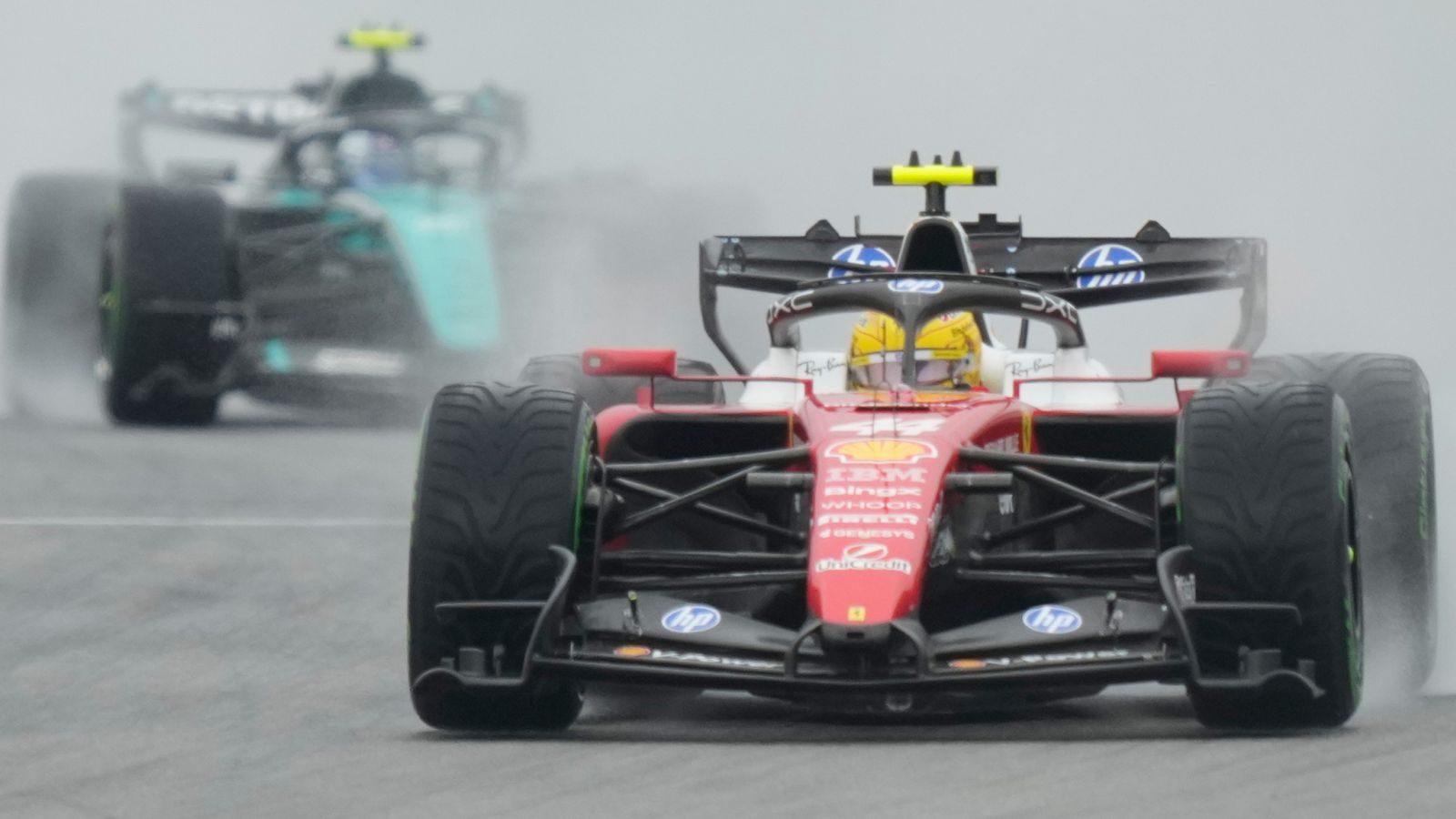
A severe software mapping conflict brought the field to a near-complete standstill during wet-weather formation laps at Sepang, triggering an operational failure that Sky Sports F1 commentator David Croft characterized as an avoidable farce. Under the current technical regulations—which mandate power units delivering approximately 50 percent of their output via electrical deployment—the governance architecture faltered when confronted with low-speed wet running.
The disruption materialized the moment the field departed the pit lane. Low rotational engine speeds, diminished mechanical grip on the soaked asphalt, and wet-weather energy-management profiles interacted with the track’s layout to trigger unintended power cuts. Lead cars, including race winner Max Verstappen and Ferrari's Lewis Hamilton, slowed to an erratic crawl as electronic systems failed to reconcile torque requests with energy-recovery constraints.
The pit-lane exit road remains barely wide enough to navigate when dead-weight chassis require manual recovery.
The Breakdown in Simulation Tolerances
The FIA required approximately 20 minutes to issue and distribute an emergency software patch to the teams, but the resulting procedural halt delayed the race start by 40 minutes. Croft leveled sharp criticism at the governing body for failing to predict these energy-delivery parameters during pre-season preparation.
"We had a shakedown in Barcelona and six days of testing in Bahrain before the season started. Why on earth were situations like this not tried out before we went racing?" Croft remarked. "This falls on the FIA. You are supposed to have the upper hand when it comes to these rules and regulations... You weren't on top of things when it came to that race, and it was a farce."
FIA single-seater director Nikolas Tombazis conceded that software routines had not undergone sufficient stress-testing under the precise thermal, grip, and mapping conditions presented by the Malaysian circuit. The governing body confirmed that the anomaly escaped detection during dry testing and initial reconnaissance laps, pledging a comprehensive technical review alongside power-unit manufacturers.
Championship Context and the Turn to Singapore
The 40-minute administrative freeze disrupted tyre temperature baselines across the board. Once the revised software restored baseline throttle response, the Grand Prix delivered a competitive display: Verstappen took victory, followed by Kimi Antonelli in second and Hamilton mounting a recovery drive to round out the podium.
Formula 1 shifts immediately to the Marina Bay Street Circuit for the season's final Sprint weekend. With high ambient temperatures accelerating chemical decay on the abrasive street surface and narrow run-off tolerances punishing electronic latency, the FIA's newly revised power-unit control algorithms face another rigorous technical test under race conditions.