Reporting note: this article draws on Sky Sports; TaxiSports provides the summary and editorial framing.
Controversial Penalty Call Under Scrutiny
Arsenal maintained their winning momentum in the Premier League title chase with a 2-0 victory against Sunderland at the Stadium of Light, yet manager Mikel Arteta voiced deep frustration regarding the officiating standards that nearly shifted the fixture's trajectory. Despite securing a fourth consecutive victory, Arteta focused his post-match remarks on the 54th-minute penalty awarded to the hosts, warning that marginal officiating decisions carry sufficient gravity to derail an entire championship campaign.
The incident occurred when referee John Brooks penalized defender Ezri Konsa for holding Sunderland's Dan Ballard inside the penalty area. The on-pitch decision was subsequently reviewed and upheld by the Video Assistant Referee (VAR). According to the transcript released by the Premier League Match Centre, Brooks communicated that Konsa was 'all over him at the near post facing the wrong way,' to which the VAR responded: 'I'm happy that it's a holding offence. The foul is confirmed. Confirming the on-field decision of penalty.'
Match Dynamics and Raya's Decisive Intervention
The course of the match altered rapidly across a two-minute span. Goalkeeper David Raya preserved the deadlock by parrying Enzo Le Fee's penalty kick, denying Sunderland the lead in front of their home supporters. Exactly 121 seconds later, midfielder Bruno Guimaraes struck to put Arsenal ahead, dampening the stadium's momentum before Bukayo Saka sealed the 2-0 result with a late penalty conversion.
Despite the positive scoreline, Arteta expressed exasperation during his post-match press briefing, characterizing the incident as an unjustifiable error.
"This is not acceptable at this level. I watched it 20 times and I cannot find a way to understand how they think to give a penalty in that situation, or the way the VAR has to intervene. I'm sad that we have to discuss this after such a beautiful game, because that changes the course of the season and it can cost you the championship."
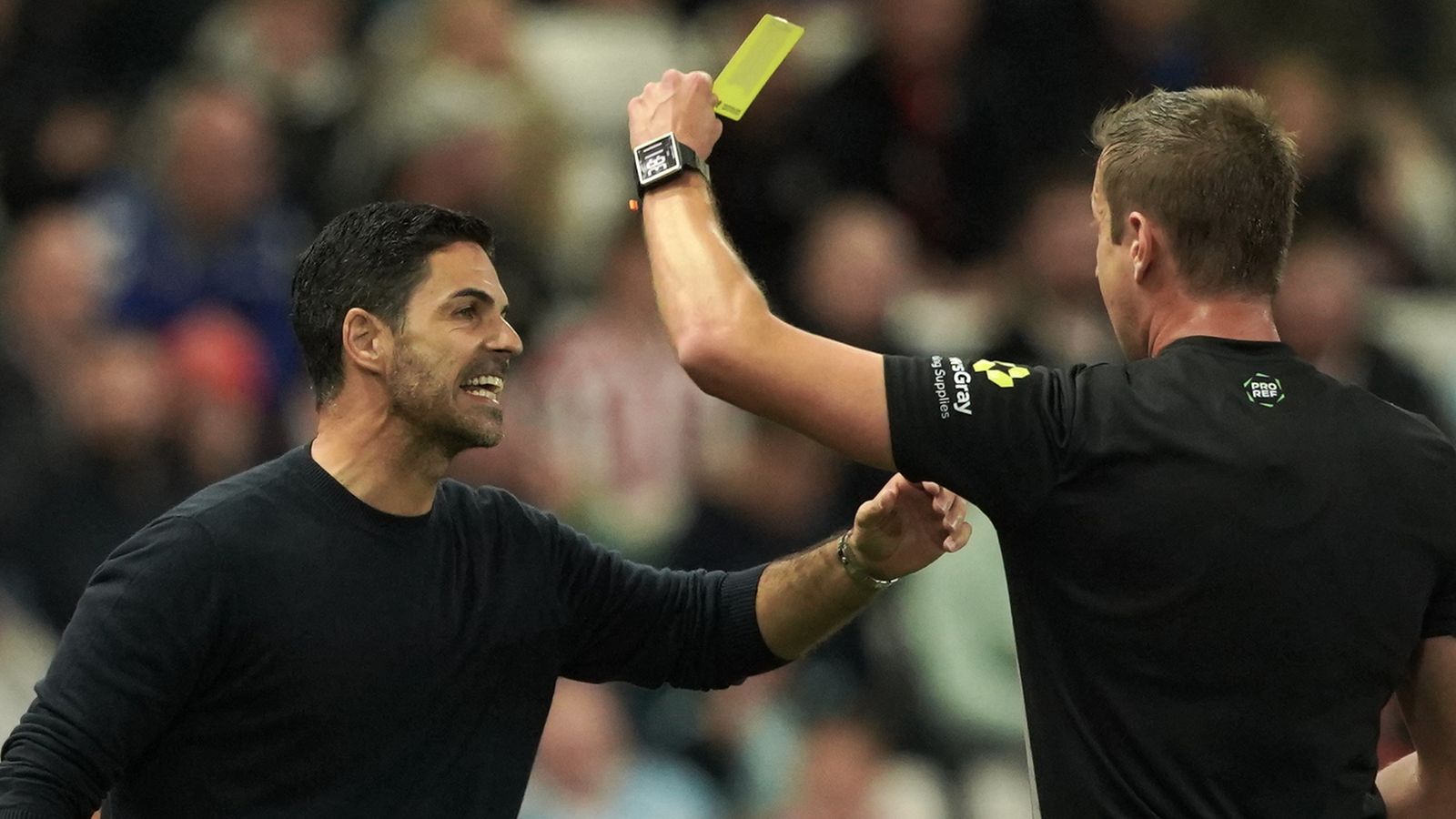
Arteta, who also received a yellow card during the match for stepping outside his technical area, later likened the tussle between Konsa and Ballard to a 'judo roll' in his broadcast interview, arguing that the contact did not merit a spot kick under any interpretation of the rules.
Implications for the Premier League Table
The result ensures Arsenal secure another three points to strengthen their position near the summit of the Premier League standings, extending their current run to four straight wins. For Sunderland, the missed penalty proved costly against a resilient defensive structure, halting their push to disrupt the upper tier of the table. Arsenal now turn their focus to maintaining defensive consistency while managing the fine margins that define title contention.

Avery Diaz
Avery Diaz writes football match recaps that unfold like slow processions across the pitch. In long, winding sentences, Avery traces the geometry of a back line as if it were the vaulted architecture of a choir, letting the wet thud of boots and the terraces' rhythmic intake of breath carry the story. The game is treated with reverence, and player exhaustion is rendered through trembling calves, sagging shoulders, and the delayed rise from a sliding tackle rather than through numbers. Each piece attends to the tactile sounds that accumulate over ninety minutes: studs slicing turf, a goalkeeper's shout swallowed by wind, the heavy silence after a chance drifts wide. Avery closes every match recap with a single sentence on the state of the turf, noting how its scars, sheen, or loosened seams mirrored the mood of the losing side. What a reader gets is not a verdict but a lingering sense of the match as a physical and emotional event, close enough to feel the damp air and the fatigue.