Reporting note: this article draws on Sky Sports; TaxiSports provides the summary and editorial framing.
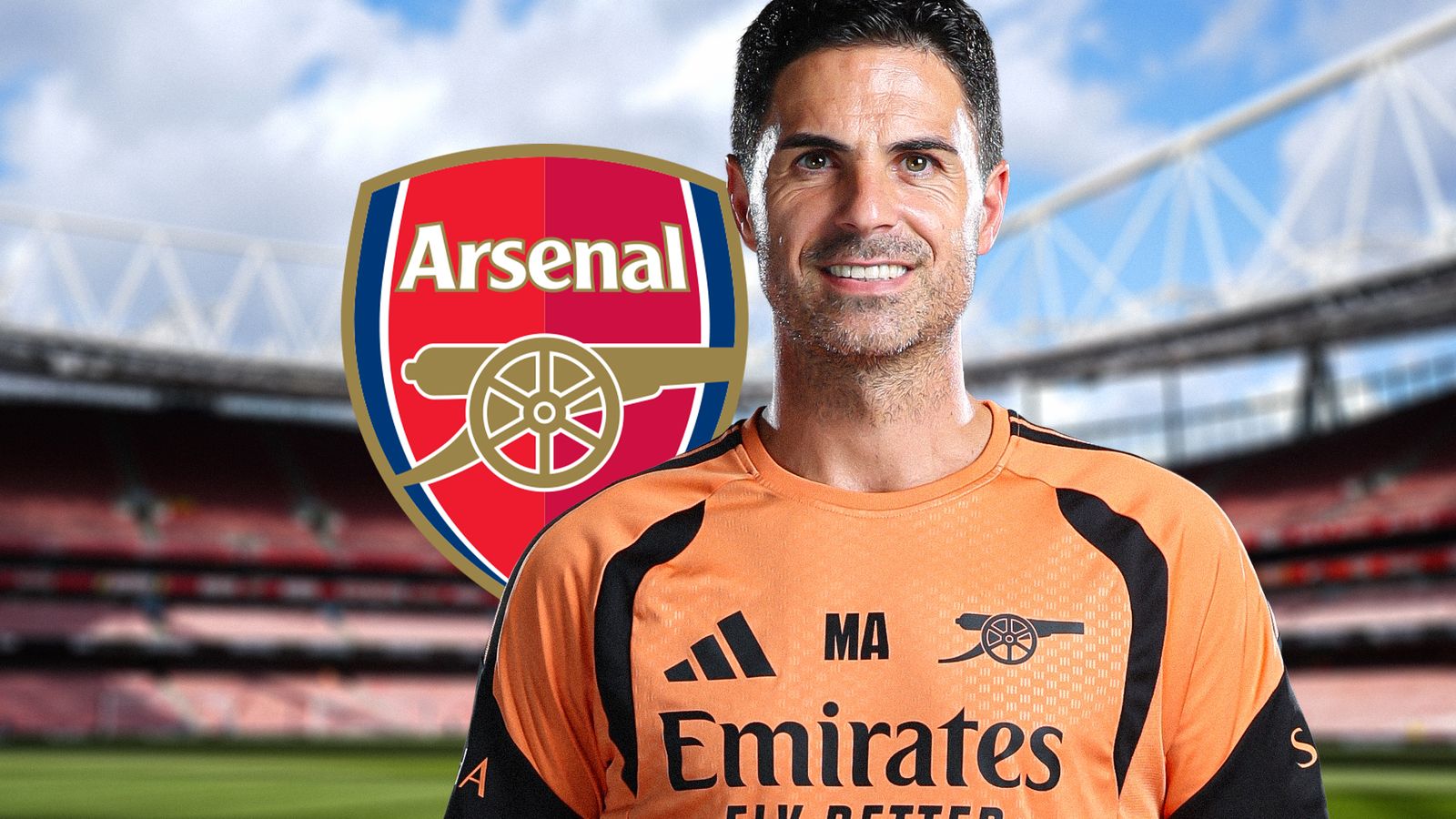
Arteta Commits to Step Five of Arsenal Project
Mikel Arteta has extended his contractual commitment to Arsenal, formalizing the transition into phase five of the club’s development model. The 44-year-old manager, who arrived in 2019 and currently holds the longest managerial tenure across English football’s top four divisions, enters the new deal having already converted Arsenal into Premier League champions.
The extension shifts the operational focus from establishing domestic competitiveness to sustaining long-term structural dominance.
The Five-Phase Progression Model
Arsenal's progression under Arteta has followed a structured five-stage timeline since December 2019:
- Phase 1 (Cultural Reset): Restructuring internal operational discipline and resetting baseline standards across the squad.
- Phase 2 (Positional Profiling): Acquiring foundational defensive and build-up profiles, including Gabriel Magalhães, Ben White, and Aaron Ramsdale.
- Phase 3 (Title Challenger Baseline): Integrating transitional operators such as Gabriel Jesus and Oleksandr Zinchenko to elevate pressing thresholds.
- Phase 4 (Championship Output): Securing the Premier League title through defensive compactness and maximized set-piece efficiency.
- Phase 5 (Dynasty and Maintenance): Establishing multi-cycle title contention and managing progressive squad renewal.
Tactical Adaptability and Structural Output
Arteta's tactical architecture has evolved based on available personnel profiles. When fully fit with an attacking corridor featuring Bukayo Saka, Martin Ødegaard, and Kai Havertz, Arsenal established a club-record baseline of 91 league goals.
During periods disrupted by personnel availability, tactical output shifted toward defensive stability and dead-ball execution, eliminating high-margin structural variance. Prior to recent fixtures, Arsenal had maintained a three-year record without conceding a three-goal margin defeat in the Premier League, reflecting strict territorial control and defensive marking discipline.
The 2029 Squad Horizon and Renewal Challenge
The primary tactical hurdle for the current contract cycle is squad aging. By 2029, key structural components of Arteta's central axis will reach the upper threshold of peak physical output:
- David Raya: Age 34
- Gabriel Magalhães: Age 31
- Martin Ødegaard: Age 30
- Declan Rice: Age 30
- Kai Havertz: Age 30
Navigating this age curve requires an active personnel overhaul without compromising spatial integrity, an inflection point that previously challenged the longevity cycles of Jürgen Klopp at Liverpool and Pep Guardiola at Manchester City.
Historical Context: The Wenger Comparison
At 44 years of age and on his fourth contract, Arteta sits three years younger than Arsène Wenger was upon his initial appointment at Arsenal (age 47). Reaching a decade in charge by 2029 will place Arteta within range of Wenger's longevity benchmarks while operating under modern physical and tactical parameters.

Jordan Chen
Jordan Chen covers football as a spatial system: positions, passing corridors, pressing lines, and structural failure. Match sequences are reduced to time-stamped, data-driven fragments. Coordinate-based spatial analysis diagrams the movement. Adjectives describing effort or desire are absent; tactical output is the only measure. He does not ask how hard a player tried; he records whether the lane was available. Quotes are taken from coaches only. Player sentiment is ignored. Game summaries proceed as numbered phases. Diagrams track how formations shift, where vertical corridors open, and where marking rotations break. The reader receives a schematic match record: what the geometry allowed, what it prohibited, and where it lost integrity. There is no mood, no will, no temperament. Only positional evidence. Each article concludes with a singular Entropy Index score. The rating, from zero to ten, measures the match's structural stability alone. The score is fixed, not impressionistic. For Jordan Chen, football is a coordinate system under stress.