Reporting note: this article draws on Sky Sports; TaxiSports provides the summary and editorial framing.
Spatial Asymmetry in Liverpool’s Post-Window Architecture
Liverpool concluded the summer transfer window with a net expenditure exceeding £200m, headlined by the £123m acquisition of Bradley Barcola from Paris Saint-Germain. Despite the capital outlay, the squad profile under manager Andoni Iraola presents pronounced spatial imbalances across both flanks and central transitional corridors.
1. Lateral Congestion: Left Flank Redundancy vs. Right Corridor Deficit
The departure of Mohamed Salah removed Liverpool’s primary inverted right-wing option. The recruitment profile, however, has concentrated attacking assets on the opposite side:
- Left-sided profiles: Bradley Barcola, Cody Gakpo, Florian Wirtz, Hugo Ekitike, Rio Ngumoha, and Victor Munoz all project naturally into the left half-space or wide corridor.
- Right-sided vacancy: The squad lacks an established left-footed attacker capable of maintaining width or cutting inward from the right flank, skewing offensive mechanics.
2. Full-Back Positioning and Conor Bradley Injury Impact
The structural demands of Iraola’s tactical model mandate high-intensity vertical movement from both full-backs. Sprint data indicates that Jeremie Frimpong and Milos Kerkez rank within the top three players across the Premier League for sprint volume.
With Conor Bradley sidelined due to injury, Frimpong has operated as the specialist right-back rather than in advanced roles. When both full-backs advance into the final third simultaneously, Liverpool's secondary defensive line requires rapid lateral coverage from the central midfield pivot.
3. Rest-Defense Failure in the Central Axis
The spatial distance between unit lines was exposed during the opening five minutes against Newcastle. With the full-back pairing pushed high and Virgil van Dijk maintaining depth, an unoccupied vertical pocket emerged between the defensive line and the advanced midfield.
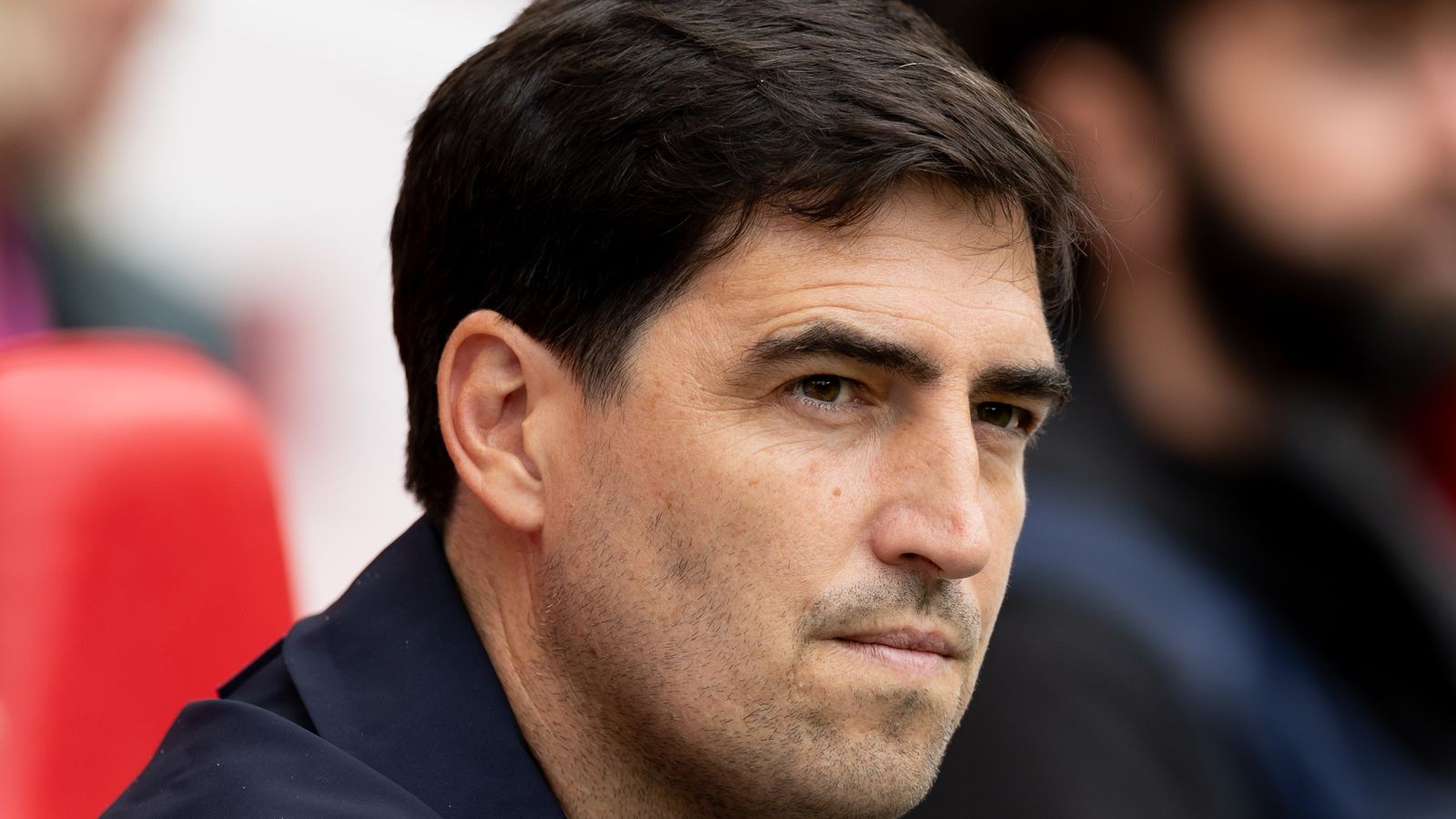
"You do not want to lose the offensive side, the fluidity, the arrivals with numbers, but obviously we were punished the other day, especially in the first goal," Iraola stated. "We did not do a proper lockdown. But there is a balance. We cannot go from one way where we send a lot of people forward to keeping everyone back so we do not arrive with numbers. I do not want to tell Ryan Gravenberch not to carry the ball or arrive in the box. It is a matter of identifying the situation."
With Alexis Mac Allister and Ryan Gravenberch assigned forward transition duties, Liverpool's central axis remains susceptible to direct counter-attacks when dynamic marking fails to secure the midfield corridor.
Entropy Index: 6.8 / 10

Jordan Chen
Jordan Chen covers football as a spatial system: positions, passing corridors, pressing lines, and structural failure. Match sequences are reduced to time-stamped, data-driven fragments. Coordinate-based spatial analysis diagrams the movement. Adjectives describing effort or desire are absent; tactical output is the only measure. He does not ask how hard a player tried; he records whether the lane was available. Quotes are taken from coaches only. Player sentiment is ignored. Game summaries proceed as numbered phases. Diagrams track how formations shift, where vertical corridors open, and where marking rotations break. The reader receives a schematic match record: what the geometry allowed, what it prohibited, and where it lost integrity. There is no mood, no will, no temperament. Only positional evidence. Each article concludes with a singular Entropy Index score. The rating, from zero to ten, measures the match's structural stability alone. The score is fixed, not impressionistic. For Jordan Chen, football is a coordinate system under stress.