Reporting note: this article draws on Sky Sports; TaxiSports provides the summary and editorial framing.
A Coalition Against Centralized Control
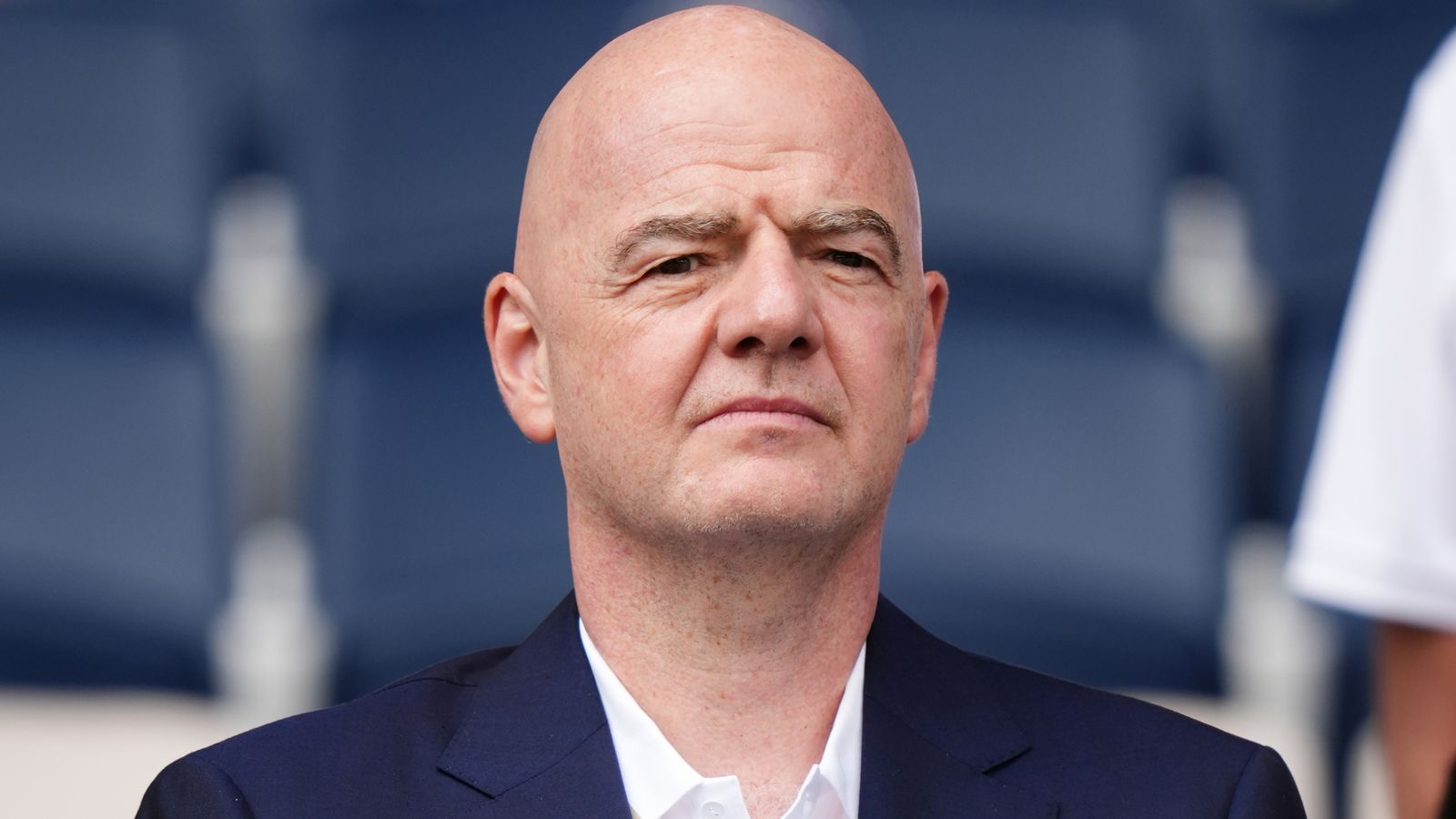
Europe’s top domestic leagues are stepping into direct conflict with FIFA leadership. The Premier League, alongside Bundesliga, La Liga, and Serie A, have coordinated a joint declaration demanding comprehensive governance reform and independent oversight within football's world governing body as pressure mounts on FIFA president Gianni Infantino.
The joint initiative by the four major leagues insists that domestic stakeholders must be granted a decisive seat at the table rather than being sidelined during critical strategic decisions that dictate the sport's global framework.
Calendar Congestion and the EU Legal Battle
At the core of the friction is the continuous expansion of the global football schedule. European domestic competitions have pushed back aggressively against 'calendar creep'—specifically the expansion of international tournaments and the broadened Club World Cup format, which heavily tax player welfare and encroach upon domestic league fixtures.
- Legal Precedent: The joint statement follows an antitrust complaint submitted nearly two years ago by the European Leagues Association to the European Union concerning FIFA’s unilateral scheduling of the International Match Calendar.
- Core Demand: The domestic competitions are demanding structural mechanisms that provide leagues with binding consultation rather than advisory roles.
The Fallout from the Commercial Rights Crisis
The push for reform follows widespread fallout over Infantino’s controversial FIFA Forward Enterprise (FFE) proposal. The initiative, which explored selling a 20 per cent commercial stake in FIFA assets—including the World Cup—to private investors such as Joshua Kushner, collapsed in July under intense pressure from confederations including UEFA, the Asian Football Confederation (AFC), and CONCACAF.
In response to the institutional turmoil, Infantino recently circulated a letter to all 211 member associations and the FIFA Council offering an external review of FIFA's governance framework for strategic projects. However, Infantino explicitly rejected stepping aside, confirming his intention to run for re-election next year and asserting that his institutional responsibilities supersede specific policy disagreements.
What Comes Next
With the joint declaration prepared for formal release, attention shifts to the upcoming FIFA Council meeting next month, where proposals regarding external governance reviews and decision-making transparency are slated for discussion. Domestic leagues and continental confederations will test whether FIFA's leadership is prepared to concede structural authority or double down on its centralized mandate.

Blake Torres
Blake Torres writes football as a visceral trial, not a pastime. His prose is steeped in the game’s raw materials: the sting of wintergreen heat, the squelch of a boot in mud, the metallic taste of exhaustion. Tactical analysis is never a detached diagram; it’s a jagged sprint through a sudden pressing trap, the panicked shift of a backline caught wrong-footed in a sudden glare. Torres treats the final whistle as a moral hinge—victory and defeat land as weight, redistributing something unspoken among players and stands. Post-match soundbites are absent; instead, he reads the slope of a shoulder, the tremor in a hand, the silence that follows a missed chance. What a reader receives is not a summary but a sensory immersion, a match felt in the sinuses and the ligaments. The narrative arcs toward no neat resolution, only the stadium itself as the lights die: a scarred penalty spot, a wind-snapped corner flag, the slow drip of rain from a gutter onto empty seats.