Reporting note: this article draws on Sky Sports; TaxiSports provides the summary and editorial framing.
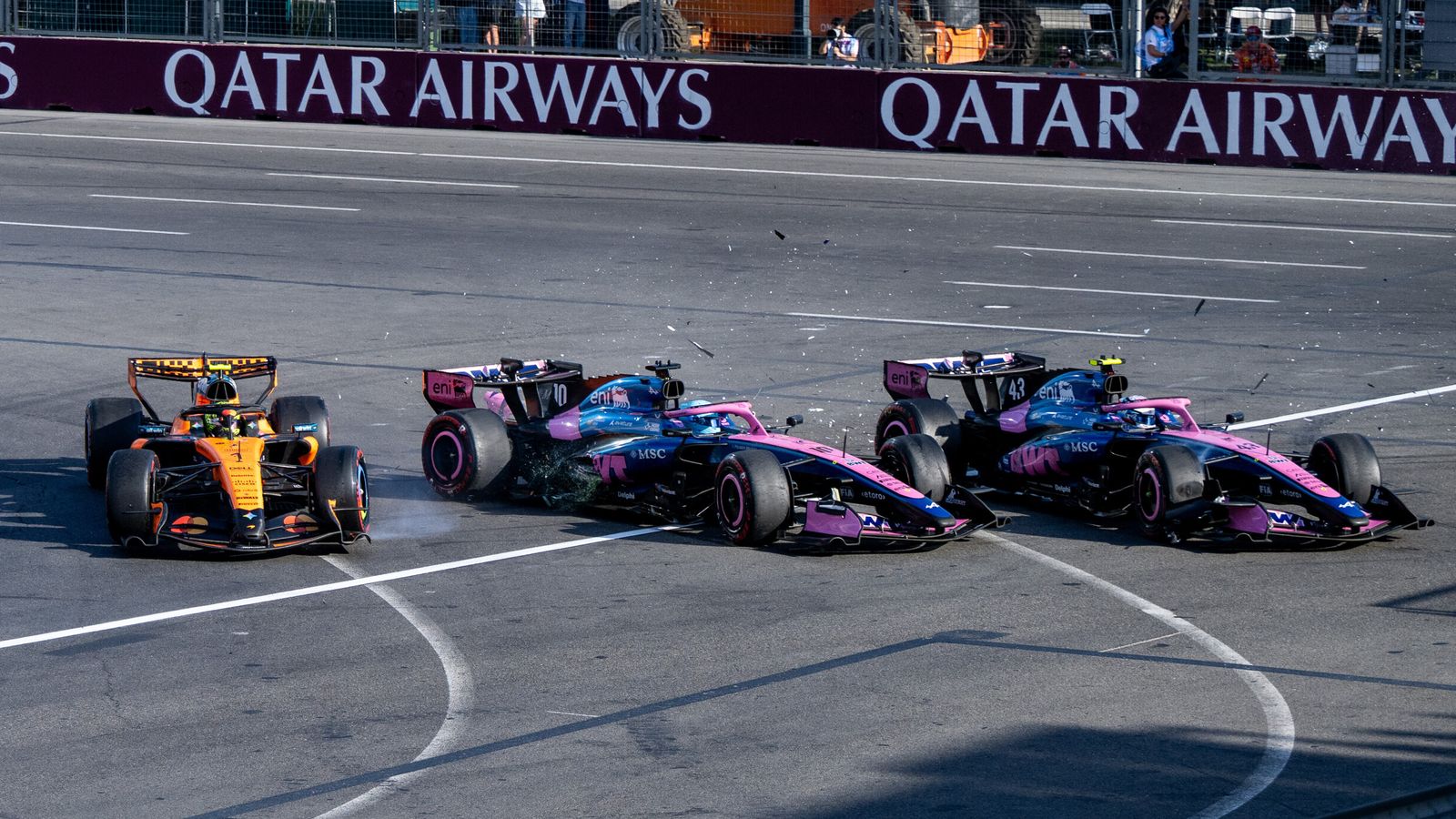
Safety Car Restart Sparks Baku Chaos
Alpine has issued a firm condemnation of online abuse targeting drivers and paddock personnel following a chaotic three-car collision at the Azerbaijan Grand Prix. The incident unfolded at the first Safety Car restart when Franco Colapinto locked his brakes into Turn 1, spearing into the side of team-mate Pierre Gasly and collecting McLaren's Lando Norris on the outside. All three cars were forced into immediate retirement.
The sporting cost was severe. Gasly had been running seventh with Colapinto in 10th, wiping out a guaranteed seven-point haul. With Racing Bulls driver Arvid Lindblad coming through to secure seventh, Alpine surrendered crucial ground in the Constructors' Championship, where Racing Bulls now hold a 15-point cushion in the fight for fifth place with eight rounds remaining.
Stewards Hand Down Grid Drop as Briatore Evaluates Fallout
Because Colapinto retired and could not serve a standard 10-second in-race time penalty, the FIA Stewards converted the sanction into a five-place grid penalty for the upcoming round. The stewards noted that Colapinto approached Turn 1 with excess entry speed on the inside, overshooting the corner without any mitigating factor from other drivers.
Alpine executive advisor Flavio Briatore pulled no punches post-race, describing the error as "very poor" for a driver at this level:
"I know that Franco has taken full responsibility for it, as he should; in fact he braked far too late considering the context of the race and the safety car restart... I want to take time to reflect on it and consider what course of action should be taken, so we can learn from it and avoid such a situation in future."
Norris Calls for Bans While Paddock Ranks Split
The aftermath revealed a stark divide in driver sentiment. A frustrated Norris argued that causing such terminal collisions warranted a one-race ban, stating plainly that "there are some drivers who shouldn't be in Formula 1." McLaren team principal Andrea Stella echoed the need for basic common sense at high-risk street circuit bottlenecks.
However, the podium finishers pushed back against Norris's call for disqualifications. Race winner George Russell, runner-up Max Verstappen, and third-placed Isack Hadjar all highlighted the razor-thin operating margins during restarts. When carbon brakes and tyre carcasses lack heat—behaving less like adhesive rubber and more like cold cured fat sliding across glass—a minor lockup on Baku's bumpy, off-line surface quickly escalates into terminal contact.
A Palate Cleanser in Paddock Diplomacy
The paddock’s political fallout mirrors an overly acidic reduction in a high-pressure kitchen: when the margins boil away too fast, tempers sour instantly. While midfield outfits scrap furiously for tens of millions of dollars in prize money, personal blame quickly turns into sharp public posturing over who belongs at the table.
Alpine Draws the Line on Online Toxicity
Beyond the sporting debate, Alpine stepped in to address the severe vitriol directed across social platforms at drivers, media, and rival competitors following the incident.
"Mistakes happen when racing at the limit and no matter the result or outcome, nobody should be subject to hateful or abusive comments," the team stated, reinforcing that condemnation of online toxicity is universal rather than aimed at any single fan base. The team reiterated its commitment to working with Formula 1 and the FIA to stamp out recurring online abuse as the championship heads to the Sepang International Circuit.