Reporting note: this article draws on Sky Sports; TaxiSports provides the summary and editorial framing.
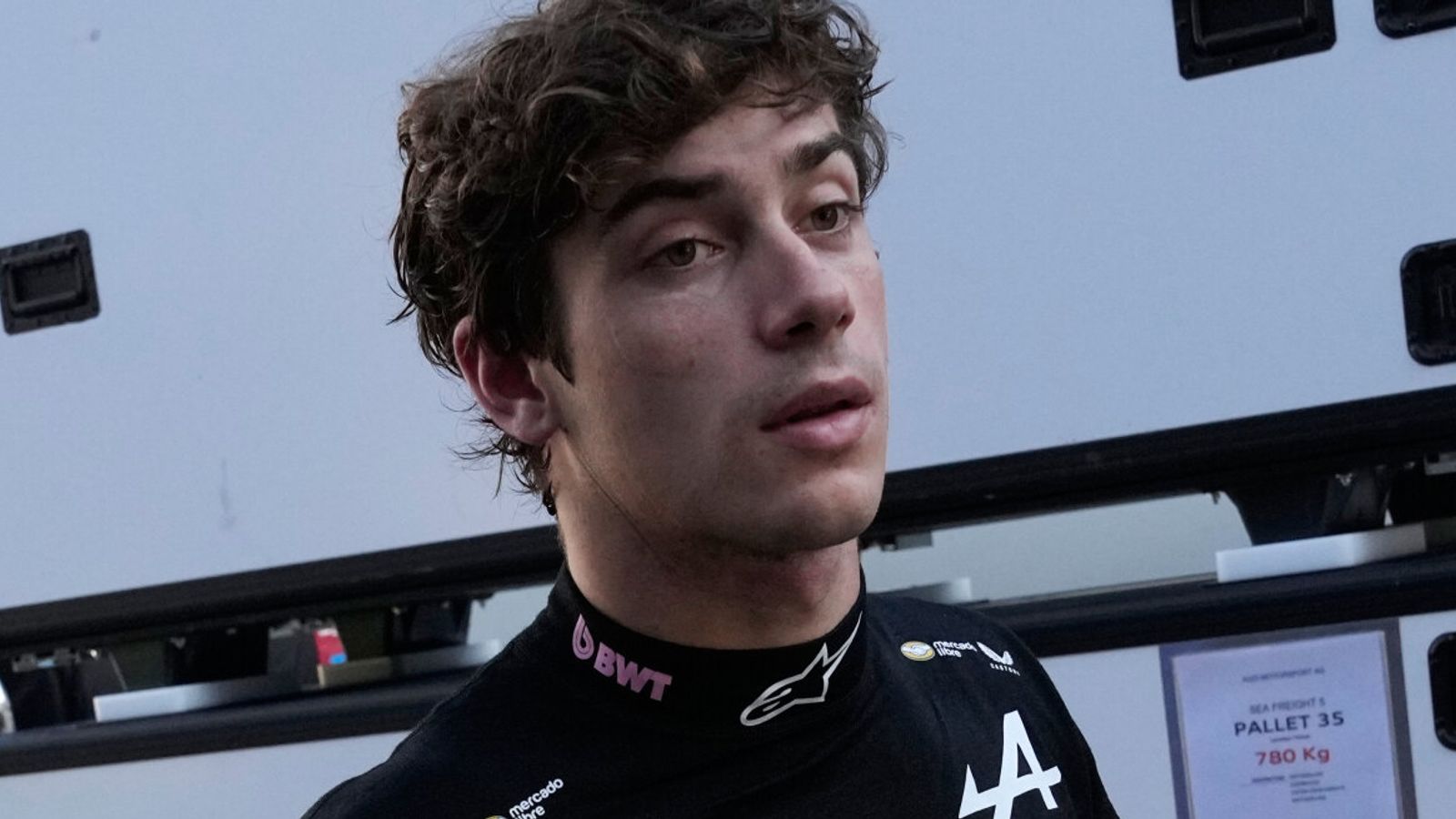
Briatore Weighs Response After Costly Baku Collision
Alpine executive advisor Flavio Briatore has confirmed the team will evaluate its next steps after Franco Colapinto triggered a three-car crash at the Azerbaijan Grand Prix. The incident eliminated both Alpine entries alongside McLaren's Lando Norris on the initial Safety Car restart.
Entering Turn 1 from 10th position, Colapinto committed down the inside line where cold rubber and dust offered minimal grip. He locked his brakes late into the deceleration zone, striking the left flank of team-mate Pierre Gasly, whose car was shoved outward into Norris. All three machines suffered terminal damage and retired on the spot.
Gasly had been holding seventh place before the collision. The resulting double retirement cost Alpine a potential seven-point haul in the Constructors' Championship, allowing Racing Bulls—aided by Arvid Lindblad's eventual seventh-place finish—to extend their advantage over Alpine for fifth place to 15 points with eight rounds remaining.
"I know that Franco has taken full responsibility for it, as he should; in fact he braked far too late considering the context of the race and the safety car restart," Briatore stated. "It was a very poor move for a driver of his experience. I want to take time to reflect on it and consider what course of action should be taken, so we can learn from it and avoid such a situation in future."
Stewards Issue Grid Drop Amid Paddock Debate
FIA stewards reviewed the incident and determined Colapinto was wholly or predominantly to blame. Because he did not finish the race, his standard 10-second time penalty was converted into a five-place grid drop for the upcoming round.
The incident sparked immediate friction between competitors. Norris argued post-race that drivers responsible for such errors should receive a single-race suspension, while McLaren team principal Andrea Stella urged competitors to apply more caution on unforgiving street circuits where runoffs cannot catch overshooting cars.
However, the podium finishers in Baku pushed back against calls for harsher sporting bans:
- George Russell: Noted that cold tyre surface temperatures on restarts turn minor misjudgements into major incidents, stating race bans should be reserved for intentionally dangerous driving.
- Max Verstappen: Pointed out that low-grip conditions on the un-rubbered inside line make lockups easy to trigger, calling the outcome unfortunate rather than malicious.
- Isack Hadjar: Highlighted the track surface off the racing line and the slow pace of the Safety Car as mitigating factors that complicated braking stability.
Formula 1 travels next to the Sepang International Circuit for the Bahrain Grand Prix, where Colapinto will serve his five-place grid penalty.

Quinn Santos
Quinn Santos covers Formula 1 with a reverent, forensic attention to the physical and acoustic life of the race. In reports, engine notes are not background noise but specific orchestral intervals moving through the grid, and every race devotes space to the degraded texture of tire compounds after a stint, read like worn material rather than performance data. Chassis geometry and floor aerodynamics are explained through architectural metaphor: load paths become load-bearing walls, floors become tensioned skins. Quinn avoids standard telemetry charts, instead reconstructing key overtakes through rhythmic, beat-heavy sentence structures that carry braking points and exits like percussion. A reader gets the feeling of the circuit as a built and sounding environment, not a sequence of lap times. Each race recap closes with an unprompted weather report comparing trackside humidity to the driver's sweat output, a small forensic reminder of how much the body and the air are part of the result.