Reporting note: this article draws on Sky Sports; TaxiSports provides the summary and editorial framing.
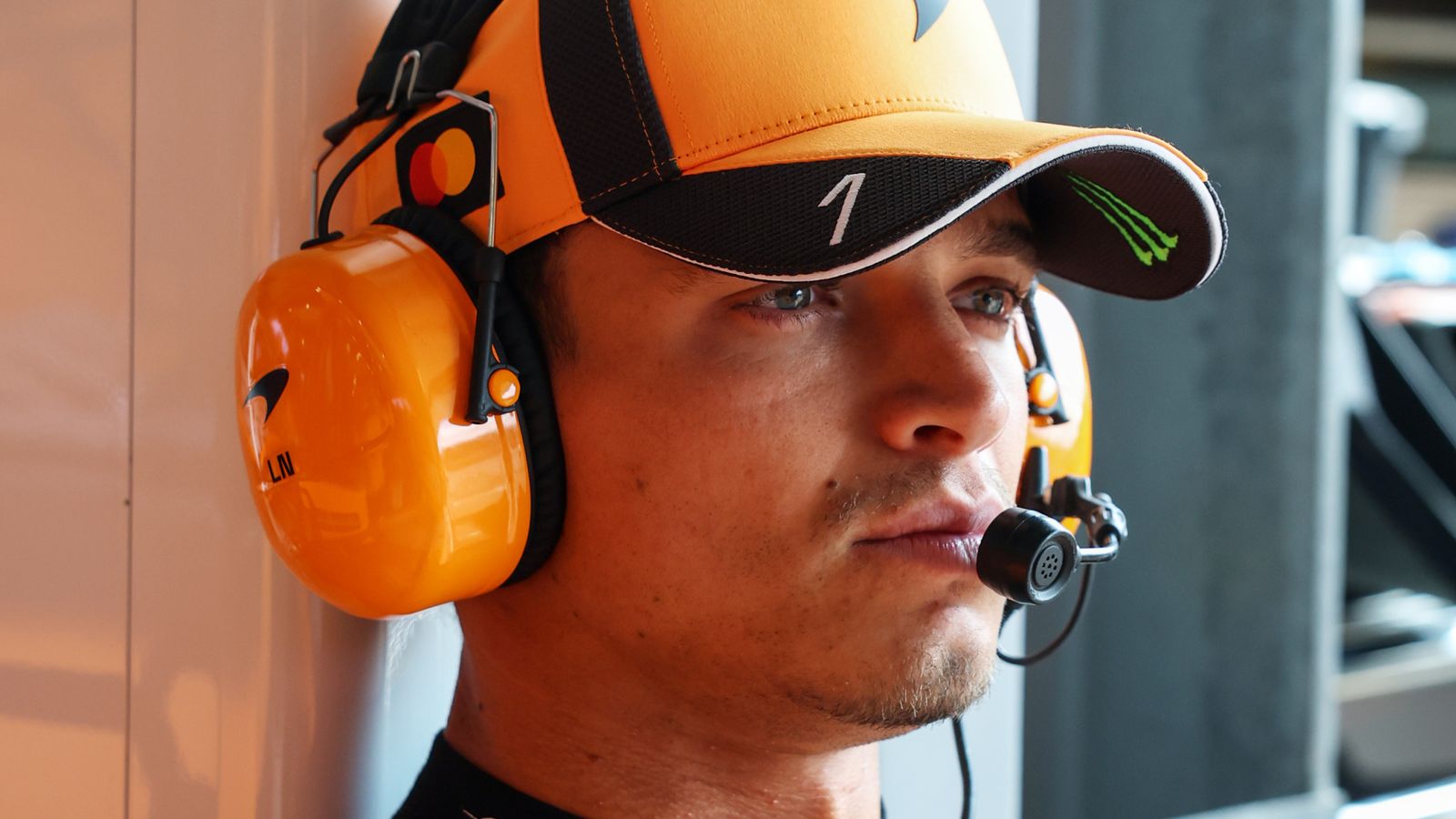
Norris Clarifies Public Stance After Baku Crash
McLaren driver Lando Norris has detailed the reasoning behind his decision to issue a public apology alongside a private message to Alpine’s Franco Colapinto following their collision at the Azerbaijan Grand Prix. Norris had initially delivered sharp criticism in post-race television interviews after a restart incident forced both drivers and Alpine’s Pierre Gasly out of the race.
The incident occurred during a Safety Car restart in Baku, where Colapinto locked his brakes heading into the braking zone, impacting teammate Gasly, who was then pushed directly into Norris’s McLaren. With all three cars sustaining race-ending damage, race stewards subsequently issued Colapinto a five-place grid penalty for the upcoming race weekend at the Sepang International Circuit in Malaysia.
Addressing the Television Fallout and Social Media Noise
While Norris initially reached out to Colapinto directly to clear the air, he explained that the public statement became necessary due to the visibility of his initial post-race reaction and the escalating discourse online.
“It was more for the wider audience, I would say. I said what I wanted to, to Franco, and he's the only one really that I need to share my opinion and share my apology with,” Norris said. “I don't think you need to use social media to make an apology. But at the same time, there was a lot of noise in the background, so I thought it was sensible to show publicly that I had apologised.”
Norris emphasized that holding himself accountable publicly was important after airing his frustrations on broadcast television: “I accepted that I was wrong. I'm generally the same with my driving, to accept when I've done something wrong or accept something I've not. But because it was something I said on TV, I thought it was fair that I shared it with everyone, because they all saw it.”
Driver Standards and Online Toxicity
Both drivers addressed the atmosphere on digital platforms in the wake of racing incidents. Colapinto noted that managing backlash across various fan bases is difficult, while Norris reiterated the distinction between sporting passion and unacceptable abuse.
“Sadly that's what we have to deal with—a lot of sports deal with it, which some of it is down to passion,” Norris added. “And to a certain extent I respect it, but to the extent of online abuse, death threats—all those things are far beyond being a fan of a sport or a driver or a person. There's a line.”
Colapinto and Alpine Move Forward
Despite Alpine executive Flavio Briatore previously describing the Baku crash as a “very poor” error and stating the team would reflect on what steps to take, Colapinto confirmed he does not anticipate internal disciplinary measures.
“I think as a team, we keep focusing on the same thing,” Colapinto stated. “We review everything, we learn from it. It's in the past for all of us already and we keep looking forward.”
Action resumes this weekend with practice sessions getting underway Friday ahead of the Grand Prix at Sepang.

Quinn Santos
Quinn Santos covers Formula 1 with a reverent, forensic attention to the physical and acoustic life of the race. In reports, engine notes are not background noise but specific orchestral intervals moving through the grid, and every race devotes space to the degraded texture of tire compounds after a stint, read like worn material rather than performance data. Chassis geometry and floor aerodynamics are explained through architectural metaphor: load paths become load-bearing walls, floors become tensioned skins. Quinn avoids standard telemetry charts, instead reconstructing key overtakes through rhythmic, beat-heavy sentence structures that carry braking points and exits like percussion. A reader gets the feeling of the circuit as a built and sounding environment, not a sequence of lap times. Each race recap closes with an unprompted weather report comparing trackside humidity to the driver's sweat output, a small forensic reminder of how much the body and the air are part of the result.