Reporting note: this article draws on Sky Sports; TaxiSports provides the summary and editorial framing.
Norris Retracts Post-Race Comments After Azerbaijan Incident
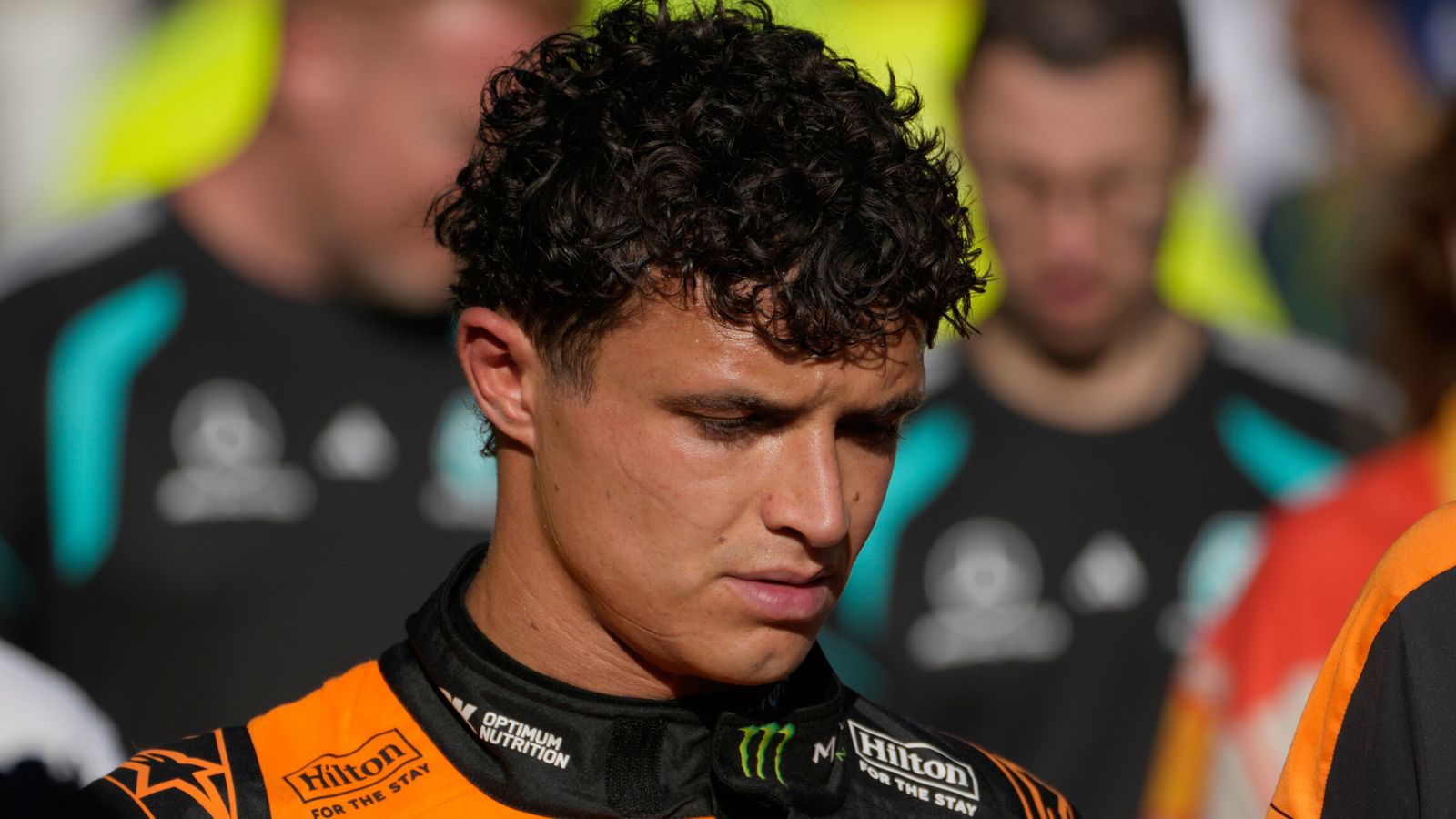
Reigning Formula 1 world champion Lando Norris has publicly apologised to Alpine driver Franco Colapinto following a multi-car collision at the Azerbaijan Grand Prix that eliminated both drivers and Alpine’s Pierre Gasly from Saturday’s race.
The incident unfolded during a Safety Car restart on the tight Baku street circuit. Colapinto locked his front brakes on the approach to Turn 1, unsettling his car and making heavy contact with the side of team-mate Gasly. The impact deflected Gasly’s car outward directly into the sidepod of Norris’ McLaren, leaving all three machines unable to continue.
Heat-of-the-Moment Frustration and Subsequent Reconciliation
In the immediate aftermath of the retirement, Norris expressed sharp frustration during broadcast interviews, stating that "there are some drivers who shouldn't be in Formula 1" and suggesting that causing such incidents should warrant a one-race suspension. Colapinto quickly took responsibility in his own post-race remarks, issuing an apology to both Norris and Gasly.
On Monday, Norris posted a statement on social media to clarify his position and retract his initial criticism:
"After the race, I sent Franco a message apologising for the comments I made that I simply should not have said. I know better and emotions were running high but that is not an excuse, it was wrong of me. I've made mistakes of my own over the years and I know this is very much a part of racing and fighting on the limit. Me and Franco came to a good understanding, are still good friends and are both excited to get back racing this weekend."
Grid Penalties and Alpine's Stance on Abuse
The FIA race stewards reviewed the restart collision and handed Colapinto a five-place grid penalty for the upcoming Bahrain Grand Prix, set to be staged at the Sepang International Circuit in Malaysia.
The high-profile crash sparked a wave of contentious discourse online, prompting Alpine to issue a formal statement condemning abusive messages directed at drivers, stewards, and team personnel across social media platforms:
- Recent Precedents: Alpine highlighted that online hostility had previously flared after Colapinto received a penalty at Zandvoort and during team-order tension with Gasly at the Spanish Grand Prix in Madrid.
- Team Statement: Alpine stated that "mistakes happen when racing at the limit and no matter the result or outcome, nobody should be subject to hateful or abusive comments," emphasizing that their condemnation applies universally across all fan bases.
Next Round in Malaysia
The Formula 1 paddock moves immediately to Malaysia's Sepang International Circuit for the Bahrain Grand Prix weekend, where Colapinto will serve his five-place grid penalty and McLaren aims to recover lost ground after Baku's double DNF.

Quinn Santos
Quinn Santos covers Formula 1 with a reverent, forensic attention to the physical and acoustic life of the race. In reports, engine notes are not background noise but specific orchestral intervals moving through the grid, and every race devotes space to the degraded texture of tire compounds after a stint, read like worn material rather than performance data. Chassis geometry and floor aerodynamics are explained through architectural metaphor: load paths become load-bearing walls, floors become tensioned skins. Quinn avoids standard telemetry charts, instead reconstructing key overtakes through rhythmic, beat-heavy sentence structures that carry braking points and exits like percussion. A reader gets the feeling of the circuit as a built and sounding environment, not a sequence of lap times. Each race recap closes with an unprompted weather report comparing trackside humidity to the driver's sweat output, a small forensic reminder of how much the body and the air are part of the result.