Reporting note: this article draws on Sky Sports; TaxiSports provides the summary and editorial framing.
Pragmatism Over Pride at Zandvoort
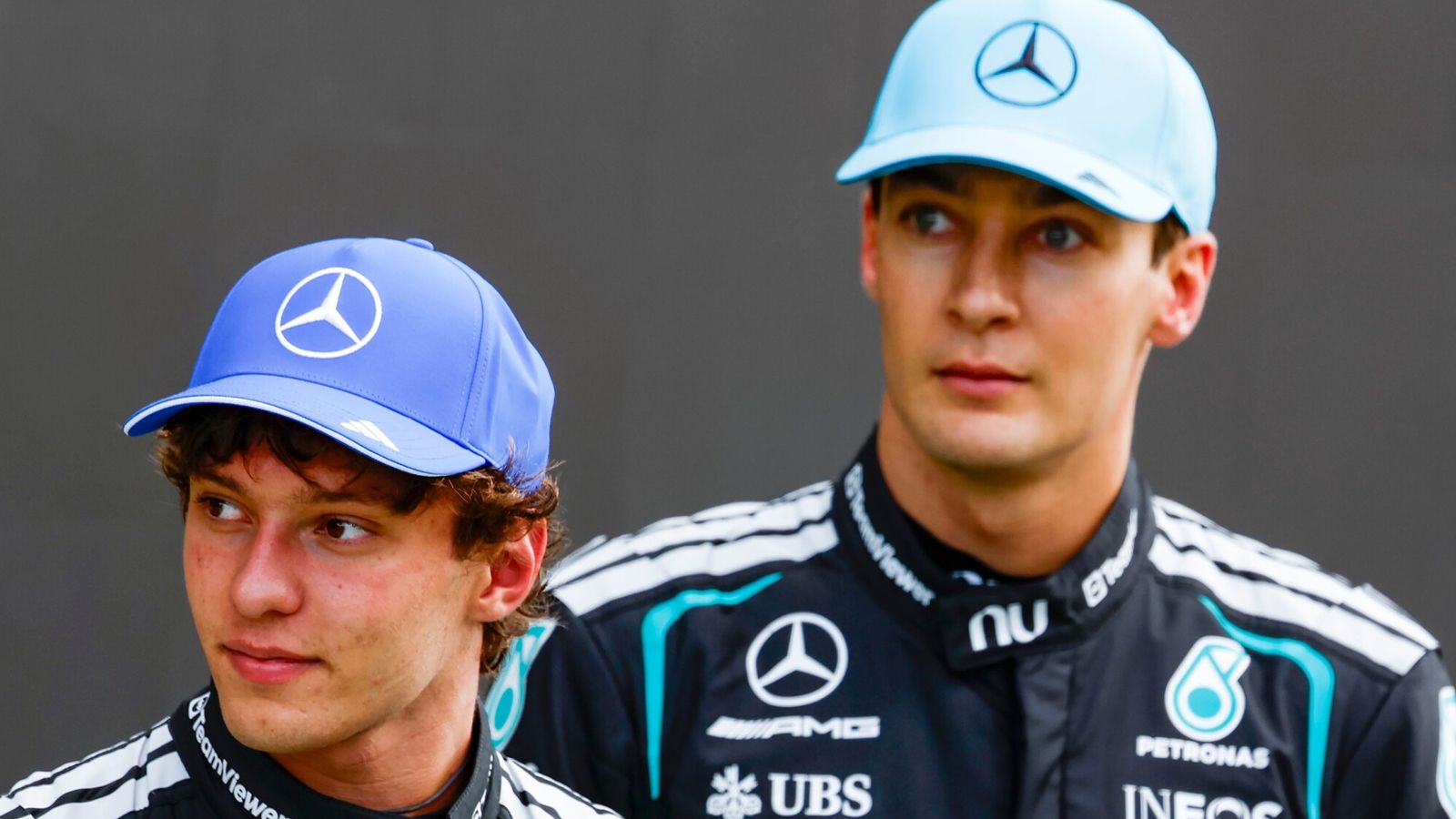
The Dutch Grand Prix served up a sharp exercise in cold-blooded kitchen management at the front of the field. While McLaren’s Lando Norris simmered away at the front to claim his second consecutive victory, Mercedes orchestrated a clinical seat-swap in the closing stages, instructing George Russell to step aside and yield second place to championship leader Kimi Antonelli.
Antonelli’s race had begun to curdle on the hard compound tyre during the second stint, prompting Mercedes to bring the 19-year-old in for fresh rubber under a Virtual Safety Car with 16 laps remaining. The pit stop dropped the Italian into third, directly behind Russell, with both Mercedes drivers suddenly feeling the searing heat of Ferrari’s Lewis Hamilton and Charles Leclerc charging hard behind them on fresher tyres.
Wolff’s Tactical Reduction
Faced with the prospect of an intra-team squabble that could have allowed Ferrari to feast on both podium positions, Mercedes team principal Toto Wolff made the call to invert the cars. The decision ensured Antonelli took second place, while Russell executed a stout defensive stand to hold third ahead of Hamilton after a secondary VSC period.
“We had a free stop with Kimi—a team internal free stop—and George was incredibly at the end fighting and also fending off the Ferraris, who were on a much quicker car,” Wolff explained. “That decision looks difficult on the outside but not on the inside. It’s a situation we discussed very often, also today in the morning: we’re not going to lose time fighting with each other and have two Ferraris breathing down our neck.”
Wolff rejected suggestions that individual driver sensitivities should override the garage’s broader objectives. “This is harsh times, there’s 2,500 people who work for championships, and it’s not one man’s game,” Wolff added. “I don't think Antonelli was anywhere near catching Norris. It was just the safest way in terms of scoring points.”
The Championship Equation
Russell initially queried the radio instruction to ascertain if Antonelli had the raw pace to hunt down Norris, but swiftly yielded once the mandate was clarified. The outcome lifts Antonelli’s lead in the Drivers' Championship to 59 points over Russell, while Norris’s victory trimmed his own deficit to the summit to 83 points. Earlier in the afternoon, Max Verstappen’s home race ended almost immediately when he suffered a heavy opening-lap crash out of seventh place.
“We’ve always said as a team, when we’re on different strategies, we’re never going to fight and we’re always going to invert,” Russell said. “Could I have kept him behind? Maybe. But equally, it could have been a P5 as well. In the end, he deserved to be P2. I think P3 was a fair result for me.”
Antonelli was quick to credit his team-mate after struggling with grip across the middle phase of the afternoon: “It was a difficult second half for me, especially in the last stint on the hards, just really struggling. George made my life a lot easier, and today P2 was the maximum we could have done because the pace of the McLarens was just too strong.”
Palate Cleanser: Paddock Tasting Menus
Watching the contrast between Mercedes’ surgical execution and Ferrari’s indecision behind them felt like comparing an exacting three-star service to an overbooked trattoria where the head chef refuses to delegate the pasta station. While Mercedes served up instant discipline to lock down a double podium, Ferrari left Hamilton simmering behind Leclerc on fresher tyres, debating the menu while the main course cooled off. It is the sort of operational friction that separates contenders from spectators when the championship reduction boils down to its final, concentrated glaze.
Next on the Menu
Formula 1 transitions immediately from the seaside dunes of Zandvoort to the temple of high-speed slipstreaming at Monza for the Italian Grand Prix on September 4–6, where Ferrari will race on home soil.
Recipe Card: The Zandvoort Pressure Cooker
Yield: One preserved double-podium finish under heavy thermal pressure.
Prep time: 16 laps.
Cook time: Until the tyres char to the canvas.
- 1 cup Granulated Sugar: Cast into a dry stainless steel pan over high flame; let it smoke on the verge of crystallization, mirroring Russell’s rear mirrors as Hamilton fills them.
- 1 pinch Sea Salt: Toss directly into the smoking reduction the exact moment the team radio crackles with an inversion order.
- Heat Source: Leave untended at maximum heat for three minutes. If you hesitate to pull it from the flame, the entire base burns bitter—just like leaving two squabbling team-mates out to get picked off by the Scuderia.