Reporting note: this article draws on Sky Sports; TaxiSports provides the summary and editorial framing.
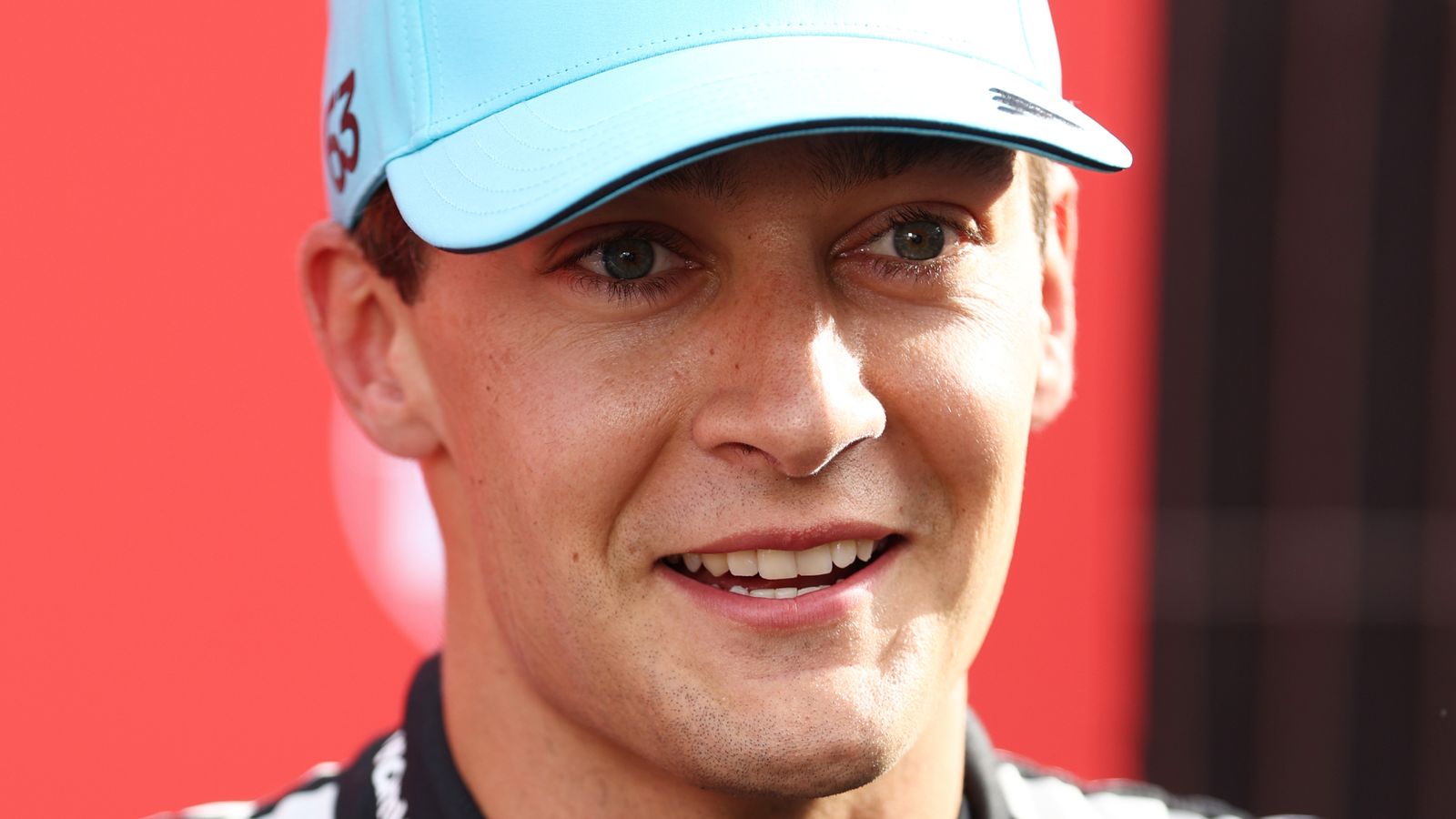
Russell Edges Norris for Zandvoort Sprint Pole
George Russell secured Sprint pole position for the Dutch Grand Prix, edging out McLaren's Lando Norris by just 0.040 seconds in a closely contested Sprint Qualifying session at Circuit Zandvoort. The Mercedes driver produced a clean, decisive final sector to claim the top spot, ending a difficult pre-summer run of form and placing himself at the front of Saturday’s 100km race grid.
The margins at the front of the field remained exceptionally tight across SQ3. Ferrari’s Charles Leclerc secured third place, with McLaren’s Oscar Piastri finishing fourth; both drivers completed their runs within a tenth of a second of Russell’s benchmark time. The Mercedes power unit held a crisp, rising minor-third cadence down the straight into Tarzan, where Russell committed late on the brakes before setting the car on its platform across the banked sweeping sections.
Antonelli Hampered by Early SQ1 Floor Damage
Championship leader Kimi Antonelli could manage no better than fifth place, finishing two tenths of a second adrift of Russell. Antonelli’s session was compromised early during SQ1 when he carried excessive entry speed into the final corner, suffering rear axle instability and running through the gravel trap on the outside of the circuit.
While the Italian avoided beaching his Mercedes, the high-speed contact with the gravel punctured sections of the underfloor. The floor, functioning as a primary aerodynamic load-bearing surface, sustained structural holes that Mercedes mechanics worked urgently to patch between sessions. Antonelli reported an initial loss of approximately 25 downforce points, noting that the missing floor integrity heavily compromised mechanical grip through low-speed cornering phases.
"I had a couple of holes in the floor," Antonelli stated. "When I came in, they initially said it was a loss of 25 downforce points. They tried to repair as much as possible, but definitely the damage was still there. I was struggling a lot in the low-speed corners."
Title Implications and Weekend Outlook
The result provides Russell with an immediate opportunity to reclaim ground in the Drivers' Championship. Antonelli entered the Dutch Grand Prix weekend holding a 50-point lead over Ferrari's Lewis Hamilton, with Russell positioned nine points behind Hamilton in third place. Russell noted after the session that approaching the weekend with a clean slate helped reset his confidence following a challenging run of races prior to the summer shutdown.
Mercedes team principal Toto Wolff suggested Russell appeared revitalized following his engagement to Carmen Montero Mundt over the break, while playing down the residual impact of Antonelli's repairs heading into SQ3, citing a minor entry error at Turn 11 as a key factor in the final gap.
Following the conclusion of SQ3, the scrubbed soft-compound Pirellis showed distinct micro-graining across their outer shoulders, ground down by Zandvoort’s abrasive seaside asphalt. Trackside relative humidity stood at 74 percent as the session concluded, contrasting with an estimated driver fluid loss of nearly 1.2 liters over the high-g, 45-minute qualifying window.
Track action at Zandvoort resumes on Saturday with the Dutch Grand Prix Sprint race, followed by Grand Prix Qualifying in the afternoon to set the grid for Sunday's main event.

Quinn Santos
Quinn Santos covers Formula 1 with a reverent, forensic attention to the physical and acoustic life of the race. In reports, engine notes are not background noise but specific orchestral intervals moving through the grid, and every race devotes space to the degraded texture of tire compounds after a stint, read like worn material rather than performance data. Chassis geometry and floor aerodynamics are explained through architectural metaphor: load paths become load-bearing walls, floors become tensioned skins. Quinn avoids standard telemetry charts, instead reconstructing key overtakes through rhythmic, beat-heavy sentence structures that carry braking points and exits like percussion. A reader gets the feeling of the circuit as a built and sounding environment, not a sequence of lap times. Each race recap closes with an unprompted weather report comparing trackside humidity to the driver's sweat output, a small forensic reminder of how much the body and the air are part of the result.