Reporting note: this article draws on Sky Sports; TaxiSports provides the summary and editorial framing.
Structural Limits and Damage Control at Baku
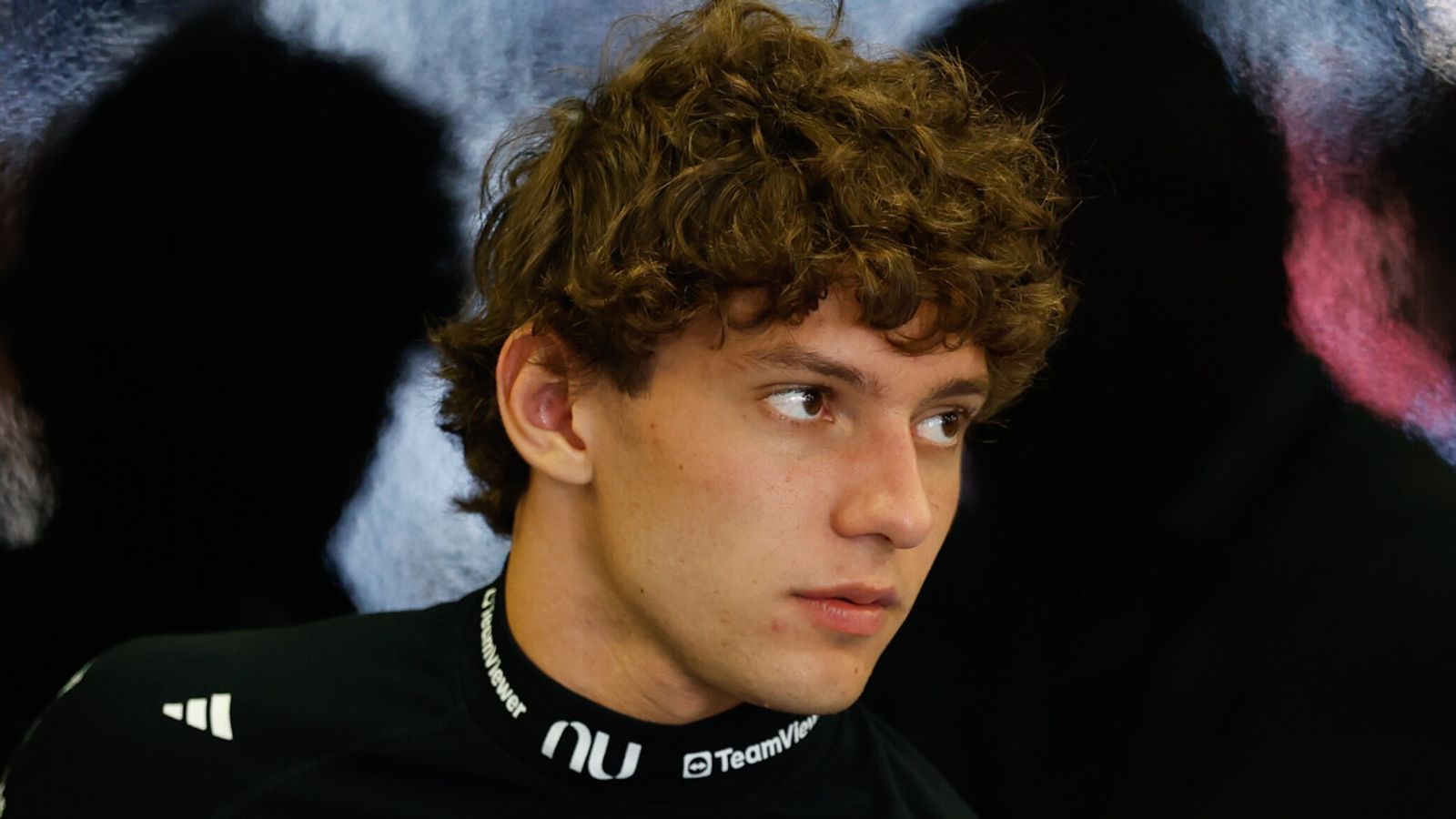
A compromised weekend at the Baku City Circuit tested the structural integrity of Kimi Antonelli's championship campaign. Starting from 16th on the grid following a Q1 qualifying crash, the Mercedes driver managed a recovery drive to fifth place in the Azerbaijan Grand Prix. The result surrendered valuable ground in the Drivers' Championship standings, with race winner and team-mate George Russell narrowing the deficit to 66 points.
Antonelli’s progress was deliberate rather than explosive. Deprived of critical baseline telemetry after technical issues halted his practice running, the 20-year-old Italian found his Mercedes operating in an uncooperative setup window across the abrasive, low-grip city circuit.
"I was driving a bit like my grandmother today, just damage save mode," Antonelli said. "I didn't take risks. Before making a move, I was making sure that I could go for it. If I had the same pace as at Monza or in previous races, it would have been different... but today, I realised very early that first of all, it was a lot harder to overtake with a train of cars all in Overtake Mode, then I didn't have the same pace as I had previously, so the mindset changed very quickly."
The pit-lane exit line offers virtually zero margin against the perimeter barriers when cars rejoin on cold compound rubber.
Aerodynamic Load Loss and Restart Incidents
Progress through the midfield required 17 laps simply to penetrate the top 10. While Antonelli capitalized on attrition ahead, his car suffered mechanical and aerodynamic compromise during the first safety-car restart. In avoiding a three-car collision, contact with the Haas of Oliver Bearman sheared vital floor edge architecture along the left side of the chassis.
With the underfloor load paths ruptured and the floor edge seal compromised, downforce levels deteriorated rapidly across the volatile street asphalt, forcing Antonelli to rely purely on defensive management to secure ten championship points.
"After the restart, I had big floor damage. My whole left side was gone with the contact," Antonelli noted. "After that, the car was very sketchy to drive, and I still tried to get to P4, but all in all, it's one of those days where you have to be happy with P5. Also seeing so many people doing mistakes, you kind of pull back a little bit because I just took advantage of everyone else's mistakes and just move forward."
Championship Standings Outlook Ahead of Sepang
Despite conceding points to Russell, who executed a lights-to-flag victory ahead of Red Bull's Max Verstappen, the championship mathematics continue to favor Antonelli. Russell still faces a looming grid penalty before the season concludes due to an upcoming engine change allocation.
The triple-header schedule relocates immediately to Malaysia's Sepang International Circuit, which steps in to host the Bahrain Grand Prix. The high-energy, sweeping profile of Sepang will provide a stark contrast in aerodynamic demand and chemical decay of tires compared to Baku's stop-start layout.
- Championship Margin: Antonelli leads Russell by 66 points in the Drivers' Championship standings.
- Next Round: Bahrain Grand Prix at Sepang International Circuit, Malaysia.
- Technical Variables: Russell's impending power unit grid penalty remains an active variable in the title run-in.