Reporting note: this article draws on Sky Sports; TaxiSports provides the summary and editorial framing.
Data-Driven Strategy Defended in Monza Title Dynamic
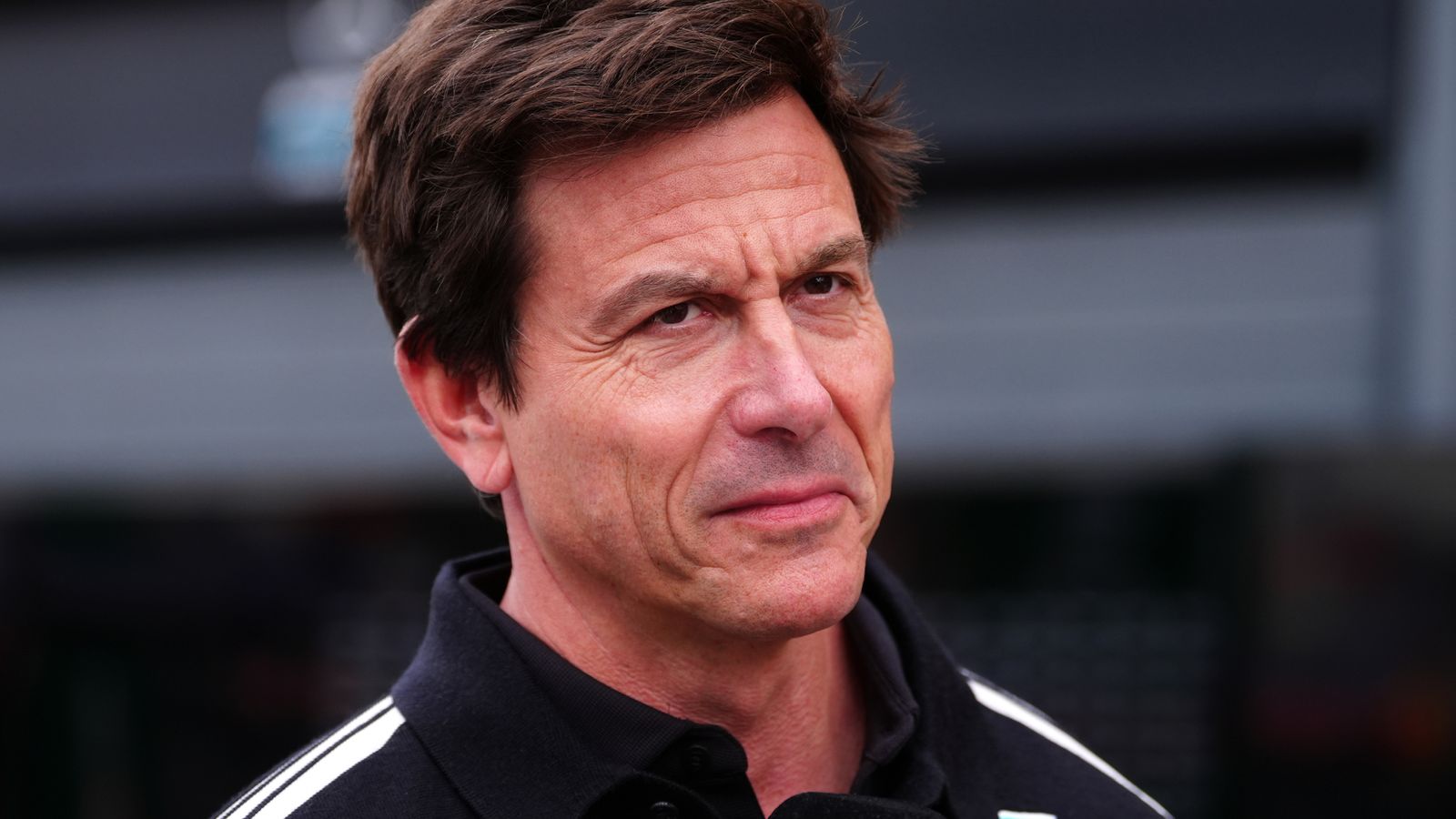
Mercedes team principal Toto Wolff has rejected external criticism regarding the strategic management of George Russell and Kimi Antonelli at the Italian Grand Prix, describing suggestions of internal favoritism as entirely unfounded. The operational split at Monza expanded Antonelli's advantage at the summit of the Drivers' Championship to 66 points over his teammate.
The critical tactical divergence unfolded under a Virtual Safety Car period. Russell held track position on an established set of hard-compound tires—calculated pre-race as the optimal baseline for a one-stop execution. Antonelli, having started 19th on the grid on hard tires, was switched to fresh medium compound rubber during the neutralization. The resulting performance offset enabled the 20-year-old to erase the delta to the front and claim victory.
"It's absolutely the right thing we did," Wolff said ahead of the Spanish Grand Prix. "He [Russell] was on the hard. It was predicted to be a one-stop as the better strategy. The medium was a compromise; we had to put the medium on Kimi because he started on the hard... saying that he was penalised is complete bull****."
The pit-lane entry delta under neutralized conditions offered a structural opening that Mercedes exploited for Antonelli without altering Russell's planned strategic trajectory.
Managing Championship Tolerances and Garage Equilibrium
The Monza result reinforces an unexpected dynamic in the 2026 title standings. While Russell entered the campaign as the primary championship contender, Antonelli’s trajectory across his second season in Formula 1 has shifted the internal competitive baseline. Russell supported the pit wall's execution post-race, acknowledging the mechanical validity of the split strategies.
Wolff maintained that managing two title contenders requires cold operational arithmetic rather than emotional equity:
- Strategic Transparency: Sunday morning protocols outline position swaps if a car behind possesses significant performance deltas or faces external threats.
- Inter-Garage Management: Decisive interventions are applied in either direction based on pure pace differentials and tire condition.
- Risk Mitigation: Avoiding intra-team friction during severe pace disparities late in stints.
The volatility of the closing laps was underscored by severe chemical decay on Russell's hard tires, producing a closing delta of approximately one second per lap in Antonelli's favor. Wolff referenced the lap-one collision between Ferrari drivers Charles Leclerc and Lewis Hamilton at Monza as the exact failure mode Mercedes sought to avoid during the final exchanges.
Championship Outlook Ahead of Madrid
The paddock arrives at the newly configured Madring circuit for the Spanish Grand Prix with tire management emerging as a central operational variable. The abrasive, untested Madrid asphalt represents an unknown friction matrix, where surface loading and thermal thresholds will dictate stint viability.
With a 66-point deficit in the standings, Russell faces an urgent requirement to halt Antonelli’s momentum. As track temperatures fluctuate across the Madrid weekend, Mercedes' capacity to balance mechanical balance against intra-team execution will undergo another direct stress test.