
Reporting note: this article draws on Sky Sports; TaxiSports provides the summary and editorial framing.
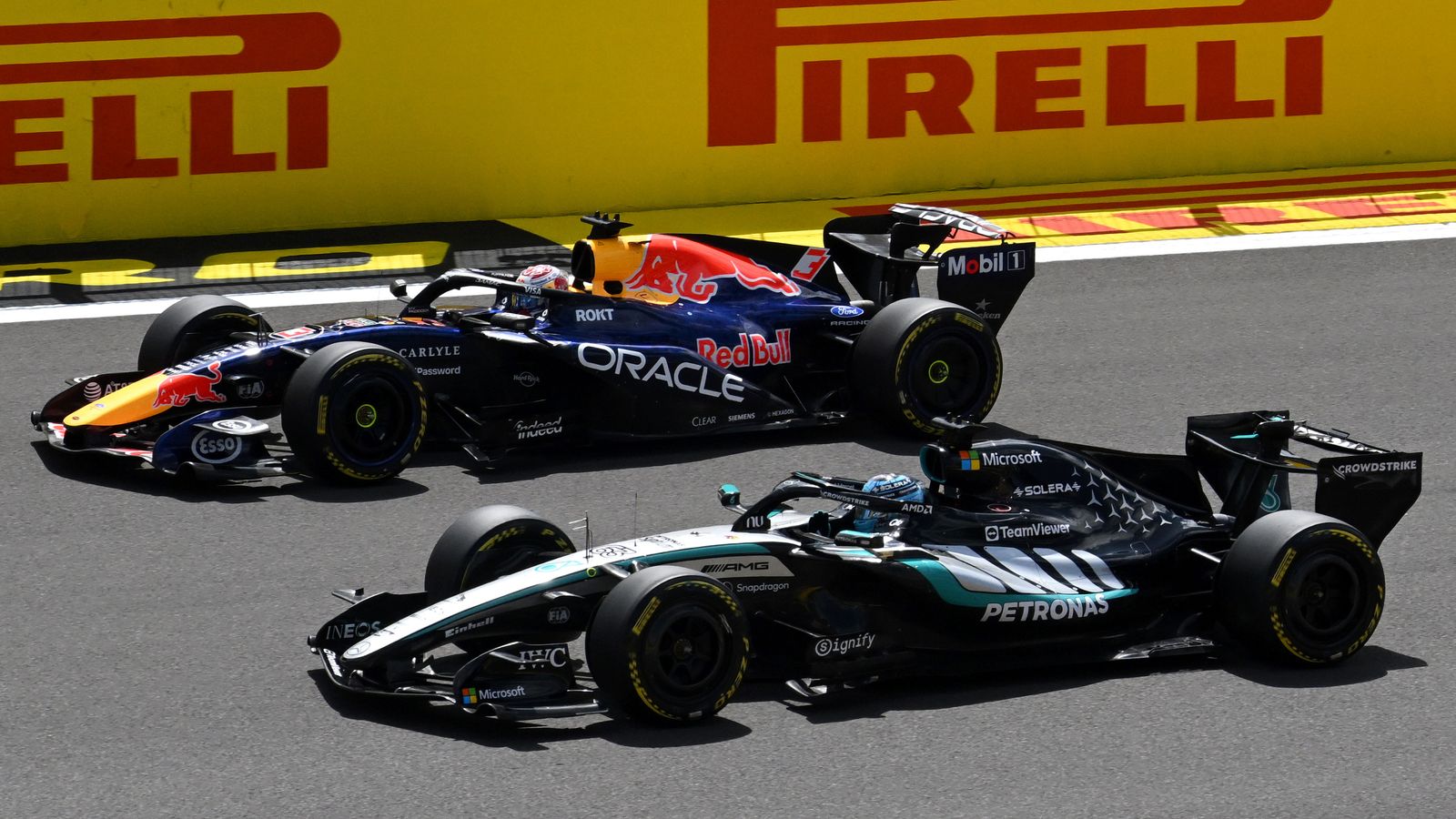
FIA Validates Engine Upgrade Allocations Across Grid
The FIA has officially confirmed that Mercedes has been granted additional engine homologation opportunities under the sport's Additional Development and Upgrade Opportunities (ADUO) system, despite pushback and controversy from rival teams across the paddock.
Introduced alongside the 2026 power unit regulations, the ADUO framework is engineered to keep engine performance within a narrow competitive band across the rules cycle. Following a forensic review of the opening cycles, Formula 1's governing body released the official classifications for the first two assessment periods, confirming allocations that leave championship leaders Mercedes with extra development scope while denying struggling rivals Red Bull any compensatory upgrades.
Breakdown of ADUO Assessment Findings
The FIA evaluated engine performance across two distinct windows during the first half of the 2026 campaign:
- Period 1 (Rounds 1–5): Red Bull was adjudged to possess the benchmark power unit. Mercedes fell within the 2% to 4% performance deficit window, granting them one additional homologation in 2026 and one in 2027, alongside corresponding dyno and cost cap allowances. Audi, Ferrari, and Honda were classified beyond the 4% threshold, earning two homologations for each season.
- Period 2 (Rounds 6–13, concluding in Hungary): The FIA announced that no manufacturer met the threshold for new allocations. Because no rival's introduced package pushed Red Bull beyond the 2% deficit boundary, the Milton Keynes squad received zero upgrade concessions.
The confirmation cements an uncomfortable technical paradox on the grid. While Mercedes dominated the opening phase of the championship and currently leads the Constructors' Championship by 87 points over Ferrari, the underlying dynamometer and telemetry assessments placed their baseline power unit behind Red Bull's internal architecture during early rounds.
Paddock Reaction and Title Implications
The ruling previously sparked vocal opposition, with Red Bull's Max Verstappen questioning the metric determinations while Mercedes team principal Toto Wolff publicly asserted earlier this summer that his squad already fielded the most potent unit on the grid. However, FIA single-seater director Nikolas Tombazis defended the integrity of the process.
"With the release of the findings of period two, we are confident that, based on the quality of the data, its analysis is incredibly robust, giving us a high level of confidence in our findings," said Tombazis. "This is the first year of ADUO so naturally there are areas which we may evolve over time, in discussion with all the PU Manufacturers."
Mercedes has yet to introduce their permitted 2026 upgrade into their chassis floor and power unit installation, whereas Ferrari, Audi, and Honda are understood to have already deployed one of their allocated steps. Meanwhile, customer team McLaren has leveraged the existing Mercedes power unit architecture to claim back-to-back victories with reigning champion Lando Norris.
Current Standings and Next Steps
In the Drivers' Championship, rookie sensation Kimi Antonelli leads Mercedes team-mate George Russell and Ferrari's Lewis Hamilton by 59 points, while Verstappen sits sixth, 130 points adrift. The third ADUO assessment window began at the Dutch Grand Prix and will run through the Mexico City Grand Prix on November 1. Formula 1 travels next to the high-speed temple of Monza for the Italian Grand Prix on September 4–6.

Quinn Santos
Quinn Santos covers Formula 1 with a reverent, forensic attention to the physical and acoustic life of the race. In reports, engine notes are not background noise but specific orchestral intervals moving through the grid, and every race devotes space to the degraded texture of tire compounds after a stint, read like worn material rather than performance data. Chassis geometry and floor aerodynamics are explained through architectural metaphor: load paths become load-bearing walls, floors become tensioned skins. Quinn avoids standard telemetry charts, instead reconstructing key overtakes through rhythmic, beat-heavy sentence structures that carry braking points and exits like percussion. A reader gets the feeling of the circuit as a built and sounding environment, not a sequence of lap times. Each race recap closes with an unprompted weather report comparing trackside humidity to the driver's sweat output, a small forensic reminder of how much the body and the air are part of the result.


