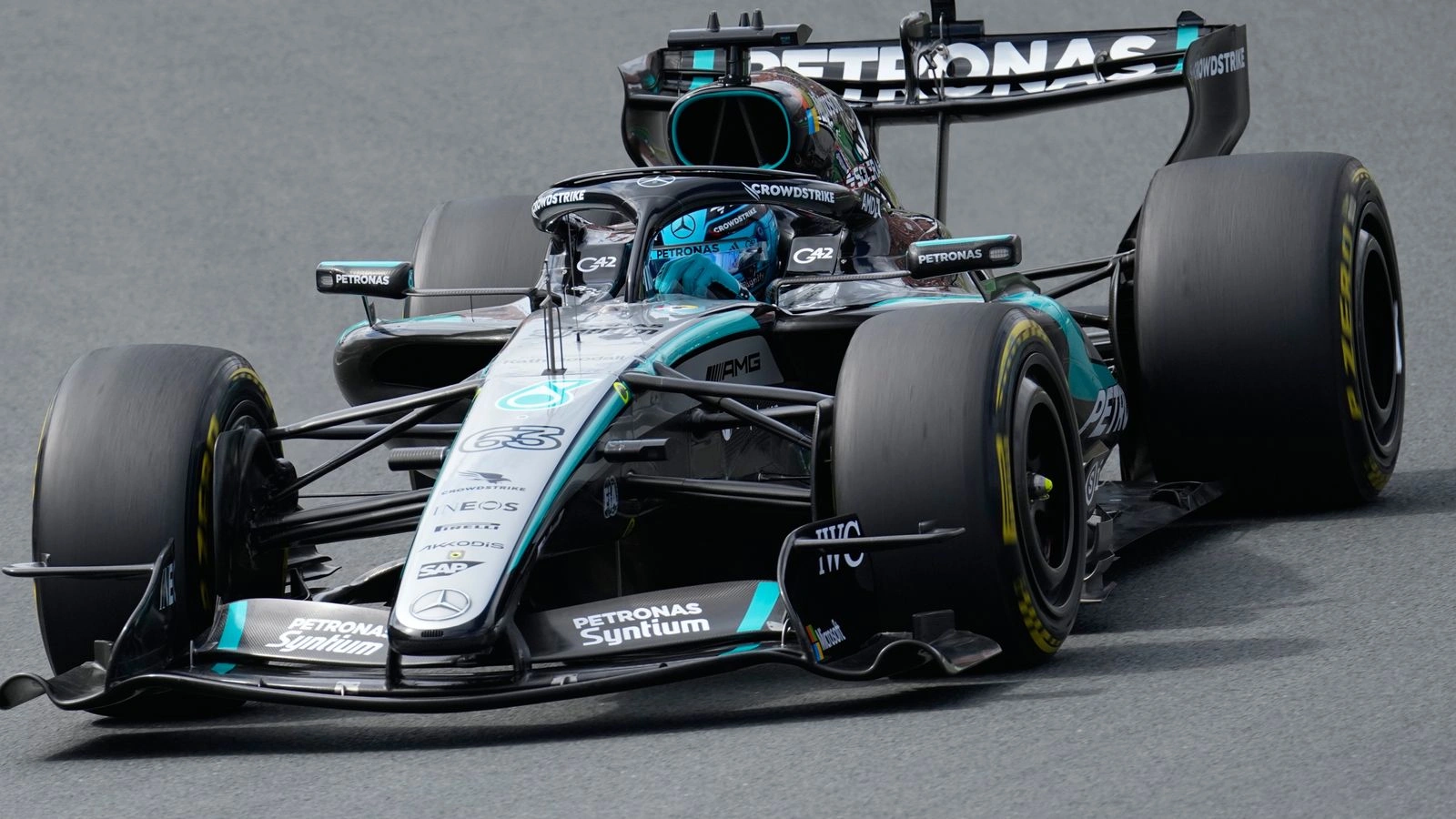
Reporting note: this article draws on Sky Sports; TaxiSports provides the summary and editorial framing.
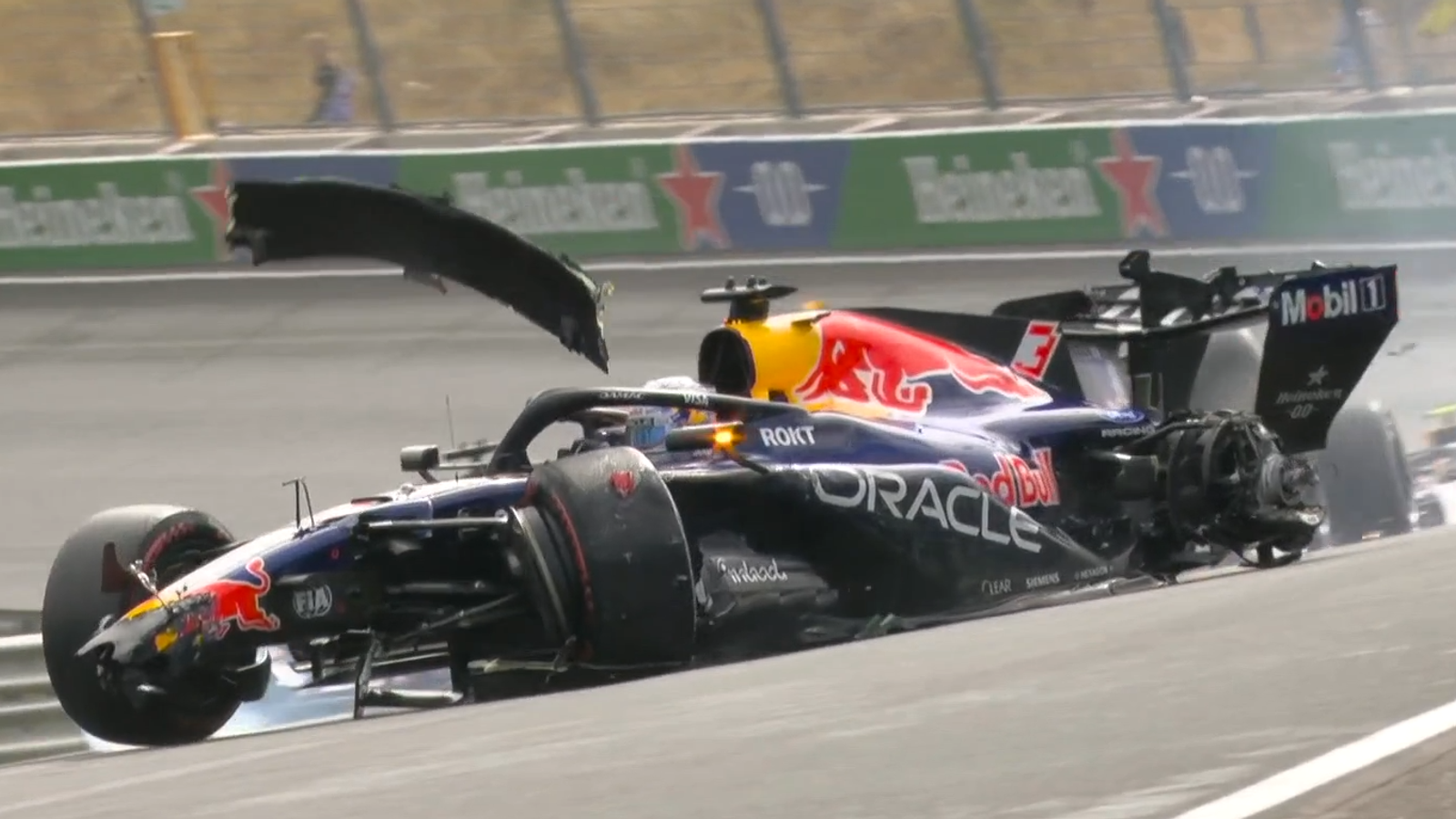
Opening-Lap Shunt Halts Verstappen's Home Race
Max Verstappen endured an abrupt and violent exit from what is likely his final home event, crashing heavily into the outside barriers on the opening lap of the Dutch Grand Prix. Running in seventh position, the Red Bull driver touched a damp kerb through Circuit Zandvoort's high-speed banked turn, breaking rear traction on slick tires and triggering an immediate red flag.
Verstappen walked away uninjured from the impact, acknowledging that the incident carried high potential for a worse outcome given the pack of cars following directly behind him.
"It was of course still quite wet in that corner. As soon as I was going through the corner, I could see a little bit of a dry line coming, and I thought from that point on I could accelerate again, but it suddenly then accelerated a lot," Verstappen said. "It caught me out, simple as that. I tried to correct it but couldn't. And then you hit the wall, but it could have been a lot worse because there were a lot of cars behind me as well, but luckily that all went well."
Analyzing the incident, Sky Sports F1 pundit Nico Rosberg observed that Verstappen took a tighter entry than rivals into the banked corner, where the usable dry line sat roughly 50 centimeters wider: "I think he just put a bit too much throttle down and you're gone. He's the greatest driver out there, one of the greatest of all time, that just goes to show how difficult it is in these conditions."
Red Bull Faces Fourth-Fastest Reality
The retirement capped a challenging weekend at Zandvoort for Red Bull, coming just days after the team confirmed a long-term contract extension keeping Verstappen through at least the end of 2030. Throughout the weekend, the RB chassis struggled for baseline pace, leaving Verstappen sixth in Saturday's Sprint and trailing Mercedes and McLaren by half a second in qualifying trim.
The car's floor and front aerodynamic architecture failed to generate the required mechanical bite across the low-grip, abrasive asphalt. After securing three podium finishes across July in Austria, Spa-Francorchamps, and Budapest, Red Bull brought only a revised front corner to Zandvoort.
Verstappen assessed the competitive pecking order plainly following the crash:
- Season Average: Verstappen noted that Red Bull has operated as the fourth-fastest car on average across the campaign.
- Development Focus: Fundamental limitations may require 2027 design changes to fully rectify.
- Team Reaction: Team principal Laurent Mekies conceded that the squad took a measurable step backward relative to its pre-summer break form.
Next Stop: Italian Grand Prix at Monza
Formula 1 moves directly to the high-speed temple of Monza for the Italian Grand Prix on September 4-6, where Red Bull will seek answers regarding low-drag aerodynamic efficiency and single-lap qualifying pace.
Trackside relative humidity at Zandvoort hovered at 78 percent during the opening stint, far outstripping the driver's immediate perspiration rate before the impact cut the afternoon short.

Quinn Santos
Quinn Santos covers Formula 1 with a reverent, forensic attention to the physical and acoustic life of the race. In reports, engine notes are not background noise but specific orchestral intervals moving through the grid, and every race devotes space to the degraded texture of tire compounds after a stint, read like worn material rather than performance data. Chassis geometry and floor aerodynamics are explained through architectural metaphor: load paths become load-bearing walls, floors become tensioned skins. Quinn avoids standard telemetry charts, instead reconstructing key overtakes through rhythmic, beat-heavy sentence structures that carry braking points and exits like percussion. A reader gets the feeling of the circuit as a built and sounding environment, not a sequence of lap times. Each race recap closes with an unprompted weather report comparing trackside humidity to the driver's sweat output, a small forensic reminder of how much the body and the air are part of the result.