Reporting note: this article draws on Sky Sports; TaxiSports provides the summary and editorial framing.
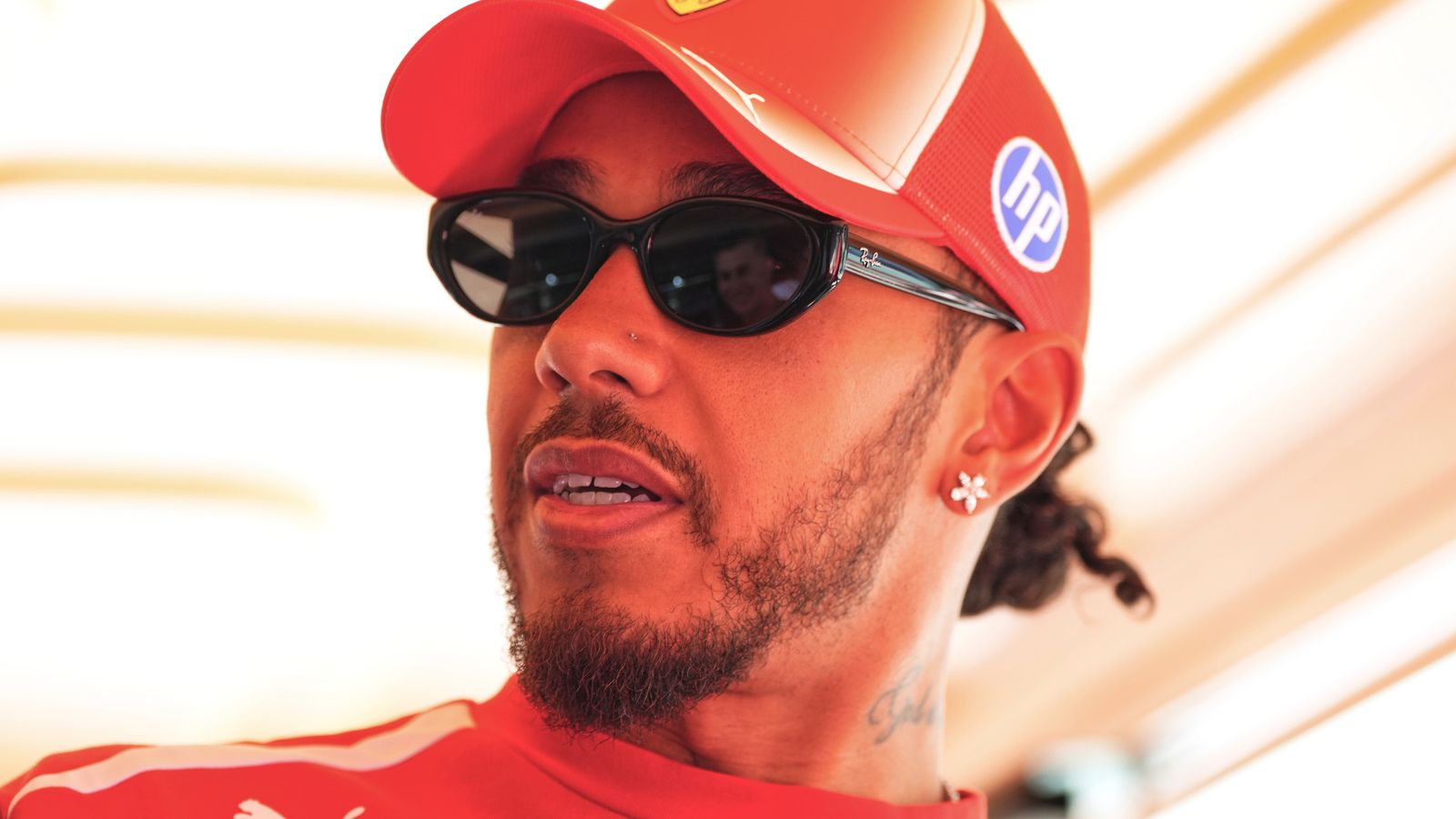
Hamilton Defends Ferrari Progress Amid Faded Title Chase
Lewis Hamilton has shifted his 2026 Formula 1 championship focus toward securing a top-three finish and hunting down former teammate George Russell, mounting a firm defense of Ferrari's developmental strides despite recent operational setbacks. Speaking ahead of the Azerbaijan Grand Prix—round 15 of 23—Hamilton emphasized that context is crucial when assessing the Scuderia's current campaign.
A costly retirement in Madrid dropped Hamilton over 100 points behind championship leader Kimi Antonelli, effectively closing the window on his pursuit of an eighth world title. Antonelli holds an 81-point advantage over his Mercedes teammate Russell, who sits in second place, 20 points ahead of Hamilton. Despite the deficit, Hamilton argued that a podium finish in the drivers' standings and second place in the constructors' battle would represent a major step forward after a winless 2025.
"I think it's also just having to think about where we were last year and where we've come to this year," Hamilton said. "If I can battle with George and somehow get ahead of him... managing to stay in the top three, even second, I think would be a huge achievement for us as a team."
Bridging the Gap on the Track
Ferrari's 2026 machinery has demonstrated genuine performance, functioning like a stiff, high-load aerodynamic floor capable of generating high peak grip when conditions align. Hamilton converted that package into a victory at the Spanish Grand Prix in June, followed by Charles Leclerc's triumph at Silverstone. However, execution errors, strategic miscalculations, and unforced retirements have blunted their momentum across the summer stretch.
Hamilton noted that while recent weekends have fallen short in operational execution, the fundamental pace of the car remains competitive:
- Championship Standings: Hamilton trails leader Antonelli by 101 points and sits 20 points behind second-placed Russell.
- Constructors' Target: Ferrari aims to hold second place and apply pressure to Mercedes over the remaining nine rounds.
- Development Trajectory: Hamilton highlighted successful upgrade packages that reversed the team's slide from fourth overall in 2025.
Russell Resets Pace for Baku Triple-Header
On the other side of the battle for second, Russell enters the Baku weekend expressing renewed confidence in his Mercedes package. After struggling earlier in the year to adapt his driving style to the technical demands of the 2026 regulations, Russell reported significant strides in his long-run performance since the summer break.
With technical regulations set for stability heading into 2027, Russell underlined that resolving underlying setup friction now provides direct value for next season. While mathematically distant from Antonelli, Russell confirmed his target remains race victories and pole positions over the upcoming Azerbaijan-Malaysia-Singapore triple-header.

Quinn Santos
Quinn Santos covers Formula 1 with a reverent, forensic attention to the physical and acoustic life of the race. In reports, engine notes are not background noise but specific orchestral intervals moving through the grid, and every race devotes space to the degraded texture of tire compounds after a stint, read like worn material rather than performance data. Chassis geometry and floor aerodynamics are explained through architectural metaphor: load paths become load-bearing walls, floors become tensioned skins. Quinn avoids standard telemetry charts, instead reconstructing key overtakes through rhythmic, beat-heavy sentence structures that carry braking points and exits like percussion. A reader gets the feeling of the circuit as a built and sounding environment, not a sequence of lap times. Each race recap closes with an unprompted weather report comparing trackside humidity to the driver's sweat output, a small forensic reminder of how much the body and the air are part of the result.