Reporting note: this article draws on Sky Sports; TaxiSports provides the summary and editorial framing.
The Arithmetic of Pursuit at Silverstone
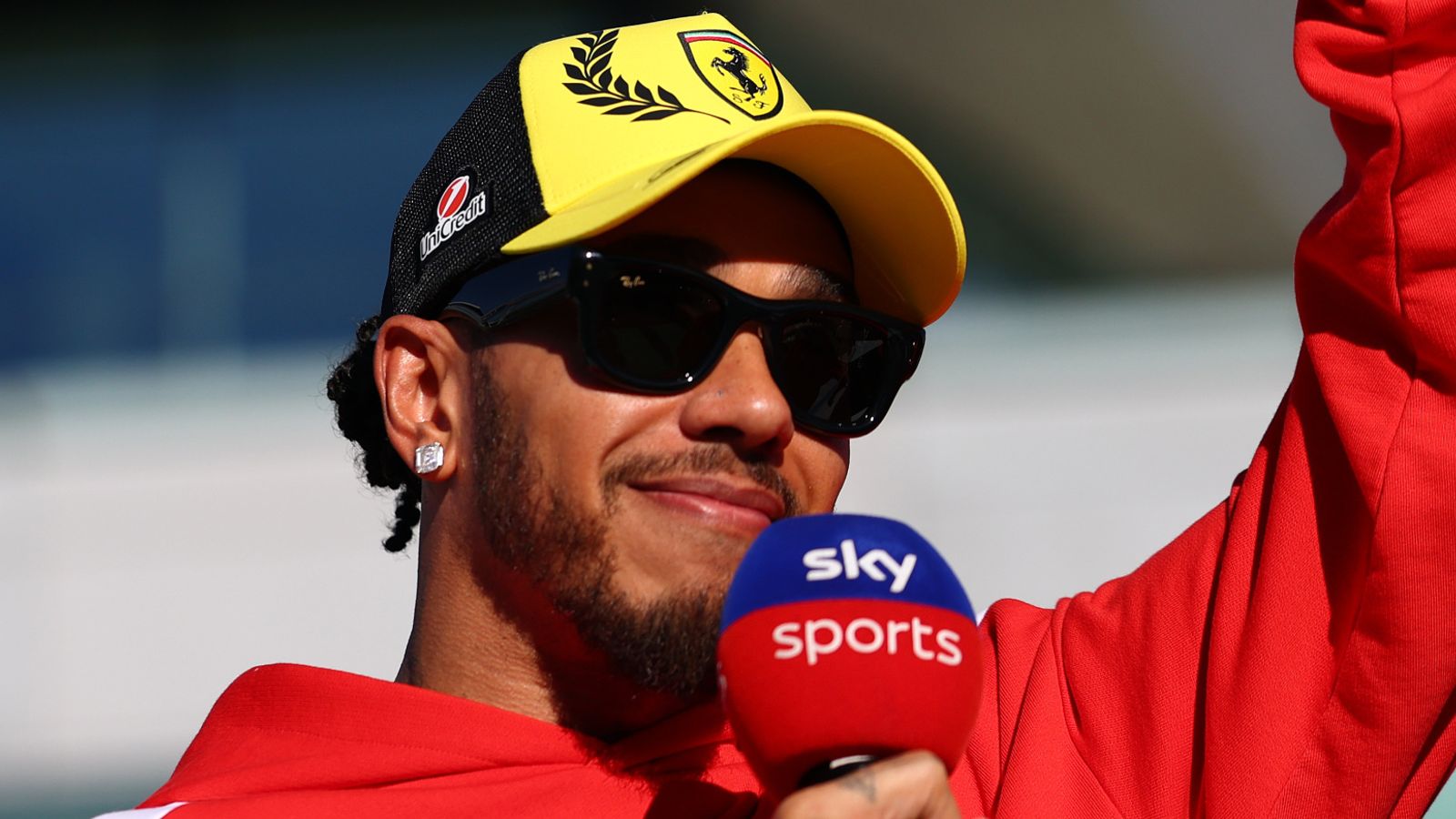
Lewis Hamilton enters his 20th home race weekend at Silverstone confronting a precise mathematical reality: an eighth World Championship remains mathematically viable, but the structural ceiling of the Ferrari chassis is currently dictated by straight-line power deployment. Hamilton sits third in the Drivers' Championship standings, 46 points adrift of Mercedes leader Kimi Antonelli after eight rounds.
Speaking ahead of the British Grand Prix, Hamilton reiterated his long-term intent to secure a record eighth title with Ferrari, asserting that he will not step away until the objective is achieved. The declaration follows an initial eight-race sequence where Ferrari has secured one victory—Hamilton's win in Barcelona—and four podium finishes, interrupting a win drought that stretched back to 2024.
The Energy Deficit on the Hangar Straight
The gap between Ferrari and Mercedes is not primarily dynamic through medium-speed mechanical grip; it is telemetry-defined along the straights. Mercedes has collected seven victories from the opening eight Grands Prix and secured every pole position of the season. George Russell's victory in Austria served as an abrupt operational check on Ferrari's development trajectory.
Silverstone introduces a specific electrical harvesting bottleneck. Because the circuit layout features sustained full-throttle arcs rather than harsh deceleration zones, the energy recovery system lacks the mechanical braking events required to replenish the battery reserve.
"We run out of battery power. There's only a few corners to charge the engine, so the MGU-K will be switched off for a large portion of the lap and that's where we will struggle probably the most. The deficit could be twice as big."
— Lewis Hamilton
The pit-lane exit line here cuts sharply into the primary trajectory, compressing the out-lap margin by critical fractions of a second.
Championship Standings and Silverstone Form
Despite the powertrain constraints, Hamilton’s historical baseline at Silverstone remains unprecedented:
- Historical Dominance: Nine career victories at the circuit, four more than any driver in Formula 1 history.
- Finishing Consistency: Top-four finishes in each of the past 13 British Grands Prix.
- Championship Buffer: A 46-point deficit behind Antonelli, with Ferrari attempting to stabilize chemical decay on high-load rear compounds across the abrasive Northamptonshire track surface.
Closing the gap on Mercedes hinges entirely on Ferrari's ability to introduce drag-reduction aerodynamic packages and calibrate thermal efficiency without compromising negative downforce pressure through Copse and Maggotts-Becketts.