Reporting note: this article draws on Sky Sports; TaxiSports provides the summary and editorial framing.
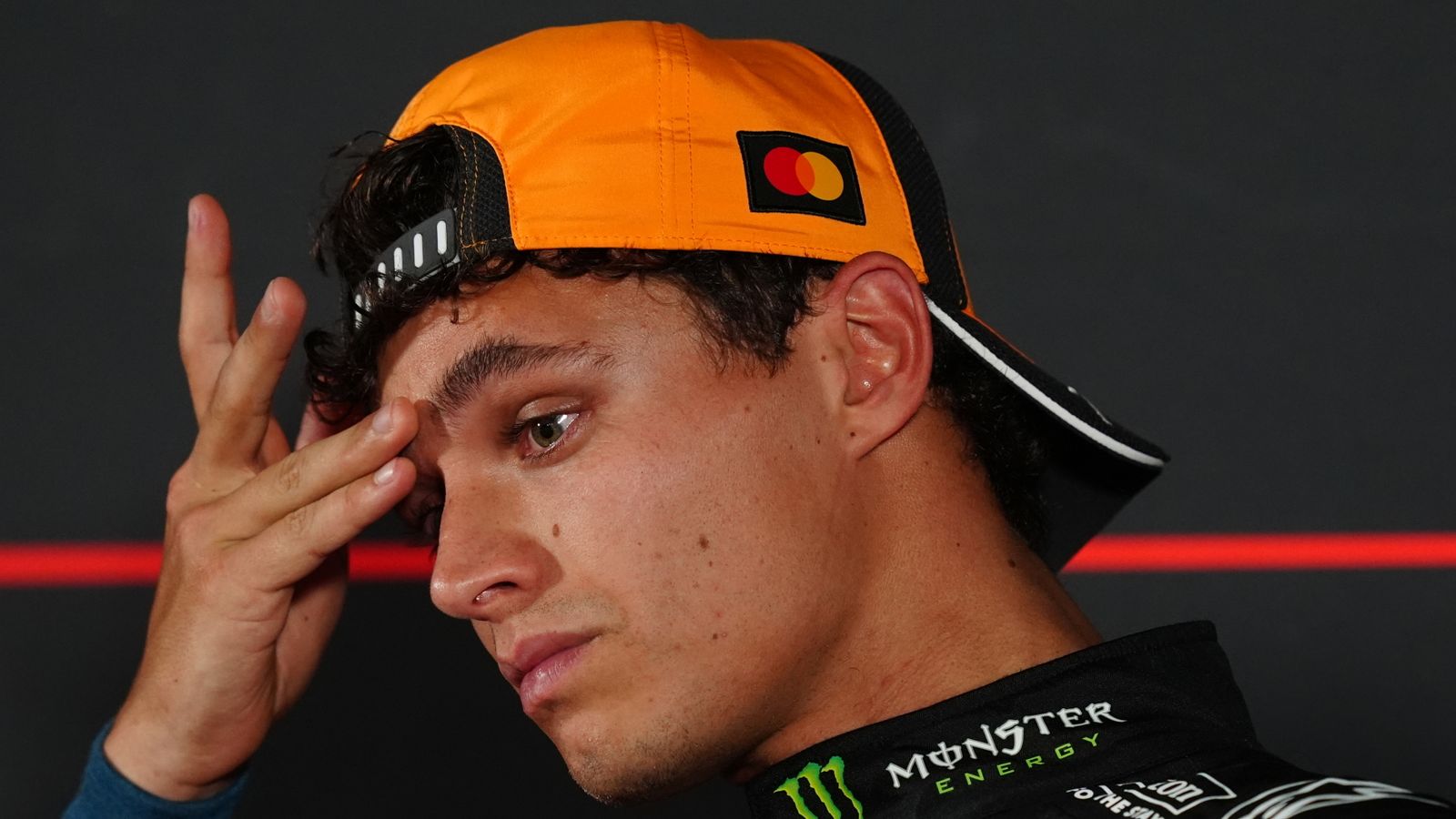
The Pit Lane Lottery at Madring
Lando Norris saw a dominant Spanish Grand Prix win vanish into the Madrid heat after a two-minute Virtual Safety Car period completely inverted the race order, handing victory to championship leader Kimi Antonelli. Norris had built a commanding six-second cushion over Antonelli when Lance Stroll’s stricken Aston Martin brought out the VSC on Lap 15. The timing could not have been more damaging for McLaren: Norris had just crossed pit entry under green conditions, while Antonelli and the chasing pack were able to dive into the pit lane under the neutralized delta.
Because the caution lasted barely 120 seconds, the track returned to green flag conditions just as Norris reached the pit entry on Lap 16. McLaren were forced to service their driver under full racing speeds, dropping him from the lead down to fifth. Norris mounted a recovery drive to secure third on the podium, but the strategic damage proved irreversible.
Tactical Deadlock: Why McLaren Could Not Stay Out
McLaren explored extending Norris’s opening stint to rebuild a buffer while Charles Leclerc held up Antonelli. However, team principal Andrea Stella confirmed that the initial set of medium tyres had already sustained heavy degradation—the compound seared down past its optimum operating window. Keeping Norris out on exhausted rubber against rivals attacking on fresh, scrubbed hard tyres would have cost even more race time.
"We considered staying out, but you have to accept that you're on relatively used mediums and the people behind you are on new hards," Stella noted. "You're never going to open a gap. It was almost a mathematical definition of being unlucky."
Drivers Demand Procedural Change
Speaking after the race, Norris argued that race control should modify VSC procedures to eliminate arbitrary timing advantages, suggesting either keeping the VSC active for a minimum of one full lap or closing pit lane access entirely during brief neutralization periods.
"A race should be won by the guy who can put in the best performance," Norris said. "For everyone to get a VSC pit stop and for me to not, it’s just unfair. We have spoken about it in drivers’ briefings saying they should leave it out for at least a lap, so it's equal for everyone. I lost out on about 20 seconds of race time."
Antonelli acknowledged the fortune involved in his win, which further consolidated his 2026 title lead. Sky Sports F1 analyst Naomi Schiff offered a countering view, emphasizing that VSCs exist purely for track worker safety and that safety car fortune balances out across a driver's career over time.
The paddock’s current political debate functions much like a regional tasting menu: technical purists demand surgical perfection and controlled ingredients, while race promoters favor the volatile acidity of sudden, disruptive safety cars that flip the order without warning.
Next Fixture
Formula 1 heads next to the streets of Baku for the Azerbaijan Grand Prix, scheduled as a triple-header opener running from September 24–26, featuring a Saturday race.