Reporting note: this article draws on Sky Sports; TaxiSports provides the summary and editorial framing.
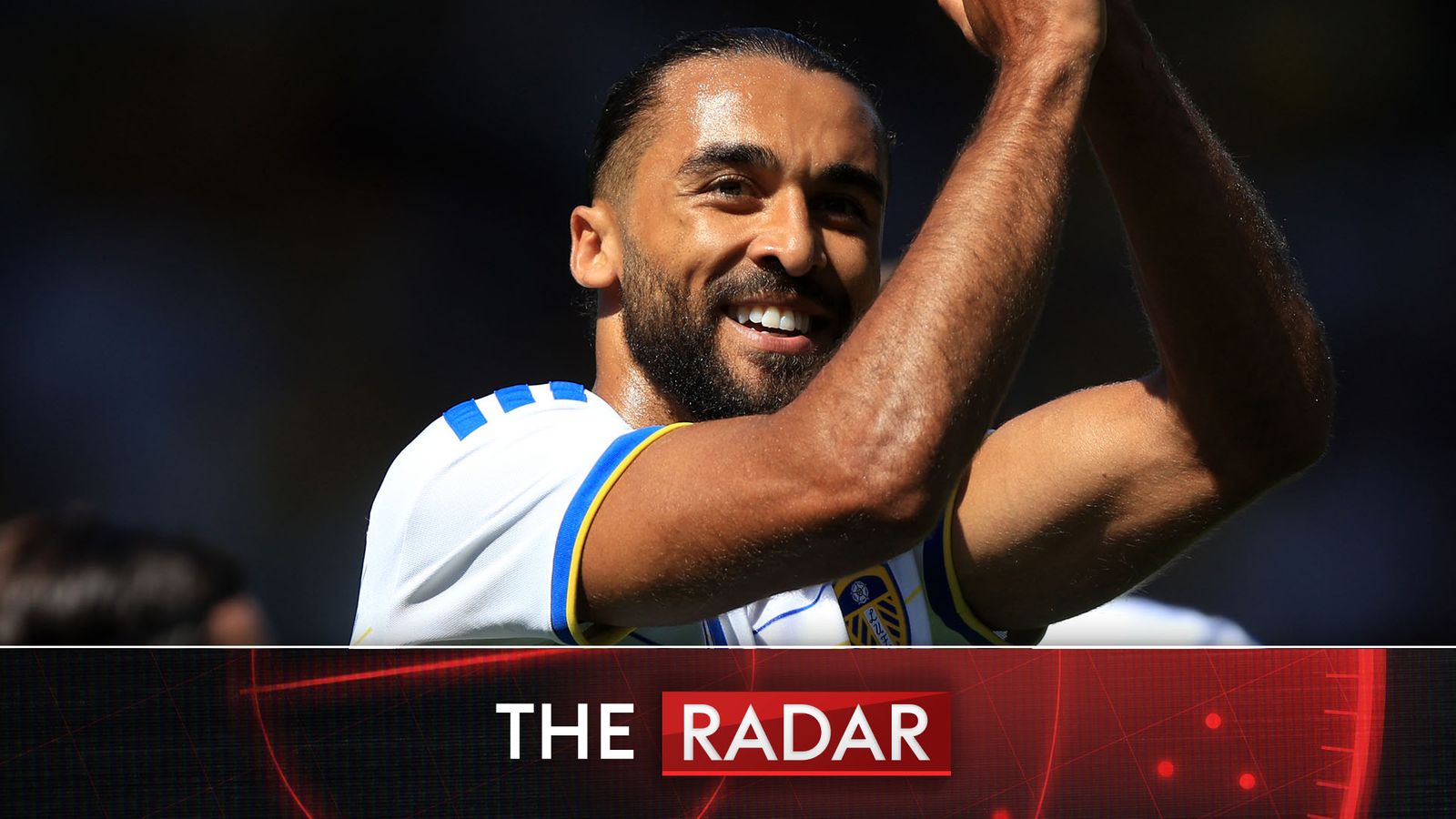
Spatial Efficiency and Central Output: Dominic Calvert-Lewin
Dominic Calvert-Lewin has recorded three Premier League goals this season following a revision by the goal accreditation appeals panel, placing him second in the division behind Manchester City forward Erling Haaland. The positional profile of the Leeds United striker demonstrates refined spatial efficiency: nine goals across 15 appearances in all competitions since April, concentrated primarily within central 18-yard box coordinates.
Leeds executed a 4-1 victory over Newcastle United on Monday, highlighting Calvert-Lewin's dual-threat mechanics in the forward line. Phase one featured an aerial conversion from a James Justin delivery; phase two deployed a direct vertical run into the channel behind the defensive line onto a pass from Tarik Muharemovic.
"He is in outstanding shape and playing with lots of confidence," said Leeds manager Daniel Farke. "It's not just scoring goals. His work-rate is top."
Underlying Geometric and Defensive Metrics
Calvert-Lewin’s physical distribution ranks him joint-top in the Premier League for aerial duels won alongside Sunderland defender Dan Ballard, while simultaneously maintaining a top-10 ranking for vertical runs behind opposition backlines. In defensive pressing schemes, Calvert-Lewin functions as the primary disruption point in Leeds' high press, contributing to Leeds ranking among the top seven clubs for forced high turnovers since the beginning of last season.
Structural availability remains steady. After managing 80 percent of league minutes last season, Calvert-Lewin has registered 92 percent of available minutes in the current campaign heading into Sunday's home fixture against Crystal Palace at Elland Road.
Sunderland Pivot Play: Brian Brobbey
In Sunderland's structural setup, forward Brian Brobbey provides direct physical stabilization. Data from GeniusIQ confirms Brobbey leads the Premier League in hold-up actions—shielding defensive markers to retain vertical distribution—matching his ranking from the previous season.
"The game against Arsenal shows that even against the strongest teams in the league or in Europe, he is really competitive," said Sunderland manager Regis Le Bris.
Brobbey’s back-to-goal actions against Arsenal center-back Ezri Konsa offered a reliable exit route out of deep defensive territory, establishing the baseline framework Sunderland will deploy against Manchester City on Sunday.
Midfield Axis: Elliot Anderson’s Transition Data
Manchester City's spatial framework under Enzo Maresca has integrated Elliot Anderson into the central defensive midfield slot vacated by Rodri. Following a derby victory over Manchester United at Old Trafford, the 23-year-old midfielder's data profiles closely match Rodri's prior output in pass completion volume, final-third distributions, and ground duel success rates.
Upcoming Premier League Fixtures
- Friday: Brentford vs Chelsea
- Saturday: Nottingham Forest vs Coventry
- Sunday: Bournemouth vs Liverpool
- Sunday: Leeds United vs Crystal Palace
- Sunday: Manchester City vs Sunderland
- Sunday: Fulham vs Manchester United

Jordan Chen
Jordan Chen covers football as a spatial system: positions, passing corridors, pressing lines, and structural failure. Match sequences are reduced to time-stamped, data-driven fragments. Coordinate-based spatial analysis diagrams the movement. Adjectives describing effort or desire are absent; tactical output is the only measure. He does not ask how hard a player tried; he records whether the lane was available. Quotes are taken from coaches only. Player sentiment is ignored. Game summaries proceed as numbered phases. Diagrams track how formations shift, where vertical corridors open, and where marking rotations break. The reader receives a schematic match record: what the geometry allowed, what it prohibited, and where it lost integrity. There is no mood, no will, no temperament. Only positional evidence. Each article concludes with a singular Entropy Index score. The rating, from zero to ten, measures the match's structural stability alone. The score is fixed, not impressionistic. For Jordan Chen, football is a coordinate system under stress.