Reporting note: this article draws on Sky Sports; TaxiSports provides the summary and editorial framing.
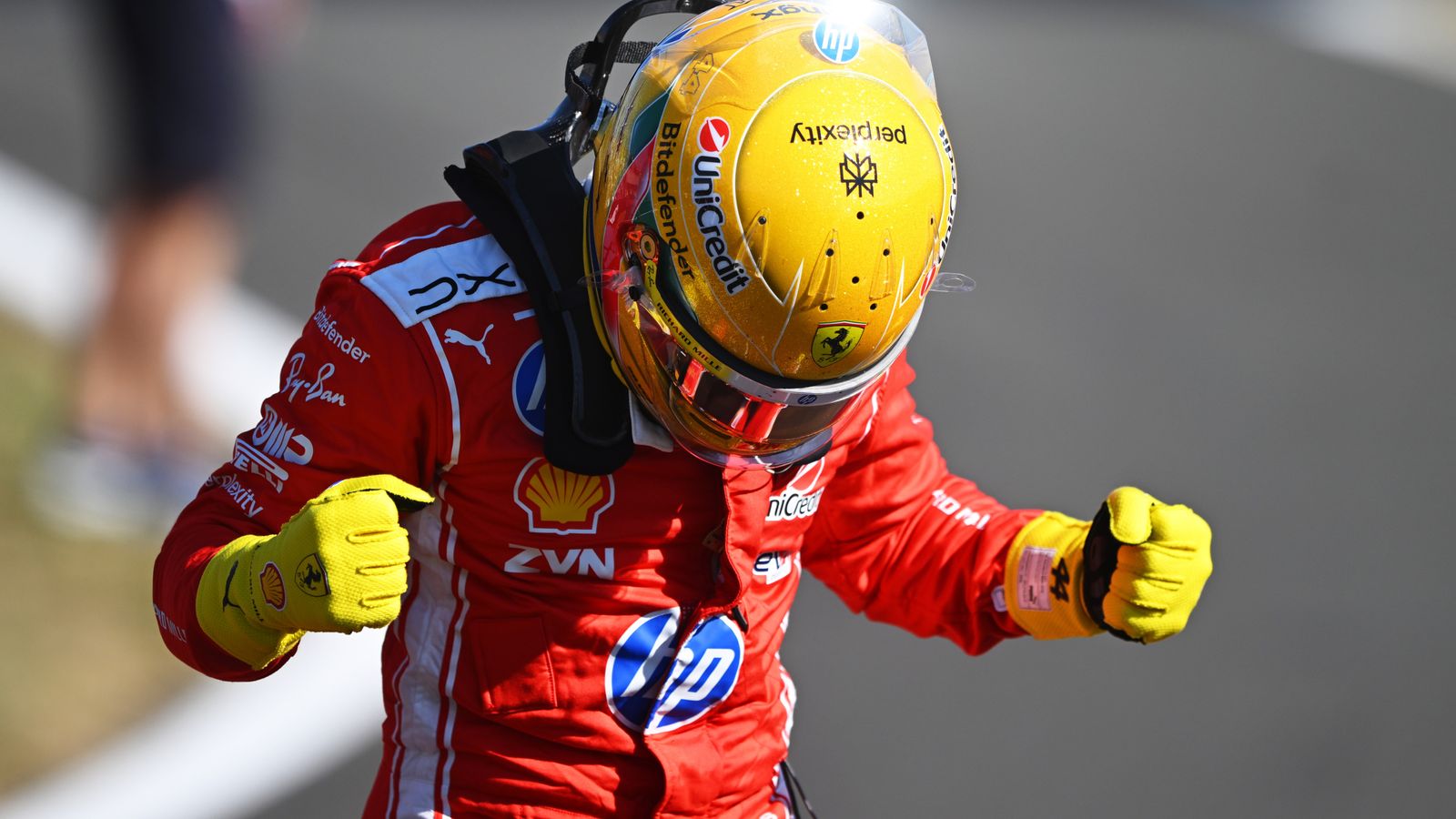
Hamilton Edges Antonelli in Precision Sprint Qualifying
Lewis Hamilton secured pole position for Saturday’s 17-lap Sprint at Silverstone, extracting an exact 0.011-second advantage over Mercedes championship leader Kimi Antonelli in Sprint Qualifying. The result marked Hamilton’s first pole in either Formula 1 qualifying format since his Sprint pole in China last season, continuing a trajectory that began with his victory in Barcelona three weeks prior.
Ferrari entered the British Grand Prix weekend anticipating severe drag penalties against Mercedes down Silverstone's expansive load paths. Instead, the Ferrari SF-26 balanced straight-line deficits through high-load stability, with Hamilton topping free practice alongside every progressive phase of the knockout session (SQ1, SQ2, and SQ3).
The Silverstone asphalt acted as its usual coarse antagonist, punishing compound thresholds across the abrasive, high-energy sweeping sections. Hamilton managed the structural load across the lap to edge Antonelli at the line, later classifying the SF-26’s baseline pace relative to Mercedes as an unexpected baseline leap.
Grid Configuration: Verstappen and Leclerc in Pursuit
Max Verstappen positioned his updated Red Bull third on the grid, lodging directly behind Antonelli to complete the front three. Charles Leclerc could not duplicate the structural efficiency of the sister car, registering a three-tenth deficit to Hamilton to end the session fourth.
George Russell endured persistent balance discrepancies, finishing fifth in the second Mercedes and trailing his teenage team-mate throughout the running order. Behind them, McLaren failed to mount an offensive against the front row. Lando Norris, who sustained structural floor damage during SQ1 and SQ2 before trackside repairs ahead of SQ3, took sixth ahead of team-mate Oscar Piastri in seventh; both McLarens concluded the final runs four tenths adrift of pole position.
Isack Hadjar briefly eclipsed Verstappen in SQ1 before settling into eighth on the soft compound, finishing within a tenth of his team-mate. Racing Bulls secured the remainder of the top 10, with Liam Lawson taking ninth and rookie Arvid Lindblad qualifying tenth.
Sprint Qualifying Results: Top 10
- 1. Lewis Hamilton (Ferrari)
- 2. Kimi Antonelli (Mercedes) +0.011s
- 3. Max Verstappen (Red Bull)
- 4. Charles Leclerc (Ferrari)
- 5. George Russell (Mercedes)
- 6. Lando Norris (McLaren)
- 7. Oscar Piastri (McLaren)
- 8. Isack Hadjar (Red Bull)
- 9. Liam Lawson (Racing Bulls)
- 10. Arvid Lindblad (Racing Bulls)
Next Track Action
Track activity resumes Saturday with the 17-lap British Grand Prix Sprint at 12:00 local time, followed by qualifying for Sunday’s main Grand Prix at 16:00. The 52-lap British Grand Prix will take place Sunday afternoon, where Hamilton pursues a target 10th career victory on home soil.