Reporting note: this article draws on Sky Sports; TaxiSports provides the summary and editorial framing.
Antonelli Consolidates Championship Leverage at Silverstone
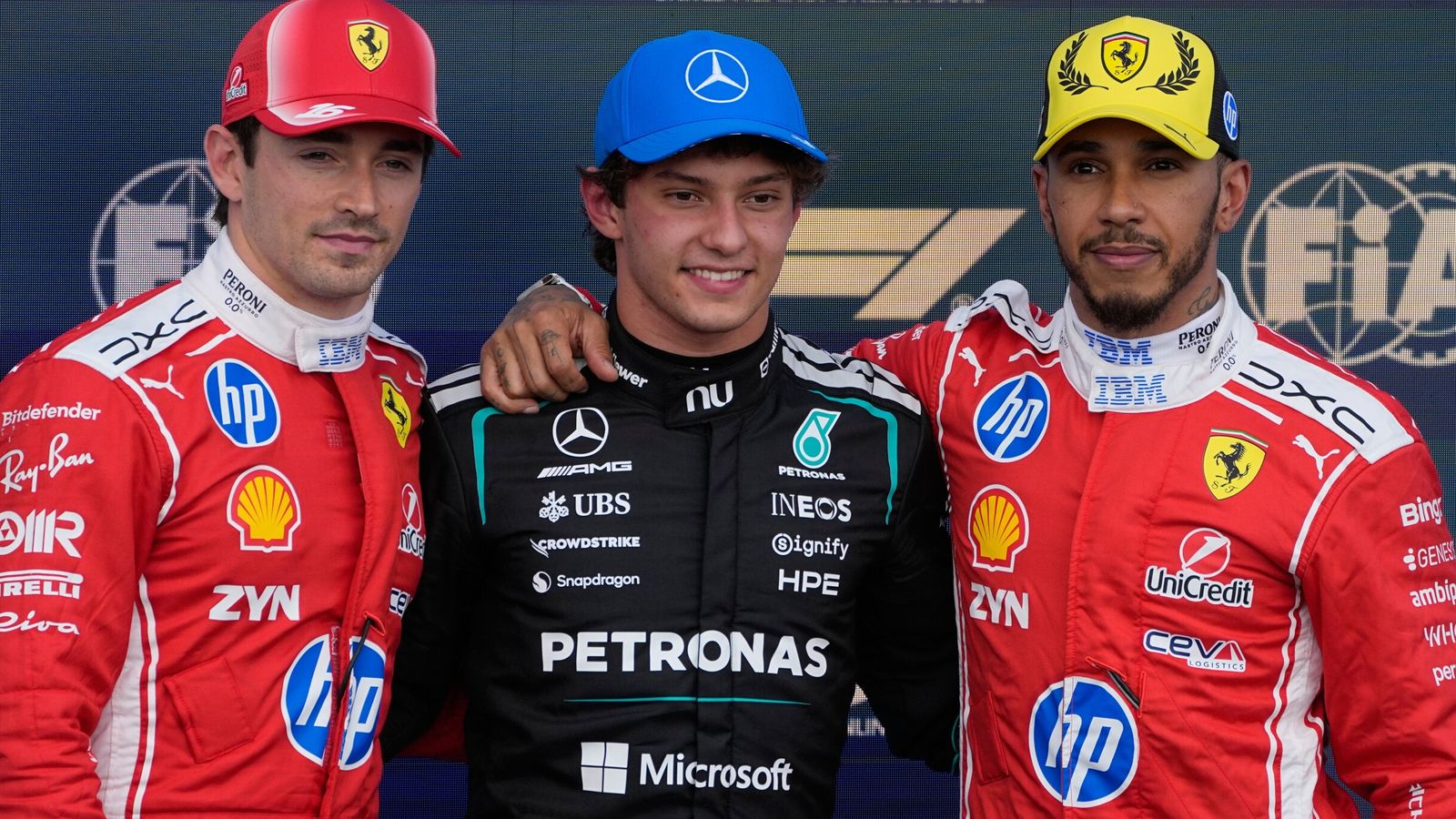
Kimi Antonelli converted raw aerodynamic efficiency into his fifth career pole position at the British Grand Prix, clocking a 1:28.111 to deny Ferrari a front-row sweep. The championship leader, fresh from extending his advantage in the standings to 43 points via a 17-lap Sprint victory, outpaced Charles Leclerc by precisely 0.175 seconds across Silverstone’s high-energy layout.
The result positions Mercedes at the apex of Sunday’s grid, disrupting Ferrari’s recent qualifying momentum. Leclerc secured second alongside Antonelli, while Lewis Hamilton took third, unable to repeat his Sprint qualifying dominance around the Northamptonshire venue.
Q3 Execution and Grid Distribution
Antonelli established the qualifying delta on his final run despite being released first into gusty, destabilizing crosswinds, extracting another 0.200 seconds out of the W-chassis floor architecture when track evolution typically favored later runners. Leclerc improved on his secondary attempt to push Hamilton to third, creating a split-strategy dynamic for the Scuderia on the clean side of the grid.
George Russell completed row two in fourth. Russell’s qualifying progression was compromised during Q1 when an off-track excursion at Luffield damaged his front-wing assembly against the perimeter barrier, costing critical garage turnaround time before advancing through Q2.
Behind the front two rows, Red Bull and McLaren operated outside the primary fight for pole:
- Row 1: Kimi Antonelli (Mercedes, 1:28.111) | Charles Leclerc (Ferrari, +0.175s)
- Row 2: Lewis Hamilton (Ferrari) | George Russell (Mercedes)
- Row 3: Isack Hadjar (Red Bull) | Lando Norris (McLaren, +0.7s)
- Row 4: Max Verstappen (Red Bull) | Oscar Piastri (McLaren, ~1.0s)
- Row 5: Arvid Lindblad (Racing Bulls) | Liam Lawson (Racing Bulls)
Championship Stakes and Race Dynamics
The gap between the front runners and the chasing pack widened significantly across Q3. Lando Norris finished 0.7 seconds adrift in sixth, with Oscar Piastri nearly a full second back in eighth, underscoring McLaren's ongoing struggle to balance ride height against high-speed floor stability. Red Bull's Isack Hadjar produced a clean qualifying run to claim fifth, outpacing four-time champion teammate Max Verstappen in seventh.
With Silverstone’s coarse surface driving rapid chemical decay across the tire compounds, Ferrari's two-car presence inside the top three provides their primary tactical route to challenge Antonelli's pace over a full Grand Prix distance.