Reporting note: this article draws on Sky Sports; TaxiSports provides the summary and editorial framing.
Calendar Tolerances and the Final Double-Header
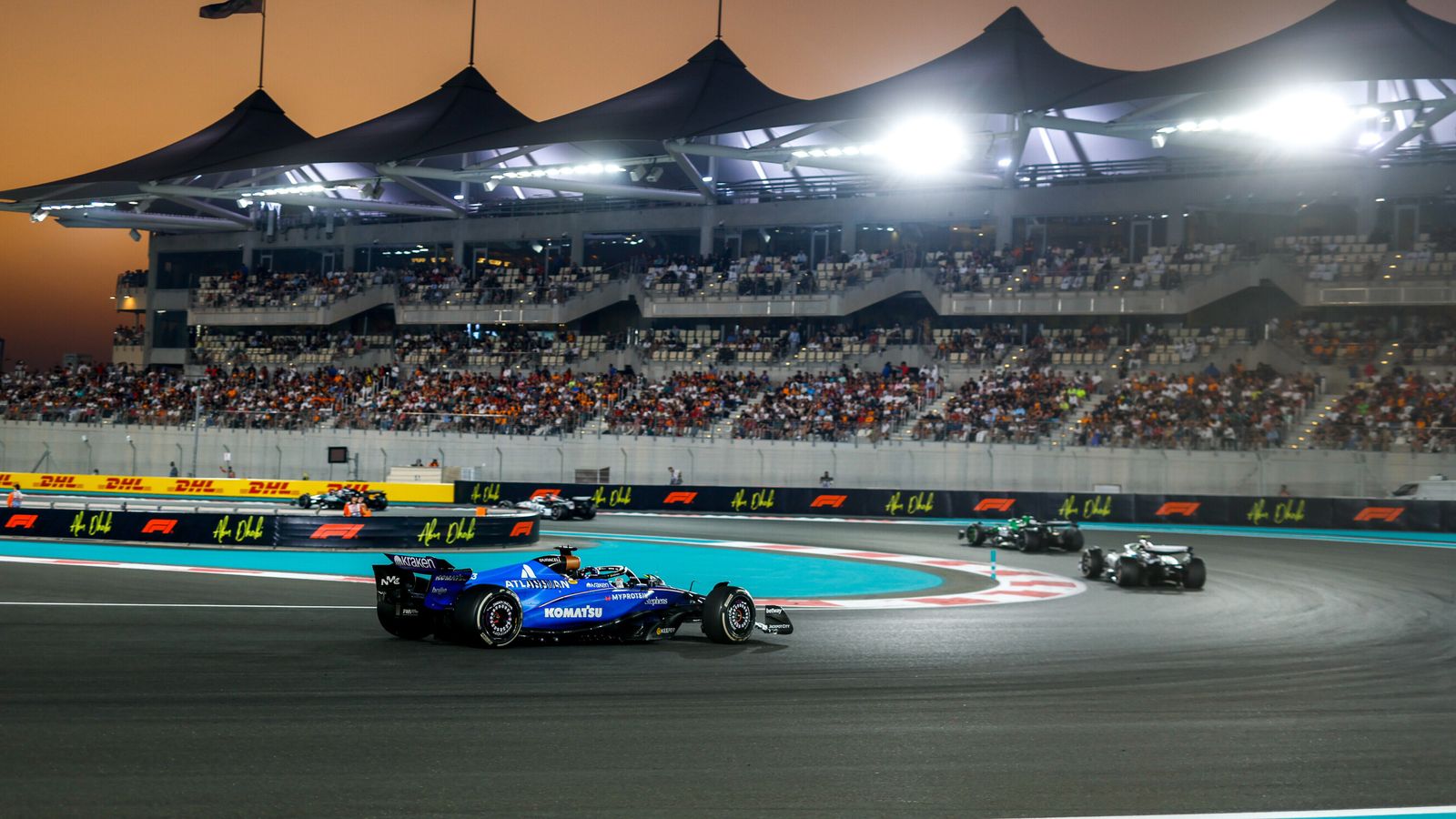
Formula 1 teams are operating against a strict logistical timeline, with a final decision on whether the season-ending Qatar Grand Prix and Abu Dhabi Grand Prix will proceed scheduled for mid-October. The closing back-to-back fixtures—scheduled for November 27-29 at Lusail and December 4-6 at Yas Marina—remain subject to regional stability following geopolitical tensions that began earlier this year.
The baseline parameters of the 23-race 2026 calendar remain intact for now. However, the operational margin for freight displacement and overseas setup requires clarity before the championship enters its final logistical window.
“I believe that Stefano [Domenicali] is targeting to tell us in mid-October so we all know what the situation is,” stated Haas team principal Ayao Komatsu during the Azerbaijan Grand Prix paddock briefing. “I believe that Imola is getting ready in case we have to do it [there]. But hopefully things can stay as a baseline.”
Audi team principal Mattia Binotto confirmed the formal cutoff established during the recent F1 Commission meeting: “Mid-October is the last call for such a decision.”
The Imola Contingency Framework
Should the Middle Eastern rounds prove unviable, the Autodromo Internazionale Enzo e Dino Ferrari in Imola has been positioned as the sport's contingency venue. Under the current arrangement, Formula 1 maintains the flexibility to assess real-time stability without prematurely locking out the scheduled venues, with commercial provisions in place to compensate Imola for preparation costs if the backup is not activated.
The structural contrast between the intended circuits and the Italian contingency presents distinct operational profiles. While Lusail and Yas Marina subject tires to sustained, high-energy lateral loads and rapid chemical decay across smooth, high-grip surfaces, a late-autumn fixture at Imola introduces colder operating windows and narrow track architecture with limited passing corridors.
Ferrari driver Lewis Hamilton highlighted the sporting and atmospheric variables associated with a late-season pivot:
“I personally want to go. I love going to the Middle East,” Hamilton noted in Baku. “Finishing in winter in Imola might not be the best weather-wise, and also it's a beautiful track, but it's not a track that we're going to be doing any overtaking in and the more races, the better.”
For now, freight lines, chassis rebuild cycles, and tire allocations remain indexed to the Middle Eastern double-header, pending the mid-October assessment from commercial rights holders and governing authorities.