
Reporting note: this article draws on Sky Sports; TaxiSports provides the summary and editorial framing.
The Mathematics of Hierarchy and the 59-Point Deficit
Two-time Formula 1 world champion Mika Hakkinen has warned that teams deploying strategic team orders to manipulate the 2026 championship battle risk severe alienation from a modernized fanbase. With 11 rounds remaining in the campaign, the points distribution across the front-running teams has introduced acute tactical friction, leaving pit walls to weigh internal driver status against external reputational risk.
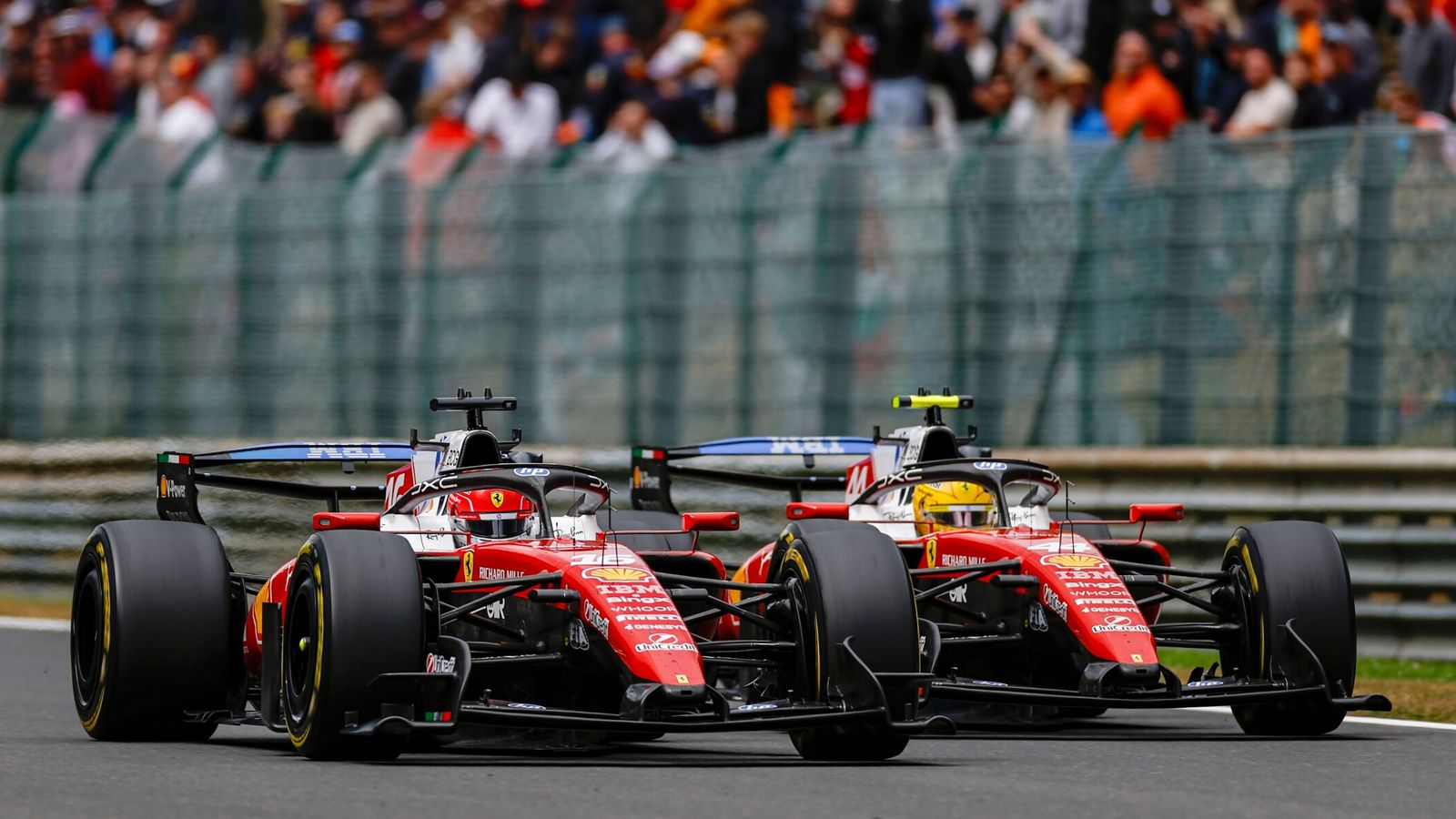
The championship architecture currently centers on Mercedes driver Kimi Antonelli, who holds a 59-point advantage over both his teammate George Russell and Ferrari's Lewis Hamilton. McLaren's Lando Norris occupies fourth in the standings, 83 points adrift after back-to-back victories reignited his title defense. Internal intra-team splits further complicate the arithmetic: Hamilton holds a 28-point margin over Charles Leclerc at Ferrari, while Norris leads Oscar Piastri by 55 points at McLaren.
Hakkinen, speaking in his capacity as a Laureus Academy Member, emphasized that the modern audience will not tolerate synthetic manipulation of race outcomes.
"Which team is going to do this kind of change and what are the arguments they are going to give and tell the fans? This is going to be an important factor," Hakkinen said. "All these drivers have a huge fanbase these days in the world, and if the team are going to decide one day that this driver is going to be number two, the fans are going to crucify this team."
Zandvoort Friction and Strategic Asymmetry
The operational divide regarding team intervention surfaced prominently at the Dutch Grand Prix. Hamilton expressed visible frustration over Ferrari team radio after finding his delta compromised behind Leclerc, while Mercedes executed a decisive position swap, instructing Russell to cede position to Antonelli to optimize tire life against the abrasive, high-load banking of Zandvoort.
While Hamilton later addressed his post-race remarks, Hakkinen noted that asymmetric data access inevitably creates friction inside the cockpit.
"The drivers are getting only a very tiny percentage of the information we get on TV," Hakkinen explained. "So when they are following another car and it doesn't let them overtake, they don't have the information and the calculations that the team have, so then very often you get these kind of reactions from the drivers, which is very normal."
Historical Models: The Schumacher Paradigm vs. Equal Opportunity
Hakkinen contrasted the current operational climate with his title-winning campaigns against Michael Schumacher in 1998, 1999, and 2000, where Ferrari instituted explicit hierarchy from the opening round.
- Absolute Hierarchy: Ferrari historically prioritized Schumacher from Race 1 to concentrate maximum championship equity into a single chassis.
- Calculated Thresholds: McLaren's historical baseline provided parity across garages until mathematical elimination forced one driver into a supporting role.
- Modern Dual-Championship Imperative: Contemporary technical regulations mandate extracting maximum aerodynamic and scoring efficiency from both cars to secure the Constructors' Championship alongside individual honors.
The grid now transitions to the low-drag demands of Monza for the Italian Grand Prix, where high-speed structural loads and narrow strategic windows will test Ferrari's and McLaren's willingness to enforce positional hierarchy.


