Reporting note: this article draws on Sky Sports; TaxiSports provides the summary and editorial framing.
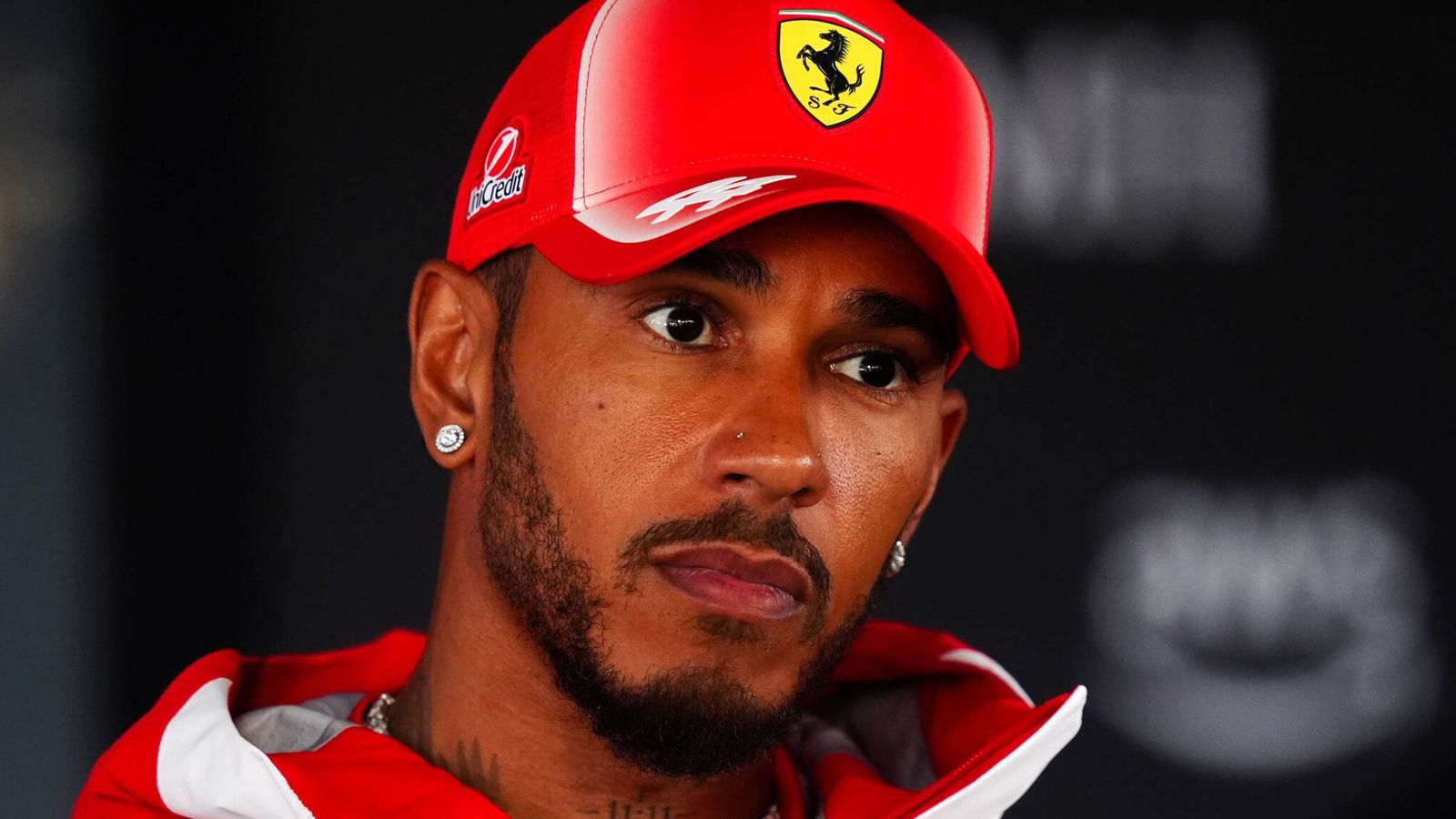
Hamilton Addresses Heated Zandvoort Radio Exchanges
Lewis Hamilton has moved to defuse internal tension at Ferrari following the Dutch Grand Prix, admitting he was not “the best version” of himself after delivering sharp criticisms over team radio and during post-race media appearances at Zandvoort.
The seven-time world champion finished fourth on Sunday, narrowly missing the podium after a late-race pursuit of Mercedes rival George Russell. Hamilton’s frustration flared earlier in the grand prix when he found himself backed up behind team-mate Charles Leclerc while running on differing tire strategies. Radio exchanges captured Hamilton’s irritation as the pit wall hesitated to orchestrate a clean swap, costing him critical seconds in free air.
Writing on social media on Monday, Hamilton took ownership of his public reaction:
“I've listened back to some of my radio and TV comments. In the heat of the moment frustration can come out, especially when you care as deeply as I do. But that wasn't the best version of me. I take responsibility for that, and I'll be better.”
Championship Standings and Strategic Comparisons
Hamilton’s post-race comments had drawn sharp contrast between Ferrari’s pit wall execution and that of his former team. Mercedes promptly ordered Russell to yield position to championship leader Kimi Antonelli later in the race, a decisive call that Hamilton highlighted when assessing Ferrari’s delays.
The fourth-place finish leaves Hamilton third in the Drivers' Championship standings, 59 points behind Antonelli. Russell sits level on points with Hamilton but holds second place on countback by virtue of race victories. Despite marking three consecutive rounds without a podium finish, Hamilton affirmed that his title aspirations remain alive.
“That passion comes from believing in this team, the people in it, and what we're building together. The direction is clear. The belief is there. And the fight is absolutely still on,” Hamilton stated.
Aerodynamic Upgrades and Execution at Monza
Ferrari brought significant structural revisions to Zandvoort, introducing a redesigned floor assembly and rear diffuser geometry. The upgraded underbody functions like a tensioned aerodynamic skin, reinforcing low-pressure load paths through medium-speed changes of direction and easing the abrasive graining on the Pirelli rubber across long stints.
While Hamilton praised the factory’s development velocity, former world champion Nico Rosberg noted that operational precision remains the Scuderia’s limiting factor. With Leclerc crossing the line fifth, Ferrari now sit 87 points adrift of Mercedes in the Constructors' Championship.
Formula 1 moves next to Ferrari’s home circuit at Monza for the Italian Grand Prix on September 4-6. Trackside sensors in coastal North Holland recorded ambient relative humidity hovering near 74 percent throughout Sunday afternoon, nearly matching the severe fluid loss endured by drivers wrestling high lateral loads through Zandvoort's banked turns.

Quinn Santos
Quinn Santos covers Formula 1 with a reverent, forensic attention to the physical and acoustic life of the race. In reports, engine notes are not background noise but specific orchestral intervals moving through the grid, and every race devotes space to the degraded texture of tire compounds after a stint, read like worn material rather than performance data. Chassis geometry and floor aerodynamics are explained through architectural metaphor: load paths become load-bearing walls, floors become tensioned skins. Quinn avoids standard telemetry charts, instead reconstructing key overtakes through rhythmic, beat-heavy sentence structures that carry braking points and exits like percussion. A reader gets the feeling of the circuit as a built and sounding environment, not a sequence of lap times. Each race recap closes with an unprompted weather report comparing trackside humidity to the driver's sweat output, a small forensic reminder of how much the body and the air are part of the result.